Circular Economy opens up new opportunities for technological cooperation between Uzbekistan and China
October 25, 2026. 11:30 • 3 min
• 252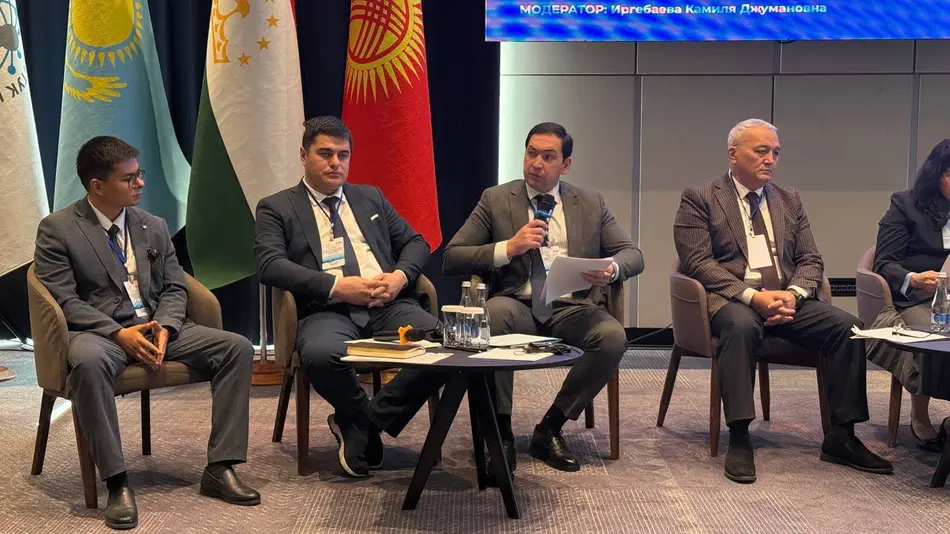
BISHKEK, October 25. /Dunyo IA/. The sixth “China–Central Asia” Think Tank Forum, themed “High-Quality Development and Joint Modernization”, was held in Bishkek on October 22–23rd, 2026, reports Dunyo IA correspondent.
Forum was organised by the Institute of Russian, Eastern European and Central Asian Studies of the Chinese Academy of Social Sciences and the National Institute for Strategic Initiatives under the President of the Kyrgyz Republic.
Forum brought together representatives of leading analytical and research centres from China and the five Central Asian countries. Uzbek delegation included experts from the Institute for Strategic and Regional Studies under the President of the Republic of Uzbekistan (ISRS), Academy of Public Policy and Administration under the President of Uzbekistan and International Institute for Central Asia.
Participants discussed prospects for joint modernization, development of transport and digital connectivity, deeper industrial cooperation and adoption of artificial intelligence. Particular attention was paid to developing human capital and expanding cultural and people-to-people ties.
Speaking at a panel session on the circular economy, ISRS Deputy Director Bakhtiyor Mustafaev highlighted opportunities for cooperation between the Central Asian countries and China in waste recycling and resource reuse. In his assessment, joint recycling facilities would help create added value and new jobs within the region.
Bakhtiyor Mustafaev noted that Uzbekistan is already creating the conditions needed to expand such cooperation. The country has established a dedicated agency, private-sector participation in waste management is growing, and a portfolio of projects to build 11 waste-to-energy plants is being prepared. Chinese technology companies are key partners in implementing these projects.
Turning to regional prospects, ISRS Deputy Director pointed out that Central Asia generates approximately 25 million tonnes of municipal solid waste annually. However, the limited size of national markets makes it difficult for each country to establish a complete recycling cycle for every type of complex waste.
In these circumstances, he identified the development of cross-border value chains as a promising solution. Under this approach, the collection and initial processing of recyclable materials in the region’s countries would be complemented by advanced processing at specialized technology centers. Bakhtiyor Mustafaev noted that combining Central Asia’s resource base with China’s technology and expertise offers opportunities to expand this cooperation.
To translate these opportunities into practical action, the ISRS representative outlined three priorities.
The first is to expand supplies of standardized secondary raw materials from Central Asia to China. As Bakhtiyor Mustafaev explained, this refers to processed materials that comply with Chinese requirements. The growing use of electric vehicles, batteries and digital equipment in the region makes it increasingly important to develop recycling capacity and establish reliable sales channels for the recovered materials.
The second is to establish joint ventures for the recovery and recycling of renewable energy equipment. According to the ISRS Deputy Director, the rapid development of solar and wind power plants requires advance planning for recycling equipment at the end of its service life. In particular, cooperation with Chinese partners would enable the recovery of silicon, silver and polymers from end-of-life solar panels for reuse in manufacturing.
The third is to develop joint educational programs to train specialists in the circular economy. Bakhtiyor Mustafaev noted that the Central Asian University of Environment and Climate Change Studies - Green University - could serve as a partner on the Uzbek side, having launched a relevant master’s degree program. He emphasized that training specialists would provide new enterprises with a skilled workforce and lay the foundation for long-term cooperation in this field.

Latest News

See all
Read also
Representatives of Uzbekistan and Turkmenistan discuss expansion of cooperation in energy sector