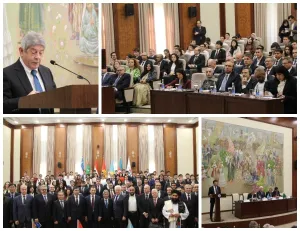
Today the water-climate agenda, once seen as a divisive factor among Central Asian countries, has become a catalyst for regional cooperation
April 13, 2025. 11:38 • 5 min
• 814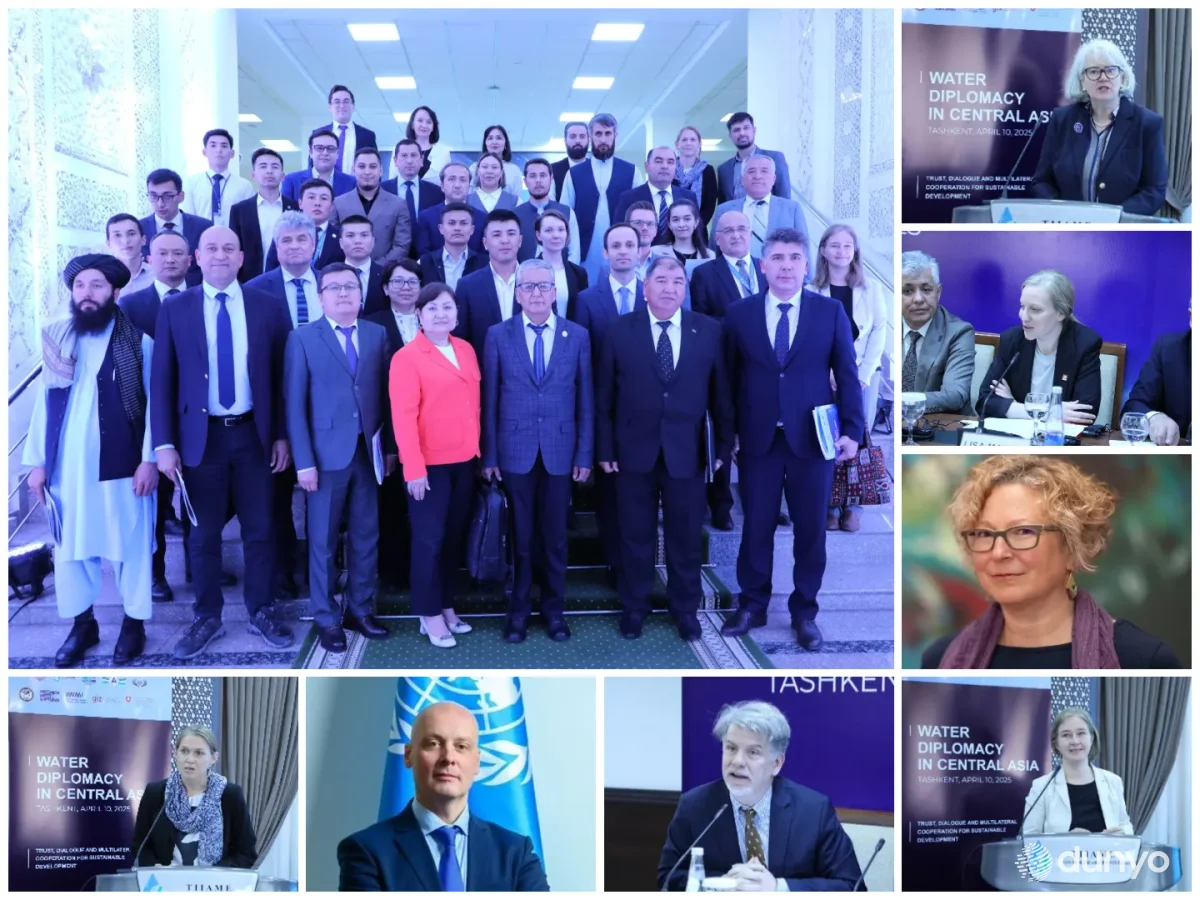
TASHKENT, April 13. /Dunyo IA/. The international scientific and practical conference titled "Water Diplomacy in Central Asia: Trust, Dialogue, and Multilateral Cooperation for Sustainable Development", held on April 10 in the capital of Uzbekistan, attracted significant interest among international partners, reports Dunyo IA correspondent.

The forum brought together over 100 participants from more than 10 countries and 15 international and regional organizations, uniting representatives from all the countries that share the basins of Central Asia’s two major rivers —Amudarya and Syrdarya. A particularly notable achievement was the participation of a delegation from Afghanistan in the multilateral dialogue for the first time, signaling a readiness for constructive engagement with the Central Asian states.
Conference participants emphasized that in the face of growing risks of water scarcity — affecting not only the region but the world at large — water diplomacy is becoming increasingly relevant as a promising avenue for international cooperation. The forum is expected to contribute not only to the sustainable momentum of mutually beneficial water cooperation in Central Asia but also to the shaping of the global water-climate agenda.
Caroline Milow, head of the regional program of the German Agency for International Cooperation (GIZ), noted that water diplomacy is gaining urgency amid climate change and intensifying water stress. "Today, water is no longer just a natural resource — it is a strategic asset, a source of life. This is particularly evident in Central Asia, which is experiencing the consequences of climate change, the accelerated melting of glaciers, and an increase in extreme weather events. This is why water diplomacy and integrated water resource management have become critically important," she stated.
At the same time, a representative of GIZ emphasized that the existing potential for cooperation enables the use of water diplomacy as a tool for building trust among nations. This approach can transform shared water resources into a solid foundation for sustainable development and regional stability.
A similar view was expressed by Lisa Marina Gampp, regional advisor on water resources and climate change for the Swiss Agency for Development and Cooperation. She noted that "water diplomacy is the key to successfully addressing issues in water resource management," emphasizing the importance of involving the academic community in this process.
Associate professor at the Department of Water Resources Management at the IHE Delft Institute for Water Education (Netherlands), Jennifer Zehring, also pointed out that beyond the government sector and scientific community, water diplomacy efforts should also include civil society, youth, and local communities. "Only such a comprehensive approach will allow for a true understanding of the nature of water-related problems and help develop solutions that are both effective and sustainable", she stated.
Regional representative of the International Water Management Institute (IWMI) in Central Asia Barbara Janusz-Pawletta, remarked that "water diplomacy goes beyond simple cooperation — it is a strategic framework aimed at ensuring all parties’ interests are taken into account and at preventing potential conflicts. This requires a scientific approach and reliable data". She added that such an approach is especially relevant given the current favorable political climate in the region, which opens up new opportunities for expanding water cooperation.
In this regard, Uzbekistan’s efforts to conceptualize water diplomacy and promote it as a distinct area of intergovernmental engagement received high praise. According to Janusz-Pawletta, "Uzbekistan, located at the very heart of Central Asia, plays a crucial role and holds great potential for promoting water diplomacy dialogue between regional countries and Afghanistan".
The importance of forming a common vision for the effective use of transboundary water resources amid today’s challenges and threats to Central Asia’s water security was repeatedly stressed, along with the potential for water diplomacy to serve as a model of cooperation not only within the region but on a global scale.
In this context, experts noted that today the water-climate agenda, once seen as a divisive factor among Central Asian countries, has become a catalyst for regional cooperation.
Regional Director of the Friedrich Ebert Foundation (Germany) in Uzbekistan and Kyrgyzstan, Philipp Jahn, emphasized that "water diplomacy serves as a basis for rapprochement and active cooperation among the Central Asian countries." He highlighted the importance of the participation of all five Central Asian states and Afghanistan, as addressing water issues in the region requires building an open and inclusive dialogue.
At the same time, a representative of the Friedrich Ebert Foundation specifically emphasized that Central Asia has accumulated considerable experience in this area. Centuries of cooperation, including in the water sphere, have become a core element of regional cohesion. Now is the right moment for Central Asia and Afghanistan to unite efforts in addressing transboundary water management challenges.
In turn, Deputy Head of the United Nations Regional Centre for Preventive Diplomacy for Central Asia (UNRCCA), Philipp Saprykin, highly appreciated the level of water cooperation in Central Asia. He emphasized that "favorable conditions for water cooperation have been created in the region." According to the UNRCCA representative, "this event and the proposals put forward during it will make a significant contribution to ensuring water security and will help promote stability and sustainable development".
The Peace and Security Advisor for the United Nations Assistance Mission in Afghanistan (UNAMA), Charity Watson, Climate, expressed her conviction that "Afghanistan’s participation in the dialogue will help unlock solutions to many issues surrounding the joint use of water resources, in a spirit of good neighborliness and mutual benefit".
Latest News
See all
Read also
Alisher Navoi Monument in Osh becomes a new symbol of Uzbek–Kyrgyz friendship
Akramjon Nematov: The drug threat requires a multilateral and comprehensive response
Swiss “PeaceNexus” Foundation Officials praise outcomes of Fergana Peace Forum