ISRS experts: Expansion of Uzbekistan's interaction with the BRICS countries will ultimately ensure the development of more effective bilateral and multilateral trade, create conditions for increased flows of mutual investments
October 23, 2024. 16:23 • 7 min
• 1071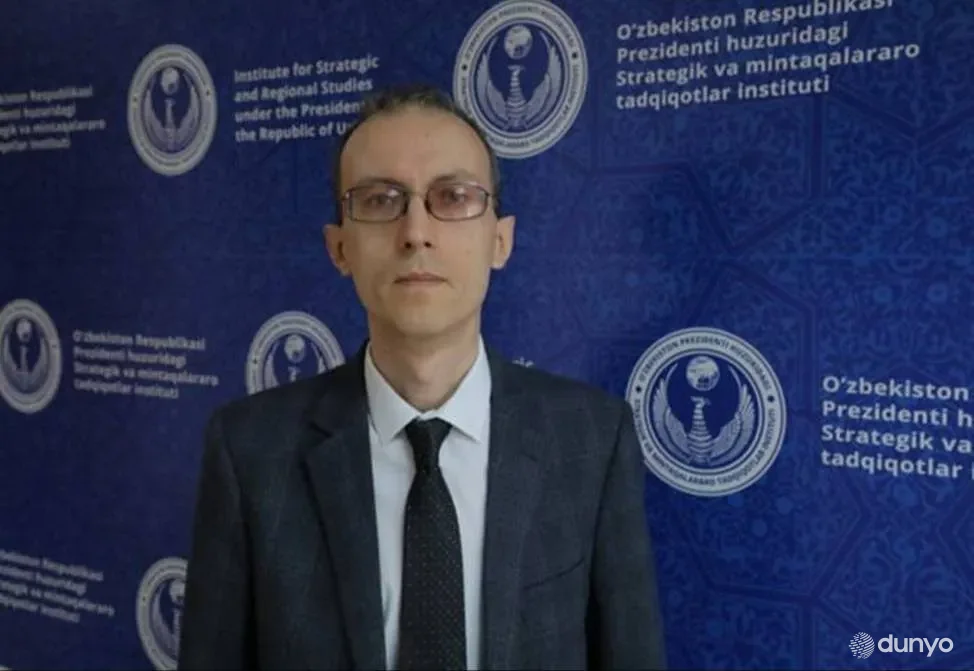
TASHKENT, October 23. /Dunyo IA/. Chief researcher of Institute for Strategic and Regional Studies under the President of Uzbekistan (ISRS), Alexey Kustov commented for the Dunyo IA on the state and prospects of our country's cooperation with the BRICS countries.

- The BRICS summit will be held in Kazan on October 22-24 this year. The participants of the upcoming event plan to discuss the prospects for further strengthening of the comprehensive partnership, as well as issues related to new formats of interaction between the countries within the framework of "BRICS Plus". The summit is expected to be attended by 32 countries, 24 of which will be represented at the highest level. In addition, the Secretaries General of such international organizations as the UN, the SCO, the CIS and the EAEU have traditionally been invited.
What is interesting about BRICS?
Recently, we have been witnessing active expert discussions about the future of BRICS and its role in the development of international cooperation. Today, the countries of this organization occupy 34% of the earth's territory, have 45% of the world's population, and provide about a quarter of the world's goods exports. According to expert forecasts, by 2028, the BRICS countries' GDP at purchasing power parity will be about 37% of the world's total.
The BRICS countries also play a major role in the global energy agenda, occupying leading positions in the field of traditional energy. The countries of the association produce and consume three quarters of the world's coal and about 40% of the world's natural gas. With the expansion of the group in 2024, the BRICS share of the global oil market exceeded 40%.
Along with enormous human and natural resources, one of the factors that ensures the significant attractiveness of the association is the rapid development of modern technologies. The BRICS countries account for 17% of global investments in technological research and innovation and 27% of publications in scientific journals.
Particular attention should be paid to the scientific interaction carried out by BRICS working groups on a wide range of issues, including biotechnology and biomedicine, information and communication technologies, renewable energy sources, etc.
In order to develop the practice of exchanging experience in this area, technology transfer centers of the BRICS countries have been created, Forums of young scientists, meetings of representatives of academies of sciences, conferences on technological foresight and innovation policy are regularly held.
It is also impossible not to note the work of existing multilateral mechanisms in BRICS, such as the "Global Network of BRICS Research Infrastructures", "BRICS Virtual Institute of Photonics", "BRICS Network Center for Materials Science and Nanotechnology", "BRICS Water Forum" and others. Their activities allow for inclusive interaction in a variety of areas requiring the introduction of modern innovative developments.
Over the last 15 years, the BRICS has been intensively developing a system of ties between the member states, including coordination of foreign policy, economic partnership, convergence of national legislation, and the development of common financial and investment institutions (the New Development Bank and the Contingent Reserve Arrangement). As a result, 933 decisions were adopted by the BRICS members during this period. Despite their non-binding nature, the level of voluntary implementation of these decisions by the BRICS countries is estimated at 77%.
All this has significantly increased the economic benefits for the members of the organization. For example, over the past 20 years, the share of mutual trade between BRICS member countries has doubled and reached 40%. Not surprisingly, this approach to cooperation attracts every year more and more participants interested in increasing their practical interaction with the dynamic BRICS countries. In 2024, Egypt, Ethiopia, Iran, Saudi Arabia, Iran, Saudi Arabia and the United Arab Emirates joined the group. In the same year, Kazakhstan, Azerbaijan and Turkey became candidates for BRICS membership.
Uzbekistan in interaction with BRICS countries
The Republic of Uzbekistan is demonstrating growing interest in interaction with the BRICS group, as this opens up certain opportunities for our country to develop its national economy, which is faced with permanent tasks of modernization, expansion and diversification of exports and attraction of foreign investment.
It is noteworthy that in recent years, the expansion of Uzbekistan's foreign economic ties with the members of the association has been progressive. There has been a consistent increase in trade turnover. As a result, BRICS states are currently among the top 20 major trading partners of Uzbekistan - in 2023, trade turnover increased by 27% and amounted to over 25 billion dollars. At the same time, exports increased to 5.9 billion dollars and imports to 19.2 billion dollars.
Thus, the basis of Uzbekistan's interaction with the BRICS countries has been the exponential growth of trade and economic exchanges, which has given impetus to the practical development of productive commercial contacts.
An important factor behind such a dynamic of engagement with the group is the special nature of bilateral relations with each of the BRICS countries due to both the historical trajectory of ties and the high level of trade-economic and scientific-technical cooperation.
For instance, the Republic of Uzbekistan and China have brought their relations to the level of "all-weather" all-round strategic partnership in 2024. Favorable macroeconomic conditions and mutual commercial interest have ensured a rapid increase in economic and investment opportunities. At the end of last year, bilateral trade turnover amounted to 13.7 billion dollars. China's share in the total volume of foreign trade turnover of our country reached 21.9%. At the same time, there is every intention to bring the trade turnover to 20 billion dollars in the coming years.
Such momentum undoubtedly testifies to the increased mutual interest in further expansion of business contacts and comprehensive financial and economic cooperation on the part of the business communities of the two countries.
Concurrently, Uzbek-Russian relations have reached the level of strategic partnership. Herewith, virtually all spheres of bilateral interaction have been noticeably diversified. This was evident in the increasing number of trade-economic and scientific-technical exchanges, new formats in business, science and culture.
The Russian market has become important for Uzbek exporters of agricultural, textile and industrial goods, while Russian enterprises have become suppliers of equipment, machinery and energy products to Uzbekistan.
As a result, in 2023, mutual trade turnover came close to 10 billion dollars, which exceeded the level of 2017 by 2.1 times. Currently, Russia ranks first in the number of enterprises with foreign capital in Uzbekistan - more than 3 thousand companies, and the volume of investments over the past 7 years has exceeded 10 billion dollars. Thus, Uzbekistan and Russia were able to find a solution to the principal task in the trade and economic relations and start the transition from classical commodity exchange to multi-disciplinary industrial-investment interaction and implementation of a multitude of bilateral projects.
Strategic partnership is also developed with India. Over the last 6 years the number of joint ventures has increased 5 times. Investment projects in IT, healthcare, pharmaceuticals, agriculture and tourism are being successfully implemented. Mutual trade is planned to reach $1 billion in the coming years.
Thus, for the Republic of Uzbekistan, a country with an open economy, the establishment of interaction with the BRICS countries is a rather urgent task. In the context of large-scale reforms carried out in the country to improve the investment environment, import innovations, and create technological projects with the participation of foreign partners, the enormous potential of the BRICS can serve as an important instrument in achieving the objectives set for Uzbekistan.
This is especially important since Uzbekistan's course of innovative transformation largely coincides with the strategy of international scientific and technological partnership within the framework of BRICS, whose members are increasingly willing to interact in various fields of physics, medicine, biotechnology and ICT. Given the rapid dynamics of global geo-economic, technological, trade and political changes, the task of intensifying scientific and technological cooperation on the BRICS platform is becoming a political and economic imperative for Uzbekistan.
It is no coincidence that during his participation in the High-Level Dialogue on Global Development in the BRICS+ format in June 2022, President of the Republic of Uzbekistan Shavkat Mirziyoyev indicated priority areas of broad international cooperation, in which much attention was paid, above all, to the need to join efforts in the field of innovation and technology transfer, digitalization, biotechnology and other branches of scientific and technological cooperation.
At the same time, opportunities in the sphere of multilateral trade cooperation between the BRICS countries and joint search for solutions in the sphere of transportation, logistics and customs cooperation are encouraging. Strengthening cooperation with the BRICS countries will make it possible to jointly address emerging issues, taking into consideration the degree of their complexity and significance for the partner countries, which is of particular interest to Uzbekistan.
Further simplification of trade procedures will not only help reduce transaction costs, improve competitiveness of products and increase trade flows, but will also contribute to further improving the investment and business environment and optimizing the efficient allocation of BRICS economic resources.
Expansion of Uzbekistan's interaction with the BRICS countries will ultimately ensure the development of more effective bilateral and multilateral trade, create conditions for increased flows of mutual investments, thereby strengthening economic growth and increasing the level of competitiveness of Uzbekistan's economy in the international arena.
Latest News
See all
Read also

“Central Asia + Japan” Summit to serve as a platform for defining new horizons of cooperation