
Kenji Hirata: Today, Japan–Uzbekistan Relations Are Entering a New Stage
December 19, 2025. 08:15 • 5 min
• 159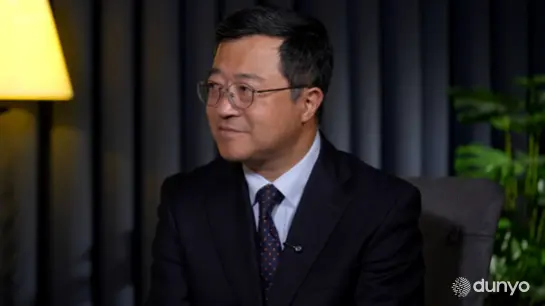
TASHKENT, December 19. /«Dunyo» IA/. On the eve of the official visit of President Shavkat Mirziyoyev to Japan and his participation in the first Central Asia + Japan summit, the Ambassador of Japan to Uzbekistan Kenji Hirata gave an interview to "Dunyo" IA, in which he shared his views on the development of bilateral cooperation, cultural and humanitarian exchanges, as well as the significance of the “C5+” format:
— First of all, thank you for finding time for this interview. Japan is known to be one of Uzbekistan’s key partners in the political, economic, and cultural spheres. In your view, which areas are the most promising for further expanding cooperation and taking relations between our two countries to a new level?
— I am pleased to have the opportunity to give this interview on the eve of the visit of His Excellency President of Uzbekistan Shavkat Mirziyoyev to Japan. I would like to emphasize that, as Uzbekistan is an important strategic partner of Japan, this visit will be a significant step in the further development of our partnership. I can say with confidence that Japan–Uzbekistan relations are now entering a new stage.
After Uzbekistan gained independence, a number of cooperation programs between the governments of our two countries were launched. However, today we see a completely different reality — New Uzbekistan. New Uzbekistan is open to the world and seeks modernization through relations with foreign countries. Foreign direct investment and trade play an important role in this process, and these areas are largely driven by the private sector. Therefore, the future of the Japan–Uzbekistan strategic partnership is primarily oriented toward the private sector. Of course, governments strive to support the private sector, and we are interested in maintaining the momentum of cooperation and further strengthening it.
— You have emphasized the importance of political and economic cooperation. At the same time, there is another crucial aspect to mention. Today we can cite many examples of cultural dialogue and educational ties between our countries — public diplomacy, the teaching of the Japanese language in Uzbekistan, and student exchanges. In your opinion, what could elevate bilateral relations to a new level in this sphere?
— Yes, the development of human resources has always been at the core of our relations. The Government of Japan implements a number of scholarship programs for Uzbek youth. Today, more than 2,400 young citizens of Uzbekistan are studying in Japan. In addition, under the leadership of leading higher education institutions — Nagoya University and the University of Tsukuba — inter-university exchange programs are being actively launched.
We sincerely hope that after completing their studies in Japan, these young people will return to their homeland — Uzbekistan — and contribute to the country’s development and modernization by applying the knowledge and experience gained in my country. I believe this will also further strengthen our mutual cooperation.
— Japan is one of the world’s leaders in sustainable innovation, energy efficiency, and environmentally friendly technologies. Uzbekistan also identifies the “green” economy and renewable energy projects as priority areas of development. What joint initiatives could be implemented by our two countries in this important field?
— Indeed, there are many concrete areas for cooperation in this regard. As you noted, there are significant opportunities in such fields as renewable energy and improving energy efficiency. One area that deserves particular attention is the fight against climate change. At present, we are working on the development of specific projects, and they will certainly be implemented in the near future.
We believe that Japanese technologies and experience in the field of green transformation can make a substantial contribution to the development of Uzbekistan’s economy. We hope that concrete and practical projects will be developed to further strengthen cooperation that serves the interests of both sides.
— Let us move on to the most important part of our conversation — the upcoming Central Asia + Japan Dialogue. This format is important for the exchange of ideas and initiatives. It is worth noting that the Central Asia+ format was first launched with Japan’s participation. From this perspective, what are the main achievements of this format so far, and what promising initiatives can be expected in the future?
— We hope that the first Central Asia + Japan summit will make a significant contribution to the development of interregional cooperation, and we believe that we will see tangible results. Today, thanks to the leadership of His Excellency President Shavkat Mirziyoyev and cooperation with other Central Asian countries, we see a strong interest in engagement within this format and a desire to expand it.
The exchange of visits has intensified, and dialogue has been established on issues such as water resource management, border control, climate change, and others. At present, cooperation between countries in the “C5” and “C6” formats has become a norm and a natural phenomenon. However, when Japan launched the “C5+1” format in 2004, the situation was completely different.
We can see what significant progress has been achieved since then. I believe that the most important contribution of the “C5+1” format lies in creating an atmosphere of mutual trust and unity. This is not an easy task and requires considerable time. Nevertheless, we are proud that Japan laid the foundation for this format. Today, we see substantial positive changes in practice. Therefore, I am very pleased that Japan supports the efforts of Central Asian countries to strengthen cooperation and partnership, primarily by fostering mutual trust.
— Thank you very much for your time and for this insightful discussion.
— I would also like to thank you for the opportunity to share my vision of the development of our cooperation.

Latest News
See all
Read also
Uzbekistan–Japan: Expanding the Boundaries of Strategic Partnership
Uzbekistan-Paraguay: A dialogue bridging continents and oceans
New Uzbekistan: From Constitutional Reforms to Constitutional Stability

Ambassador of Uzbekistan presents credentials to the President of Greece