“National Geographic Traveler”: A land where every corner tells a story of history and modern life
February 12, 2026. 11:44 • 3 min
• 642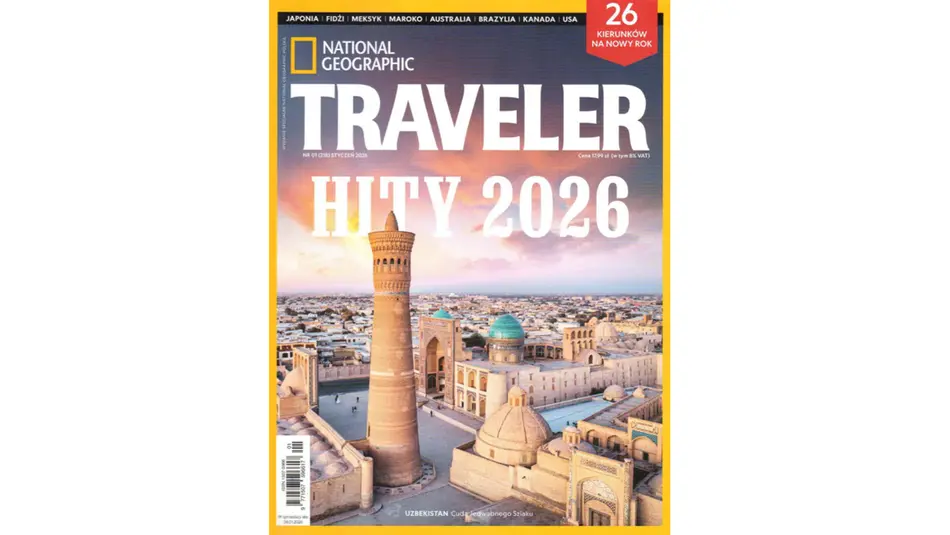
WARSAW, February 12. /Dunyo IA/. Polish journalist and writer Paulina Wilk has published a feature report titled “Tashkent, Khiva, Bukhara, Samarkand” in the internationally renowned magazine “National Geographic Traveler”, highlighting her journey across Uzbekistan, reports Dunyo IA correspondent.
From the very first lines, Wilk immerses readers in the atmosphere of night-time Tashkent - a young, ambitious city undergoing rapid transformation. Through chance encounters, she conveys the openness and dynamism of contemporary Uzbek society. Her attention is drawn to the interplay of tradition and modernization: elegant suits alongside old customs, politeness coupled with business acumen, the dust of the steppes juxtaposed with the glass facades of new constructions.
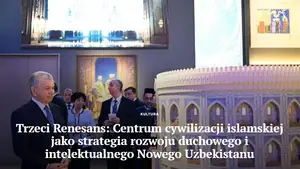
A central focus of the report is the Hazrati Imam complex, the spiritual heart of Tashkent. Wilk highlights the symbolism of ancient religious sites standing alongside the planned Islamic Civilization Center, which will house the unique Quran manuscript - one of the oldest copies of the Islamic holy book and inscribed in UNESCO’s Memory of the World register. For the writer, this blend of old and new architecture becomes a metaphor for modern Uzbekistan: a country carefully preserving its heritage while boldly moving toward the future.
The journey aboard the high-speed “Afrosiyob” train to Samarkand reveals the grandeur of Shah-i-Zinda and the Registan ensemble. A personal note enriches the narrative: Wilk compares the restored Registan with a photograph of her mother taken there in 1991. The contrast between past and present underscores the scale of transformation over recent decades. Samarkand emerges not as a static museum city but as a living, breathing urban space with family-run restaurants, the Siyob Bazaar and evening light shows bringing its history to life.
In Bukhara, the journalist draws attention to the careful restoration of the historic center alongside the emergence of new districts locally dubbed the “Dubai quarters” - symbols of modernity and elegance. Wilk vividly describes the city’s artisanal traditions, cuisine, and evening music in courtyards, portraying Bukhara as a space of unhurried, deeply rooted life.
Khiva, in her report, appears almost fairy-tale-like: the Ichan-Kala fortress, illuminated after sunset, becomes a “jewel in the desert”. Nights spent in a former madrasa, the morning call of the muezzin, mud-brick walls, and minarets create the image of a “gateway to distant Asia”. Wilk then travels to the Fergana Valley, a region of artisans, weavers and potters, where traditional techniques for producing silk and cotton fabrics remain alive.
Wilk concludes her journey at Tashkent’s Chorsu Bazaar, a symbol of historical globalization. Through her descriptions of goods, flavours and scents, she emphasizes that such spaces have, for centuries, connected East and West, fostering cultural exchange and the flow of ideas.
Her feature “Tashkent, Khiva, Bukhara, Samarkand” offers a European perspective on Uzbekistan as a country of synthesis: ancient and modern, steppe dust and turquoise domes, local traditions and global context. Its publication in “National Geographic Traveler” further underscores the growing international interest in Uzbekistan’s cultural and historical heritage, as well as its contemporary development.

See all