Abdusamat Khaydarov: Over the years of Independence, Uzbekistan has developed its own system of diplomatic education
September 29, 2026. 19:32 • 8 min
• 93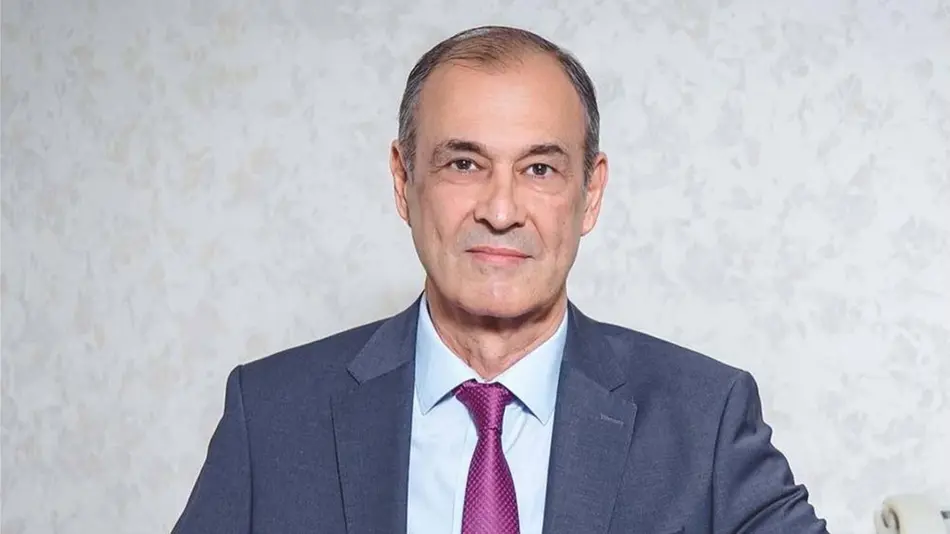
TASHKENT, September 28. /Dunyo IA/. Director of the Diplomatic Academy under the University of World Economy and Diplomacy of the Ministry of Foreign Affairs of Uzbekistan, Professor Abdusamat Khaydarov in his interview with the "Ishonch" newspaper, drawing on his extensive diplomatic and academic experience, discussed how the diplomatic profession is transforming, why the nation requires its own school of international analysis and what knowledge will define the diplomacy of the future, reports Dunyo IA correspondent.
- Foreign policy of Uzbekistan has become noticeably more active. International relations are expanding and the role of economic diplomacy, technology, transport and investment projects is growing. How have the requirements for a diplomat changed?
– Very significantly. The state strategy is embodied by specific individuals - diplomats, international lawyers, economists, analysts, security experts and regional studies specialists. Therefore, the quality of the diplomatic service directly depends on personnel training.
Over the years of independence, Uzbekistan has developed its own system of diplomatic education. Its foundation was laid by the University of World Economy and Diplomacy, established in 1992. The new stage of the country's development, which began in 2016, has transformed the foreign policy environment as well. Uzbekistan began to pursue a more open and active policy, while economic ties, as well as investment and technological agendas, expanded.
An important step was the adoption of the President’s Resolution in 2022 “On measures for systemic reform of the activities of the University of World Economy and Diplomacy”. In accordance with it, Diplomatic Academy was established under UWED.
University provides future specialists with fundamental training, while the Academy ensures systematic training of diplomatic personnel, including senior-level diplomats, retraining and professional development, as well as scientific and methodological support for diplomatic activities. In the modern world, one has to learn throughout their entire career.
– At the meeting on the activities of the Ministry of Foreign Affairs and foreign diplomatic missions on January 15th, 2026, President of Uzbekistan Shavkat Mirziyoyev emphasized that the time of a new formation of diplomats has come. What does this formula mean in practice?
– A significantly broader range of knowledge and skills. A diplomat must confidently navigate international law and politics, understand economics, investment, trade, transport and logistics, as well as comprehend technology, security issues, the climate and the information agenda. The very substance of the profession has changed. Today, a diplomat participates in political dialogue, facilitates the attraction of investments, promotes exports and develops transport routes, as well as scientific, technological and humanitarian ties.
Economic diplomacy has acquired particular significance. A modern specialist needs to perceive the connection between a political decision and its practical result, understand what benefit an agreement can bring to the country, and what opportunities it opens up for business, investment, and new technologies.
A diplomat of the new formation is an individual with strategic thinking, capable of aligning the foreign policy interests of the state with the tasks of its development.
– Let us imagine a young diplomat who is being posted to China, a European nation or a Persian Gulf state. What skills must they possess?
– An understanding of the host country's economy, its business environment, market structure, investment policy, and business interests. It is vital to discern opportunities for Uzbek enterprises, identify promising technologies, and assess the viability of joint projects. Today, it is no longer sufficient merely to organize a meeting and prepare negotiations. One must comprehend what will transpire after the signing of a document, what impediments may arise, who will become the project partner and how competitive the proposal is.
Such work requires analytical skills, ability to work with economic data and the capacity to perceive long-term trends.
– What remains the most challenging aspect of training diplomatic personnel?
– The pace of change. International relations are becoming increasingly complex. New centers of power are emerging, economic ties are being restructured, technological and informational risks are appearing, and climate problems are more visibly affecting the international agenda. Diplomatic education must respond promptly to these processes. Particular attention is required for analytical and language training, economic knowledge, and the ability to work with digital tools and large volumes of information.
It is impossible to learn diplomacy solely from a textbook. A future specialist must comprehend how decisions are made, negotiations are prepared, risks are assessed and the interests of different parties are taken into account. Therefore, education, science and diplomatic practice must develop in close connection.
– Can a state pursue an effective foreign policy without its own national school of diplomatic education and international studies?
– It is extremely difficult. Education shapes professional competencies, whereas science generates, systematizes and updates the knowledge upon which they are built.
We must independently research international processes, regional dynamics, transformations of the global system, and new forms of diplomacy. Such a science should assist the state in identifying risks and opportunities in a timely manner, creating a professional foundation for foreign policy decisions. A national diplomatic school is formed by personnel, education, science, practice, historical experience and its own intellectual tradition.
Uzbekistan has accumulated significant experience in foreign policy and diplomatic activities. It is vital to systematize, comprehend and transmit this experience to future generations. In recent years, the preparation of research papers, textbooks and monographs has intensified at UWED and the Diplomatic Academy. Among them are “History of the Diplomacy of Uzbekistan”, “Uzbekistan and the UN” and “Central Asia in Global Politics”.
– In anticipation of the 35th Anniversary of Independence, “Explanatory Diplomatic Dictionary” and the monograph “Diplomacy: From Origins to Modernity” have been prepared. What is their significance?
– These publications address distinct yet interconnected tasks. The dictionary shapes the language of the profession, while the monograph unfolds its history, theory and contemporary substance.
Professional culture begins with the precision of concepts. A diplomat constantly works with the terminology of international law, the negotiating process, protocol, security, and foreign economic relations. “Explanatory Diplomatic Dictionary” represents the first specialized publication of this kind in Uzbekistan. It is intended for students, faculty, researchers, officials of the Ministry of Foreign Affairs and diplomatic missions of Uzbekistan abroad.
Monograph allows for tracing the development of diplomacy from its early forms to the modern system of international relations. Its first part is dedicated to the history and evolution of traditional diplomacy, while the second focuses on economic diplomacy.
Such a structure reflects the transformation of the profession itself. Trade, investment, exports, technology, energy, transport and accessing new markets have become the most crucial avenues of the state's international activities. For Uzbekistan, which is actively expanding its foreign economic ties, this is particularly relevant.
– How are artificial intelligence and digital analytics transforming diplomatic work?
– Modern tools accelerate the search and processing of information, assist in correlating large datasets, tracking trends and preparing analytical materials. Concurrently, the political context, understanding a partner's position, and assessing potential compromise and long-term consequences demand human judgment. Responsibility for decision-making also remains with the individual.
A future diplomat must be trained to utilize technology professionally and critically, verify information and comprehend the limitations of digital tools. Artificial intelligence expands a specialist's capabilities, yet the standard of diplomacy continues to be determined by the quality of human intellect.
– How can openness to global experience be maintained while forming one’s own school?
– UWED and the Diplomatic Academy cooperate with foreign universities, diplomatic academies, and research centers. Among the partners are the University of Glasgow, the University of Tsukuba, and specialized institutions of India, Italy, Türkiye, Oman and other countries. The cooperation encompasses joint research, educational programs, exchanges of faculty and experts, as well as scientific conferences and publications.
International ties allow for comparing approaches, discerning the strengths and weaknesses of one’s own system, and adopting the best practices. Concurrently, openness to the world demands intellectual independence and the capacity to evaluate global processes through the prism of national interests and regional specificity.
– How do you envision an Uzbek diplomat in a few years?
– First and foremost - as an individual possessing broad strategic thinking. They will have to operate in a world where politics will intertwine even more closely with economics, technology, climate issues, energy and information security. Such a specialist will require fundamental knowledge, a profound understanding of national interests, command of foreign languages, modern analytical tools and the capacity to foresee the consequences of decisions for years to come.
There are qualities upon which time has no power. These are professional culture, responsibility, precision of words, ability to listen, comprehend the interlocutor and conduct negotiations. Technologies and forms of diplomacy will change. The ability to understand one’s country's interests and professionally represent them to the external world will remain the foundation of the profession.
If we succeed in combining fundamental education, continuous professional development, science, international experience and our own diplomatic tradition, Uzbekistan will secure a school capable of training specialists for the world that is only just emerging.

Latest News

See all
Read also
Saida Mirziyoyeva: Perpetrator will face the harshest punishment available under the law