Akramjon Nematov: Modernization agendas of Kazakhstan and Uzbekistan - Foundation for Sustainable Development in Central Asia
November 05, 2026. 11:30 • 9 min
• 7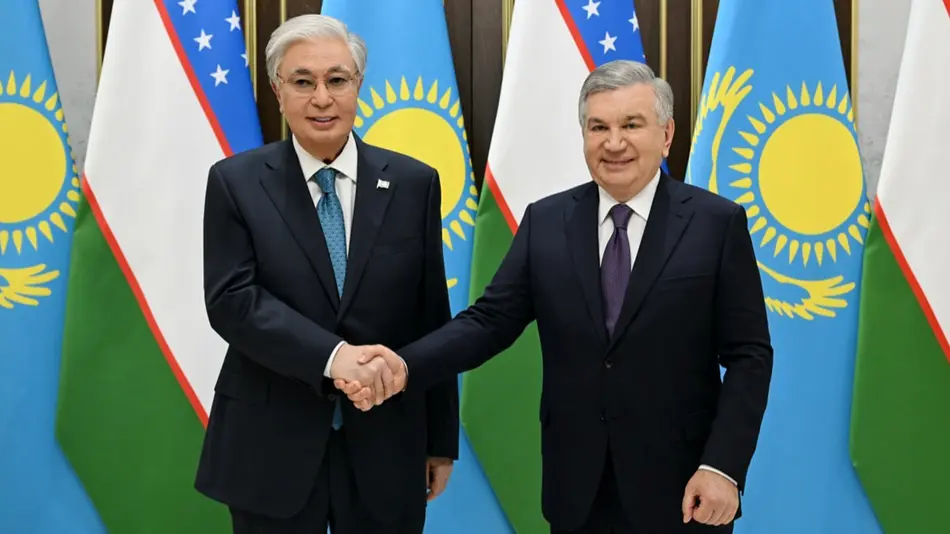
TASHKENT, November 5. /Dunyo IA/. Akramjon Nematov, First Deputy Director of the Institute for Strategic and Regional Studies under the President of Uzbekistan (ISRS), commented to IA Dunyo on the Address of President of Kazakhstan Kassym-Jomart Tokayev to the people of the country, entitled “Kazakhstan’s Current Priorities in a New Historical Cycle”:
Central Asia is entering a new stage of its historical development. Today, countries of the region have an opportunity not only to adapt to far-reaching changes in the global economy, but also to independently develop new sources of economic growth, strengthen regional connectivity and steadily improve the quality of life of their peoples.
Against this backdrop, alignment of the strategic priorities of the countries of the region, particularly those of Kazakhstan and Uzbekistan, aimed at comprehensive economic modernisation, technological upgrading and more effective public administration, takes on special significance.
President Kassym-Jomart Tokayev’s State of the Nation Address, “Kazakhstan’s Current Priorities in a New Historical Cycle”, was a major political event that set out the scale of the reforms ahead. It reflects Kazakhstan’s ambition to enter a new phase of development driven by the technological transformation of the economy, extensive infrastructure renewal, human capital development and improvements in citizens’ well-being.
Address was delivered in the year marking the 35th anniversary of Kazakhstan’s Independence, following the entry into force of the new Constitution on July 1st, 2026. In my view, its fundamental significance lies in translating political renewal into a long-term programme of economic and social reforms. The aim is to establish a new development model capable of responding to technological competition and structural shifts in the global economy.
Comprehensive approach to modernisation deserves particular attention. Infrastructure, energy, transport, industry and digital technologies are treated as interconnected components of a single framework for economic growth, rather than as separate policy areas. The principal measure of the reforms’ success remains their tangible impact on people’s daily lives.
Proposed timetable illustrates the scale of the agenda: the proposal to declare 2027 the Year of Nationwide Large-Scale Construction, plans for extensive infrastructure renewal by the end of 2029, and the preparation of a comprehensive plan for public administration reform by June 1st, 2027. Strategic objectives are thus supported by specific deadlines and institutional arrangements for implementation.
These priorities are of particular interest to Uzbekistan, as they broadly align with the objectives set by President Shavkat Mirziyoyev and enshrined in the “Uzbekistan – 2030” Strategy. Both countries are prioritising structural economic transformation, accelerated industrial development, digitalisation, a better business environment, more effective public administration and decent living standards for their citizens. These reforms share a common direction: a transition towards economies driven by productivity, technology, knowledge and a skilled workforce.
In my view, the alignment of Kazakhstan’s and Uzbekistan’s modernization priorities goes beyond similarities between their national development programs. It provides a solid basis for deeper economic cooperation, the pooling of industrial and infrastructure capabilities, and more advanced forms of regional cooperation. By focusing reforms on citizens’ needs, both countries are also strengthening public trust and domestic resilience, thereby helping to underpin the region’s strategic autonomy. Each country retains the freedom to choose its own development model while gaining additional opportunities through the alignment of strategic interests and joint efforts.
Allied relationship between Kazakhstan and Uzbekistan is particularly important in this context. Strategic Partnership and Alliance Program for 2024–2034, approved by the two heads of state, provides a long-term institutional framework for coordinating national priorities. The task now is to translate the political trust built over time into tangible economic outcomes, making bilateral cooperation a source of new production facilities, investment, technology and jobs.
At the same time, bilateral cooperation should be viewed within a broader regional context. The Consultative Meeting of the Heads of State of Central Asia and Azerbaijan in Avaza was a significant development in this regard. In my view, the complementary nature of the initiatives put forward demonstrates a readiness to move from strengthening political trust towards establishing a shared framework for development. Uzbekistan’s proposals for joint production ventures, financial and technical support for projects, and infrastructure coordination are complemented by its partners’ initiatives in transport, energy and digital development.
Together, these initiatives lay the groundwork for a new model of industrial and technological development based on knowledge, artificial intelligence, resource efficiency and skilled labour.
In this context, five key areas could provide further impetus for aligning the modernization strategies of Kazakhstan and Uzbekistan.
First, deepening industrial cooperation and investment ties.
As global production chains are restructured, Kazakhstan and Uzbekistan have an opportunity both to strengthen their own industrial capabilities and to establish new regional production links. Machinery manufacturing, chemicals, electrical equipment, pharmaceuticals and agricultural processing offer particularly promising opportunities.
Establishing joint ventures, developing cooperation between industrial sites and sharing technological expertise would allow the two economies to make more effective use of their complementary strengths. The strategic objective is not simply to increase bilateral trade, but to build a shared production base focused on manufacturing and exporting high-value-added finished goods.
This approach would enable a transition from a relationship centred largely on trade towards deeper industrial collaboration, creating skilled jobs and additional sources of economic growth within the region.
Second, strengthening transport and logistics connectivity.
Geoeconomic shifts and the reconfiguration of international transport routes are significantly enhancing Central Asia’s role in Eurasian connectivity. For Kazakhstan and Uzbekistan, transport infrastructure development is now not only a matter of transit, but also an essential means of making domestic industries more competitive and expanding access to external markets.
Coordinating transport projects, increasing capacity at border crossings, digitalising freight operations and developing logistics centers would reduce costs, make deliveries more predictable and improve businesses’ access to international markets. Transport corridors should serve not only transit flows, but also support the establishment of new production facilities and distribution centers, as well as the expansion of regional trade.
Third, accelerating digital and technological transformation.
Amid global technological competition, the ability to adopt and apply advanced solutions is becoming a key determinant of economic resilience. Artificial intelligence, e-commerce, industrial automation and the digitization of public administration offer particular promise for Kazakhstan and Uzbekistan.
Joint development of digital platforms, exchanges of technological expertise and cooperation between research centers and developers would help expand the regional technology market and improve production efficiency. It is equally important to build domestic capabilities in artificial intelligence, data processing and software development, enabling both countries to move beyond consuming imported technologies and gradually contribute to the development of new technology products.
Fourth, advancing cooperation on water, energy and the environment.
The long-term sustainability of Central Asia’s economic growth will depend to a considerable extent on the region’s ability to use water and energy resources efficiently, adapt to climate change and adopt modern technologies that conserve natural resources.
This makes it particularly important to coordinate energy and infrastructure projects, develop renewable energy, improve energy efficiency and introduce water-saving solutions in industry and agriculture. Plans for accelerated economic growth must take water and energy availability into account from the outset, since access to these resources will largely determine the scope for further industrialization across the region.
At the same time, bilateral cooperation between Kazakhstan and Uzbekistan should complement the multilateral cooperation mechanisms involving all Central Asian states. Long-term sustainable development across the region can be secured only by taking each other’s interests into account and seeking balanced solutions.
Fifth, developing human capital and strengthening people-to-people ties.
Ultimately, success in all these areas will depend on the quality of human capital: the availability of skilled professionals able to work in emerging sectors, master modern technologies and develop innovative solutions.
Closer cooperation between universities and research centers, joint educational programs, stronger engineering education and training for promising industries should become integral parts of the bilateral agenda. Educational initiatives should be more closely aligned with the needs of the productive economy, ensuring that training meets the demands of emerging labour markets.
Cultural, scientific and youth exchanges are equally important. They build public support for the strategic partnership, strengthen mutual understanding between the two peoples and sustain cooperation over the long term.
In my view, the strategic significance of aligning the modernization programmes of Kazakhstan and Uzbekistan extends well beyond bilateral relations. With their substantial combined economic, industrial, transport and human resources, the two countries can play a pivotal role in shaping a new framework for regional development. This places a particular responsibility on our states: to maintain the pace and consistency of national reforms while also helping create the conditions for modernization throughout Central Asia.
It is essential that all countries in the region have access to the opportunities that arise. Joint production ventures, cross-border infrastructure and technology value chains should be developed with due regard for the interests and competitive strengths of every participant. The equal participation of Kyrgyzstan, Tajikistan and Turkmenistan would broaden the scope for shared modernization, strengthen the regional market and attract investment into projects that benefit all partners.
Today, Central Asia’s combined natural resources, industrial and transport capacity, and human capital, together with the complementary strengths of its economies and accumulated experience of cooperation, provide a basis for strengthening the region’s position in the changing global economy. It is important to seize this opportunity in time: to secure a more resilient position in global production and logistics chains, develop domestic industries and technological expertise, and expand regional markets. This would not only increase Central Asia’s participation in the global economy, but also ensure greater returns from that participation for every country in the region.
Modernization, however, should not be measured solely by investment volumes, trade turnover or the amount of infrastructure built. Its true measure will be the extent to which reforms improve people’s quality of life, raise incomes, create decent jobs, broaden access to modern education and technology, and open up new prospects for the younger generation.
This is the ultimate purpose of modernization: to strengthen each country’s resilience through the well-being of its citizens and mutually beneficial cooperation with its neighbours. Aligning the national strategies of Kazakhstan and Uzbekistan, alongside the active participation of all countries in the region, can make an important contribution to Central Asia’s long-term stability, economic competitiveness and strategic autonomy.
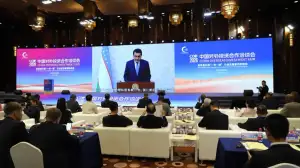
Photo from the archive of the Press Service of the President of Uzbekistan

Latest News


See all
Read also
Uzbekistan and Turkmenistan intend to expand cooperation in Book Publishing and Printing
International Youth Forum “Bridge of Friendship among Youth: Peace, Harmony and Cooperation” Held in Batken
Delegation of Uzbekistan to attend Fourth Inter-Parliamentary Forum of Central Asian States in Dushanbe