View from Dushanbe: Seoul summit is also significant for the further economic diversification of Central Asia
September 17, 2026. 15:00 • 3 min
• 100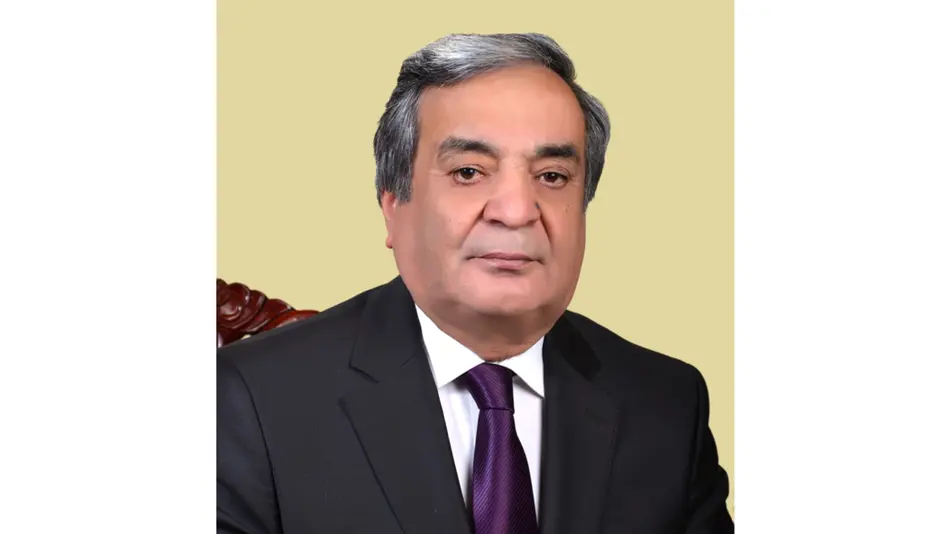
DUSHANBE, September 17. /Dunyo IA/. Professor of the Russian-Tajik (Slavonic) University Rakhmon Ulmasov commented for Dunyo IA on the outcomes of the state visit of the President of Uzbekistan to South Korea, which took place on September 13–16th:
- First summit at the level of heads of state “Republic of Korea – Central Asia” elevates South Korea's interaction with the five countries of the region to a new level, with Uzbekistan occupying a special place in the South Korean strategy as one of Seoul's key partners in our region.
Cooperation between Uzbekistan and South Korea covers industry, transport, digital technologies, resource extraction, and education. On the eve of the summit, the countries signed 13 cooperation documents, including in the fields of artificial intelligence, critical minerals and railway transport.
President of Uzbekistan also proposed to co-create a “New Silk Road” with South Korea, which could serve as a foundation for the further expansion of economic and technological ties.
One of the promising areas remains attracting South Korean investments into establishing modern enterprises, developing raw material processing, energy, digitalization and vocational education. This is particularly relevant for Uzbekistan in the context of the objective to transition from predominantly exporting raw materials to manufacturing and exporting products with higher added value.
Development of human resources capacity could also play an important role. Cooperation with South Korea in the field of education, vocational training and academic exchanges is capable of expanding opportunities for training specialists in high demand across modern economic sectors.
For the countries of Central Asia, the South Korean experience is of interest not only from the investment perspective but also in terms of technology implementation, industrial development, and the creation of skilled jobs. Concurrently, labor migration to South Korea demands compliance with local market requirements, including vocational training, language proficiency and visa conditions.
Seoul summit is also significant for the further economic diversification of Central Asia. For the region, cooperation with South Korea unlocks opportunities to attract investments and technologies, while the South Korean side is interested in resources, energy and new markets.
For Uzbekistan, the practical outcome of this interaction will be the implementation of the reached agreements – spanning from joint projects in the fields of artificial intelligence and transport to industrial development, human resources training and raw material processing.

Latest News

See all
Read also

View from Madrid: Dynamic development of Uzbek-South Korean relations is also of interest to the international community
Attitude from Baku: Significance of the State Visit of the President of Uzbekistan to South Korea extends far beyond bilateral relations
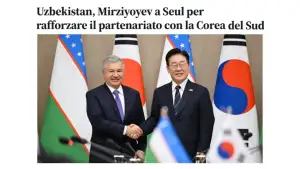
Italian Media provide extensive coverage of the State Visit of the President of Uzbekistan to the Republic of Korea and his participation in the “Central Asia – Republic of Korea” Summit