Duyshenkul Chotonov: Kyrgyzstan and Uzbekistan are jointly shaping a new model for the development of bilateral cooperation and regional interaction
July 30, 2026. 10:30 • 12 min
• 86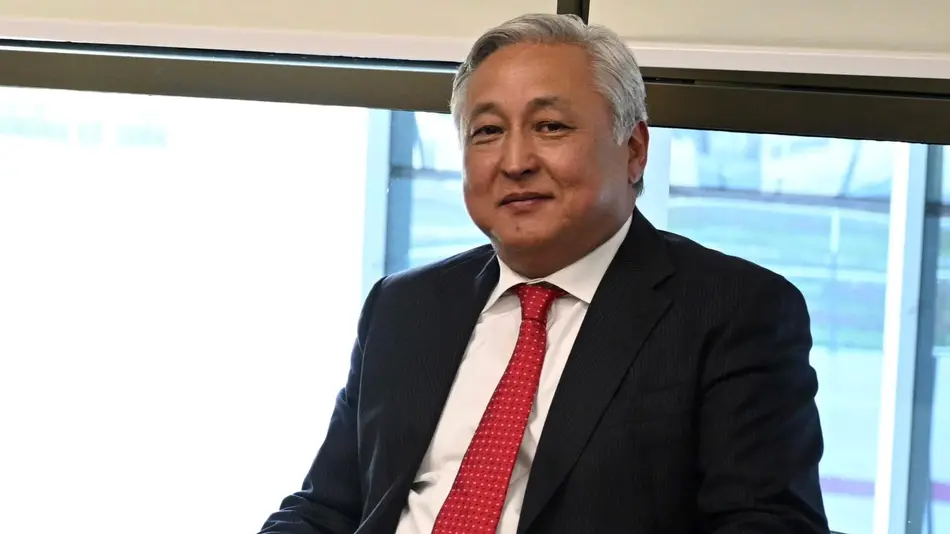
BISHKEK, July 30. /Dunyo IA/. On the eve of the state visit of the President of Uzbekistan Shavkat Mirziyoyev to Kyrgyzstan, Ambassador of Kyrgyzstan Duyshenkul Chotonov gave an exclusive interview to Dunyo IA correspondent.
– Mr. Ambassador, upcoming state visit of the President of Uzbekistan is regarded as one of the key events on the bilateral agenda. In your view, what new agreements and arrangements could determine the further development of the comprehensive strategic partnership between Uzbekistan and Kyrgyzstan?
– Undoubtedly, the upcoming state visit of the President of the Republic of Uzbekistan, His Excellency Shavkat Mirziyoyev, to the Kyrgyz Republic is of truly historic significance. We are confident that this visit will open a new chapter in Kyrgyz-Uzbek cooperation and contribute to the formation of a new architecture of partnership based on mutual trust, strategic proximity and shared interests.
We expect that, following the outcomes of the visit, new agreements will be reached aimed at further deepening practical cooperation in key areas, including trade and economic relations, investment, industry, transport and logistics, energy, cultural and humanitarian ties, as well as other priority sectors. Our countries are jointly advancing major infrastructure projects, including the construction of the China–Kyrgyzstan–Uzbekistan railway and the Kambar-Ata-1 Hydroelectric Power Plant.
An important component of the state visit is its comprehensive business and humanitarian agenda. This includes the Days of Culture of Uzbekistan in Kyrgyzstan, being held ahead of and during the visit, the regular Kyrgyz-Uzbek Business Forum, the Forum of Rectors of Higher Education Institutions of the two countries, as well as the recently held meetings of the Intergovernmental Commission, the Business Council, and the Kyrgyz-Uzbek Expert Council. Undoubtedly, all these events and their outcomes add substantial practical content to the visit and create a solid foundation for adopting new joint decisions.
A substantial package of bilateral documents covering cooperation across various key areas is being prepared for the upcoming visit. These agreements will open up additional opportunities for further strengthening mutually beneficial Kyrgyz-Uzbek partnership.
The most important point is that, today, Kyrgyzstan and Uzbekistan are jointly shaping a new model of bilateral cooperation and regional interaction based on trust, pragmatism and mutual benefit. I am convinced that the upcoming state visit of the President of Uzbekistan to Kyrgyzstan will provide a powerful impetus for further strengthening the multifaceted strategic partnership between the two brotherly states.
– Trade turnover between Uzbekistan and Kyrgyzstan is demonstrating record growth rates, while the Uzbek-Kyrgyz Development Fund has been supporting joint projects for several years. In your view, what initiatives could bring bilateral economic cooperation and mutual trade to a qualitatively new level in the coming years?
– According to official statistical authorities, trade turnover between our countries reached almost $1.2 billion in 2025, representing a 37 percent increase compared to the 2024 figure. During the first five months of 2026, bilateral trade amounted to $469 million, marking a 44 percent increase compared to the same period in 2025.
We consider it a realistic and important objective to increase this figure to $2 billion through joint efforts, by leveraging the potential of our economic partnership and maintaining an open and favorable business environment.
In June this year, the 12th meeting of the Joint Kyrgyz-Uzbek Intergovernmental Commission on Bilateral Cooperation was successfully held on the shores of Lake Issyk-Kul under the chairmanship of the heads of government of the two countries. We see that joint work within the framework of the Intergovernmental Commission makes a significant contribution to implementing all agreements and plans, primarily in the areas of trade, economic cooperation and investment.
Development of projects with the support of the Uzbek-Kyrgyz Development Fund is of particular importance. The Fund’s activities have become an important instrument for establishing joint ventures and attracting investment. I am confident that, going forward, the Fund will further expand its support for small and medium-sized enterprises, particularly in such areas as the textile industry, agricultural processing, production of construction materials, and modern technologies.
Agro-industrial sector also holds significant potential. Our countries have broad opportunities to expand cooperation in agriculture, processing of agricultural products and the introduction of advanced technologies. Combining these capabilities will enable the production of competitive goods not only for the domestic markets of the two countries, but also for export to other states across the region.
In addition, attention should be paid to the development of tourism, educational programs and technological exchanges. Economic partnership will become more sustainable when it is based not only on trade in goods, but also on the joint development of human capital.
For our part, we are ready to provide maximum support in expanding business contacts, establishing cooperation between enterprises of the two countries, supporting investment initiatives and promoting joint projects.
– The ongoing construction of the China–Kyrgyzstan–Uzbekistan railway is already being described as one of the most significant infrastructure projects in Eurasia. How could this new transport corridor influence the economies of our countries and their cooperation?
– One of the key factors in the further economic integration of Uzbekistan and Kyrgyzstan is the development of transport infrastructure. Today, we are witnessing significant progress in the implementation of the strategic China–Kyrgyzstan–Uzbekistan railway project, which has the potential to become the “Silk Road” of the modern era, creating new opportunities for trade, investment and strengthening regional connectivity.
Railway construction project is of great importance not only for our two countries, but also for the entire region. The railway line will connect the three countries, creating a new transport corridor between East and West. The implementation of the project will help reduce cargo delivery times, lower transportation costs and expand regional businesses’ access to international markets.
It is particularly important that this project will contribute to transforming Kyrgyzstan into a key transit hub of Eurasia, while providing Uzbekistan with additional opportunities to develop export routes and enhance logistics efficiency. In the long term, the railway will enable increased freight volumes and further strengthen economic connectivity between the countries.
According to expert estimates, following the launch of the railway, freight transportation volumes could reach approximately 5–8 million tons annually at the initial stage. In the future, as transport infrastructure develops and trade flows increase, this figure could grow to 13–15 million tons per year. These prospects highlight the significant economic potential of the project.
Undoubtedly, implementation of such a large-scale infrastructure initiative requires addressing a number of complex challenges. These include taking into account environmental considerations, ensuring the efficient use of land resources, aligning technical standards for railway infrastructure, as well as securing the project’s financial sustainability and importantly, ensuring public support.
I would like to emphasize that the implementation of the railway project is receiving special attention and strong support from the leaders of the participating countries. They view this initiative as an important element in strengthening regional connectivity, expanding trade and economic cooperation, and developing the region’s transport potential. High-level support creates the necessary conditions for effective coordination among all stakeholders and for the successful implementation of this strategic project.
– How do you assess the current level of cultural and humanitarian cooperation between Uzbekistan and Kyrgyzstan, and which areas do you consider the most promising today?
– Level of cultural and humanitarian cooperation between Kyrgyzstan and Uzbekistan can today be described as one of the most dynamic areas of bilateral relations in recent years. This sphere serves as a strong foundation for the entire framework of bilateral ties. Our countries are united by a shared history, linguistic affinity, common cultural values and centuries-old traditions of good-neighbourly relations, which are being translated into practice through an extensive calendar of joint events.
Over the past few months alone, a number of vibrant cultural exchanges have taken place. The troupe of the T.Abdyumomunov Kyrgyz National Academic Drama Theatre presented the play “Akyrky Kat” in Tashkent, dedicated to the family of Chyngyz Aitmatov and timed to mark the 100th anniversary of the renowned writer’s birth. The one-man performance “Kusa” was staged in Tashkent, Andijan and Bukhara, while the drama “Kyl Kypyrö” by Gulasal Aliyeva was translated into Uzbek and presented at the Bukhara Regional Theatre. The “Maqom” ensemble of the Babur Osh State Academic Uzbek Drama Theatre took part in international festivals in Khujand and Namangan. Uzbek filmmakers have actively participated in the international “Umut” Film Forum, the Bishkek International Film Festival, and other competitive programmes. Meanwhile, the Kyrgyz “Shattyk” dance ensemble won first place at the International Lazgi Dance Festival in Khiva.
On July 21st, 2026, the presentation of the book “New Uzbekistan: The Path of Shavkat Mirziyoyev” in its Kyrgyz-language translation was successfully held in Bishkek. State Secretary of the Kyrgyz Republic Arslan Koichiev noted that the publication represents a significant work reflecting the development trajectory of modern Uzbekistan, the reforms being implemented in the country, and transformations in the system of public administration. He emphasised that the translation of the book into the Kyrgyz language marks an important step towards further strengthening cultural, scientific and spiritual cooperation between the two brotherly peoples.
The organisation of mutual Days of Culture has become a valued tradition, bringing our peoples even closer together and serving as another testament to our shared spiritual heritage.
A significant unifying factor remains the rich literary legacy of our peoples. I would like to express particular appreciation for the sincere attention devoted in Uzbekistan to preserving the legacy of the great Kyrgyz writer Chingyz Aitmatov. We view this as a manifestation of profound respect for the Kyrgyz people and our shared spiritual history. For its part, Kyrgyzstan strives to preserve with the same care the memory of outstanding representatives of Uzbek culture.
Regarding the most promising directions, I would highlight the continuation of regular reciprocal Days of Culture and Days of Cinema, mutual tours of national theaters and musical groups, expansion of targeted quotas for student enrollment in creative higher education institutions of Bishkek, as well as the implementation of joint projects aimed at preserving the historical and cultural heritage of the region.
– Looking ahead to the next 10–15 years, how do you envision the Uzbek-Kyrgyz partnership? What joint achievements will our countries be able to take pride in during the coming decade?
– A special role in the development of Kyrgyz-Uzbek relations is played by the trusted and regular dialogue between President of the Kyrgyz Republic Sadyr Japarov and President of Uzbekistan Shavkat Mirziyoyev. It was precisely the political will and strategic vision of the leaders of the two states that enabled bilateral cooperation to reach a qualitatively new and high level across virtually all areas of interaction in a relatively short period of time.
Of course, a historic achievement was the completion of the delimitation of the Kyrgyz-Uzbek state border, a process that Kyrgyzstan and Uzbekistan had been working towards for many years. Today, the state border has become a border of friendship and good-neighbourliness, contributing to the strengthening of comprehensive ties between our countries.
Kyrgyzstan and Uzbekistan, alongside other neighbouring states, are committed to jointly building a common space of sustainable development, security and prosperity in Central Asia.
All decisions adopted by our leaders and governments contribute to the further growth of mutual trade, the development of industrial cooperation, the implementation of major investment and infrastructure projects, the expansion of transport and logistics routes, and the establishment of joint production facilities. These efforts will enhance competitiveness and strengthen the role of Central Asia as a key transport and economic hub of Eurasia.
Therefore, I believe that today Kyrgyz-Uzbek cooperation represents one of the key factors of regional stability. Our countries are already demonstrating an example of how common challenges can be effectively addressed and mutually beneficial initiatives advanced on the basis of mutual trust and good-neighbourly relations.
We are all striving to ensure that the younger generation lives in a region of opportunities for education, science, entrepreneurship, tourism and cultural exchange. The more direct contacts there are between people, the stronger the relations between our states become.
We look to the future of our relations with great optimism. I am confident that, in the decades to come, we will proudly speak of impressive economic achievements and large-scale projects implemented for the benefit of our countries and brotherly peoples.
– The First Informal Consultative Meeting of the Heads of State of Central Asia and Azerbaijan is being held amid growing international interest in the region. In your view, what strategic objectives are currently facing this format of cooperation?
– The First Informal Consultative Meeting of the Heads of State of Central Asia and Azerbaijan in Cholpon-Ata is taking place at a time when Central Asia is emerging as one of the most dynamically developing regions of Eurasia and is attracting increasing attention from leading global players.
In these circumstances, the primary task, in my view, is to ensure regional stability, preserve regional unity and give it practical substance.
In this context, the implementation of all important initiatives put forward by the heads of state during the previous Consultative Meetings of the Heads of State of Central Asia should contribute to the formation of a unified space of cooperation capable of independently shaping the regional agenda and presenting coordinated positions on the international stage.
As is known, the 7th Consultative Meeting of the Heads of State of Central Asia identified a number of concrete objectives, including strengthening the institutional foundations of regional cooperation, eliminating trade barriers and harmonising standards, launching joint production chains, transitioning from a raw-material-based model to processing and industrial partnership, creating a favorable investment climate, establishing a network of cross-border industrial hubs, as well as advancing digital transformation.
It should be noted separately that with the accession of Azerbaijan, this format has acquired a new dimension. This opens up significantly greater opportunities for the development of international transport corridors, trade and investment cooperation between Central Asia and the South Caucasus.
I would also like to particularly emphasise the adoption, within the framework of the 7th Consultative Meeting of the Heads of State of Central Asia, of the Appeal to the United Nations Member States regarding the candidacy of the Kyrgyz Republic for non-permanent membership of the United Nations Security Council for the 2027–2028 term.
Support for Kyrgyzstan’s candidacy by all Central Asian countries became a clear indication that the region is indeed capable of acting as a united force on key international issues. By speaking with a common voice, the countries of Central Asia have significantly strengthened their positions within the United Nations and created an important precedent for a coordinated diplomatic approach.
I believe that this is precisely where the work of this format should be focused - on developing as many forward-looking joint projects as possible across various areas that will deliver tangible results for our countries and peoples.

Latest News
See all
Read also
Kubanychbek Omuraliev: New Uzbekistan has become a model of successful systemic transformation
Aleksandr Ogorodnikov: Relations between Belarus and Uzbekistan are acquiring a strategic character