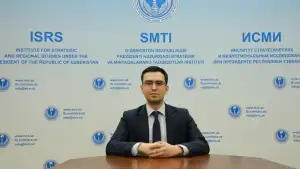
ISRS: A New Stage of Climate Cooperation Should Focus on Practical Implementation
October 08, 2026. 18:00 • 6 min
• 129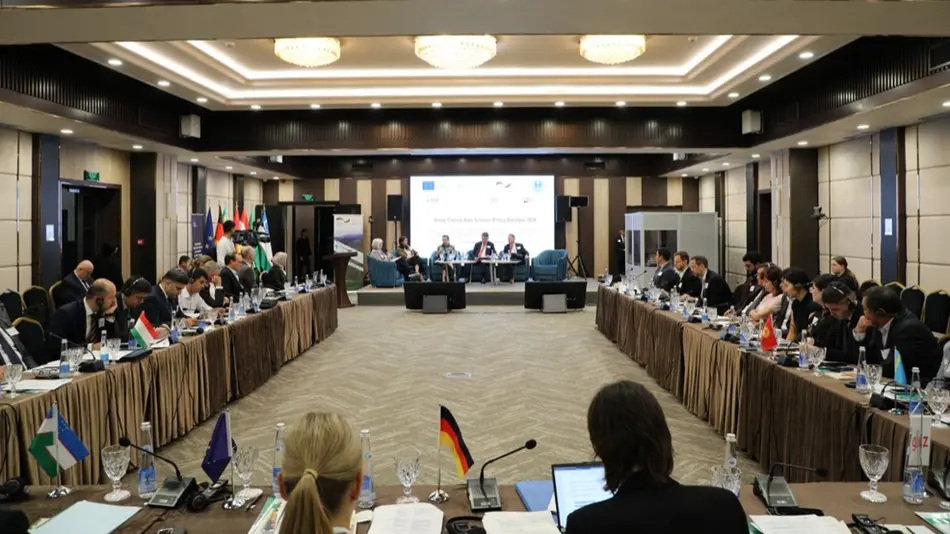
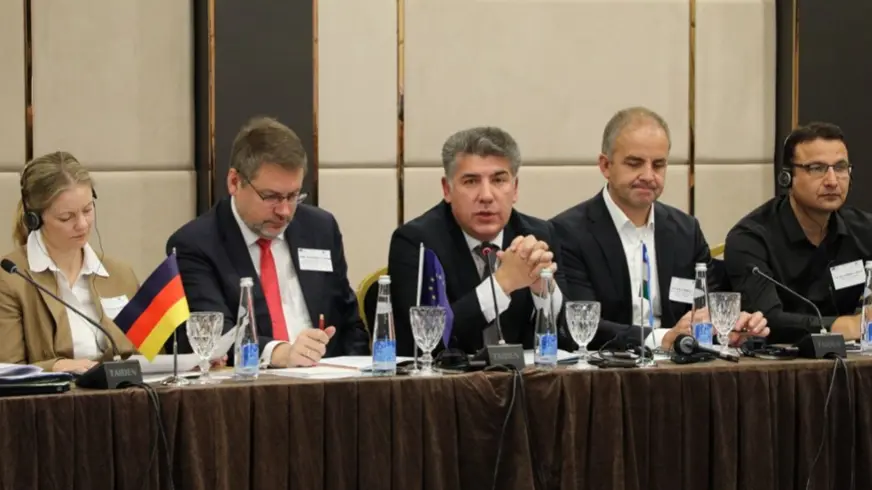
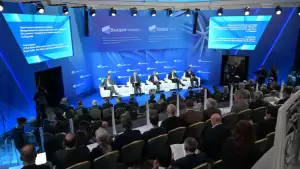
TASHKENT, October 8. /Dunyo IA/. A regional dialogue entitled “From Scientific Knowledge to Evidence-Based Climate Policy: Strengthening Regional Cooperation for Climate Resilience in Central Asia” began in Tashkent today. The event is organized by the German Society for International Cooperation (GIZ) jointly with the Institute for Strategic and Regional Studies under the President of Uzbekistan (ISRS), reports Dunyo IA correspondent.
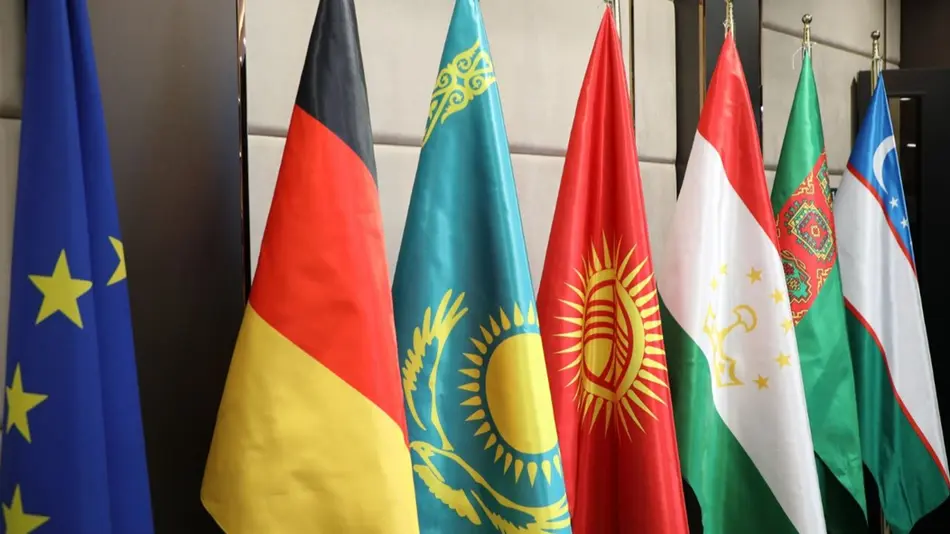
The two-day event has brought together representatives of relevant German federal institutions and research centers, government and research institutions from the Central Asian countries, as well as leading international organizations and development partners, including European Union, OECD, United Nations Environment Program, OSCE and other international partners.
Dialogue focuses on strengthening cooperation within the framework of the “Green Central Asia” Initiative, launched by the German Federal Foreign Office in 2020 together with the countries of the region, bringing together scientific expertise, public policy and regional cooperation.
One of its key outcomes has been the Regional Climate Change Adaptation Strategy for Central Asia, developed and endorsed by the five countries of the region. The initiative to adopt the Strategy was put forward by President of Uzbekistan Shavkat Mirziyoyev at the Fifth Consultative Meeting of the Heads of State of Central Asia, held in Dushanbe in September 2023.
Addressing the participants, Akramjon Nematov, First Deputy Director of the Institute for Strategic and Regional Studies under the President of Uzbekistan, noted that the climate agenda is of direct practical importance to Uzbekistan. Climate change can no longer be viewed solely as an environmental issue: it directly affects water, food and energy security, agriculture, economic resilience and the quality of life of the population.
According to him, Uzbekistan fully recognizes the scale of these challenges. This is why a fundamental transformation of state policy has taken place at the initiative of President Shavkat Mirziyoyev: environmental, climate and water-related issues have evolved from a set of separate sectoral concerns into a cross-cutting priority of the national development strategy, shaping approaches to the economy, water management, agriculture and territorial development.
Akramjon Nematov also highlighted the significant strengthening of the institutional foundations of this policy. Environmental rights have been enshrined in the Constitution, while a long-term strategic planning system has been established. National Committee of Uzbekistan for Ecology and Climate Change reports directly to the President. Scientific and professional capacity is also being developed, including the Central Asian University for Environmental and Climate Change Studies.
In his assessment, these transformations represent a shift in the very model of governance: from responding to consequences to preventing risks; from fragmented sectoral solutions to an integrated ecosystem-based approach; and from predominantly administrative methods to policies grounded in data, science, technology and economic incentives.
Akramjon Nematov particularly emphasized the approach of the President of Uzbekistan, according to which climate resilience begins above all with effective transformation at the national level. Thus, prior to 2017, water-saving technologies were applied across only 19,000 hectares; by early 2026, their coverage had reached 2.6 million hectares, or 60 percent of irrigated land, while annual water savings had reached 2.5 billion cubic metres. Over the past five years, around 6 GW of solar, wind and hydropower capacity has been commissioned, bringing the share of green energy in power generation to 30 percent. Under the “Yashil Makon” initiative, more than 1 billion trees and shrubs have been planted, while the level of greening increased from 8 percent in 2020 to 14.3 percent in 2025. More than 2 million hectares have also been covered by afforestation efforts on the dried seabed of the Aral Sea.
As Akramjon Nematov stressed, these figures are important not in themselves. They demonstrate Uzbekistan’s consistent transition towards a more resource-efficient and environmentally sustainable development model based on the rational use of water resources, expansion of clean energy, ecosystem restoration and the reduction of climate-related risks.
At the same time, ISRS representative emphasized that Uzbekistan’s climate policy is proactive not only at the national level, but also at the regional and global levels. Rationale behind this approach is clear: climate, water and environmental risks do not recognize national borders, and the effectiveness of national reforms therefore depends to a large extent on the ability of countries to develop joint solutions.
In Central Asia, President Shavkat Mirziyoyev has consistently proposed precisely such practical mechanisms. At the Samarkand Climate Forum, proposals were put forward to launch a Regional Program for the Implementation of Water-Saving Technologies, establish an annual “Green Belt of Central Asia” campaign, and create in Tashkent a Secretariat of the European Union’s “Water–Energy–Climate Change” Initiative to mobilize financing, technologies and expertise. The President also called for expanded cooperation with the EU under the Copernicus Programme to ensure continuous satellite monitoring of glaciers and early assessment of risks to mountain ecosystems.
At the same time, Uzbekistan is consistently elevating the region’s climate agenda to the global level. At COP29, President of Uzbekistan proposed establishing an International Centre for Climate Loss and Damage Assessment, developing under the auspices of the United Nations a Declaration on Commitments to Ensuring the Health and Environmental Security of River Ecosystems, establishing a Regional Genetic Resources Bank, and creating an Alliance of Global Climate Capitals, with its first forum to be held in Tashkent.
According to Akramjon Nematov, Central Asia has now reached a stage where the main task is no longer so much the development of new framework documents as the practical implementation of the agreements already reached. In other words, the regional climate agenda needs to move from developing approaches to their systematic implementation.
In this regard, Akramjon Nematov outlined six practical areas of action:
First, to establish an interoperable regional system of climate and hydrometeorological data based on comparable methodologies, information exchange and joint risk monitoring.
Second, to translate the Regional Climate Change Adaptation Strategy into a portfolio of concrete projects with clear timelines, designated implementing institutions and measurable indicators.
Third, to accelerate joint programmes on water conservation, cryosphere monitoring, drought management and early warning systems, while strengthening the “water–energy–food–ecosystems nexus”.
Fourth, to make human-capital development and scientific cooperation a regional priority by expanding joint educational programmes and academic mobility.
Fifth, to develop climate, green and blue finance mechanisms, while more actively engaging the private sector, development banks and international financial institutions in the implementation of water and climate-related projects.
Sixth, to strengthen the ability of the Central Asian countries to develop coordinated positions where their interests converge, while respecting the national priorities of each country.
As Akramjon Nematov noted, this is where the practical value of “Green Central Asia” lies: it brings together science, public policy, international expertise and investment opportunities, making it possible to move from understanding risks to joint solutions, and from solutions to projects and investment.

Latest News

See all
Read also
Akramjon Nematov: Central Asia is emerging as an independent center of cooperation in an emerging multipolar

Abdusamat Khaydarov: Over the years of Independence, Uzbekistan has developed its own system of diplomatic education

Saida Mirziyoyeva: Perpetrator will face the harshest punishment available under the law