Eldor Aripov: Berlin played an important role in shaping the European Union’s modern policy toward Central Asia
April 16, 2026. 16:00 • 5 min
• 294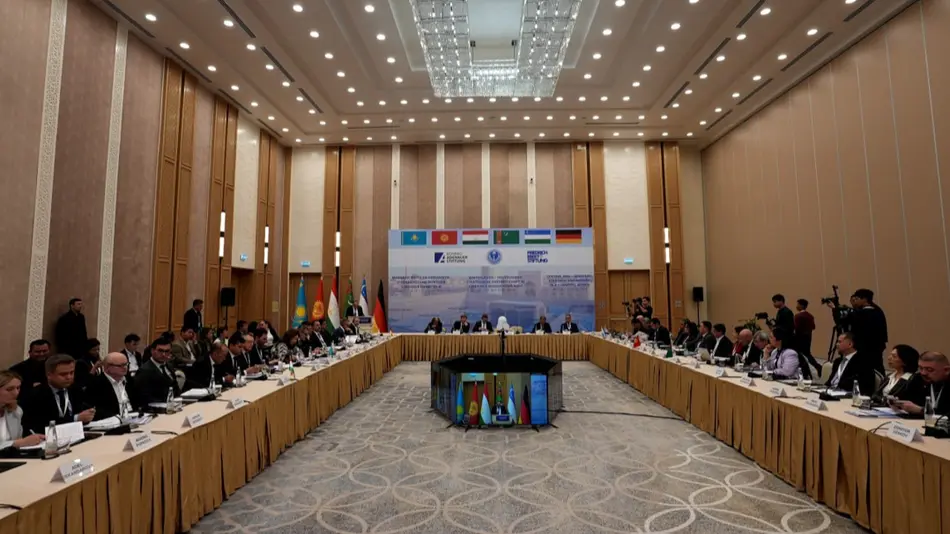
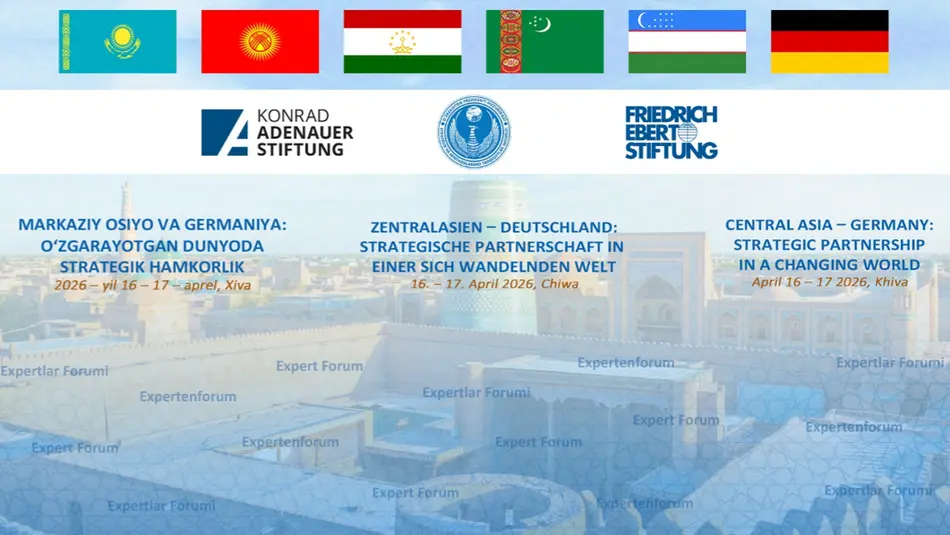
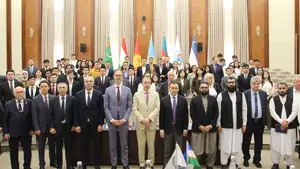
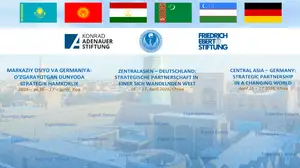
KHIVA, April 16. /Dunyo IA/. Today, in the city of Khiva, the opening of the inaugural expert forum “Central Asia–Germany” was held, marking a significant milestone in the development of interregional dialogue and the formation of a new architecture of cooperation between the countries of Central Asia and Germany, reports Dunyo IA correspondent.
The event, organized by the Institute for Strategic and Regional Studies under the President of Uzbekistan (ISRS) jointly with the Konrad Adenauer Foundation and the Friedrich Ebert Foundation, brought together representatives of expert circles, international organizations, and leading think tanks, confirming the high level of mutual interest in deepening the partnership.
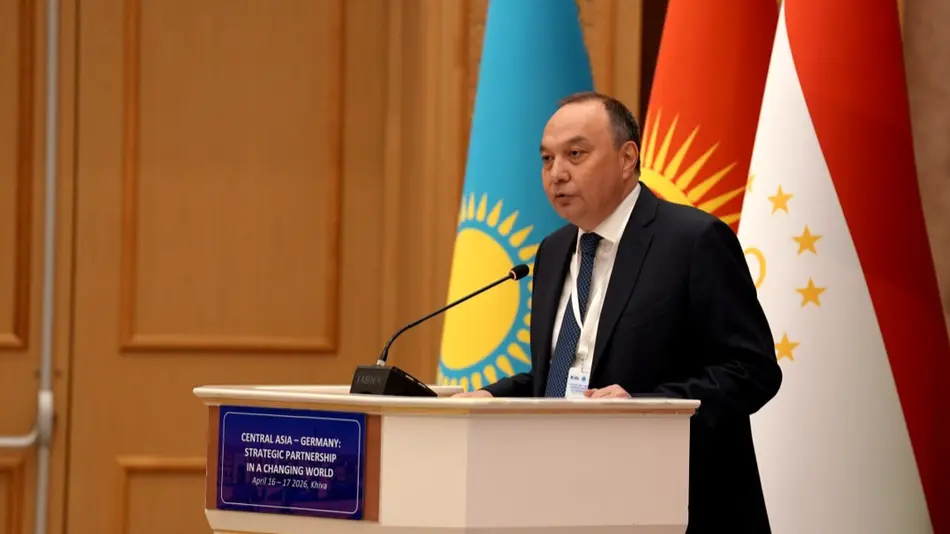
Speaking at the opening ceremony, Eldor Aripov, Director of ISRS under the President of Uzbekistan, emphasized the symbolic importance of holding the forum in Khiva — a city with historical ties to the German people. He noted that as early as the 19th century, a community of German Mennonites had settled in the region and made a significant contribution to the development of Khorezm, including the introduction of advanced technologies, the development of crafts, and the early growth of photography and cinema. “This historical experience clearly shows that where culture and knowledge come together, development inevitably follows,” he said.
On the contemporary agenda, Eldor Aripov emphasized that the launch of the “Central Asia–Germany” format is a natural reflection of the profound transformation taking place across the region. In his view, “Central Asia is steadily moving beyond its former status as a periphery of global processes and is emerging as a dynamically developing hub of economic activity and cooperation in Eurasia.”
According to Eldor Aripov, the combined gross domestic product of the region’s countries already exceeds $400 billion, while average annual growth rates stand at around 6%, significantly higher than global averages. He noted that this momentum has been made possible by a qualitative strengthening of intra-regional ties — including growing mutual trade, increased investment activity, and the development of industrial cooperation. “The region’s economy is increasingly functioning as a coordinated system,” the ISRS Director said, pointing to the emergence of cross-border clusters and the development of integrated production chains.
Particular attention was given by the Uzbek expert to the growing importance of Central Asia in global logistics. Eldor Aripov emphasized that, amid the instability of maritime routes, overland corridors across Eurasia are gaining renewed relevance, with the region emerging as a key link in ensuring resilient transport connectivity between Europe and Asia.
Speaking about long-term growth drivers, the ISRS Director also highlighted the region’s demographic potential. According to his assessment, Central Asia’s population is expected to approach 100 million by 2050, while the region remains one of the youngest in the world. “This is not just a demographic trend — it is a powerful development resource that drives demand for technology, education, and innovation,” he noted.
A key part of the speech was devoted to Uzbekistan’s role in strengthening regional cooperation. Eldor Aripov noted that, thanks to the consistent and forward-looking policy of the President of Uzbekistan, Shavkat Mirziyoyev, Central Asia has seen the emergence of a fundamentally new climate — one defined by trust, good neighbourliness, and openness. According to him, this has been a decisive factor in the region’s shift toward a more mature model of engagement with external partners, based on equality, a balanced consideration of interests, and a long-term strategic vision.
In this context, Germany is viewed as one of the region’s key partners. Eldor Aripov recalled that Berlin played an important role in shaping the European Union’s modern policy toward Central Asia, acting as an initiator in the development and updating of the relevant EU strategy. “Germany today is one of the architects of Europe’s presence in the region,” he emphasized.
Speaking about bilateral relations, the ISRS Director noted their steady positive momentum. According to him, by the end of 2025, trade turnover between Uzbekistan and Germany had exceeded $1 billion, while the portfolio of joint investment projects had reached more than $10 billion. More than 200 enterprises with German capital are operating in the country, with cooperation increasingly shifting toward technological partnership. “Around 55% of Germany’s exports consist of high-tech equipment and engineering solutions, which reflects the complementarity of our economies,” Eldor Aripov said.
Among the priority areas for further cooperation, the ISRS Director highlighted the establishment of specialized industrial zones with special conditions for the development of the machinery, chemical, and electrical industries; the joint exploration and processing of critical mineral resources; the development of human capital and labour mobility mechanisms; the expansion of cooperation in environmental protection and water resource management; as well as the formation of a structured partnership model in the digital economy and IT sector.
As the ISRS Director emphasized, the synergy between Germany’s technological potential and Central Asia’s resource, demographic, and logistics base creates unique conditions for building a long-term and sustainable partnership. “This is not merely about cooperation, but about jointly shaping a new architecture of engagement that brings together technology and resources, investment and human capital,” he said.
In conclusion, Eldor Aripov expressed confidence that the forum in Khiva will become a starting point for regular expert dialogue, strengthening professional contacts, and developing new initiatives that could provide additional impetus to the development of cooperation between Central Asia and Germany.
Hosting this forum in Uzbekistan confirms the country's strengthening status as a key platform for developing strategic decisions and advancing international expert cooperation. Its results form a solid foundation for further expanding multilateral cooperation.

See all