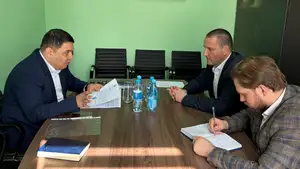
Eldor Aripov: Uzbekistan-Azerbaijan relations reach historic heights
March 13, 2026. 18:30 • 5 min
• 873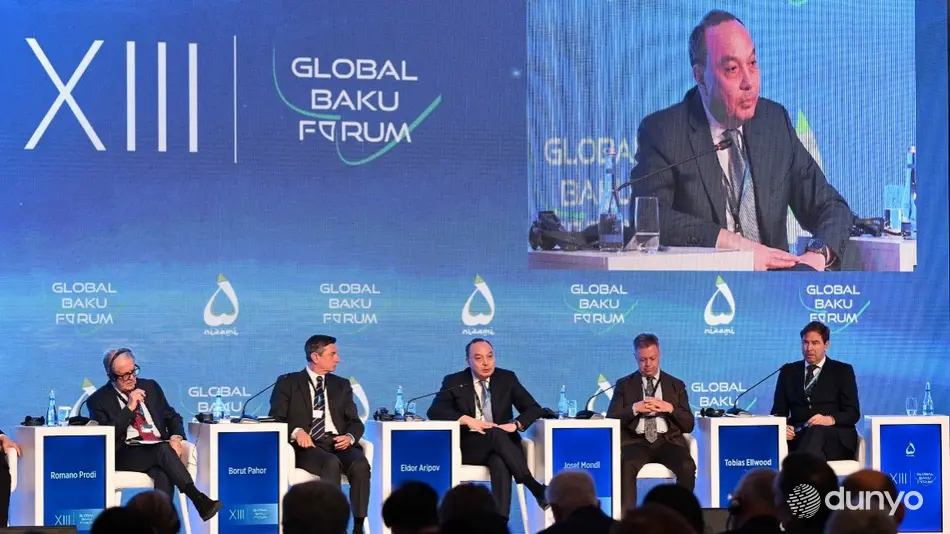
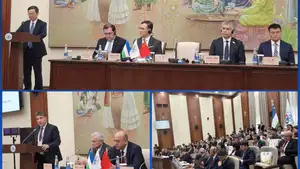
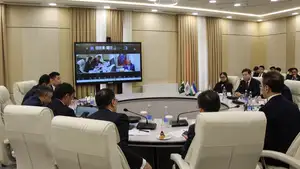
BAKU, March 13. /Dunyo IA/. The XIII Global Baku Forum, organized by the Nizami Ganjavi International Center, was held in Baku on March 12-14 of this year, reports Dunyo IA correspondent.
Approximately 400 foreign participants attended its sessions, including current and former heads of state, members of international organizations, and experts.
The forum was held under the motto “Building Bridges in a Divided World” and focused on discussing key trends in the transformation of the international system, the crisis of multilateralism, and issues of global security and sustainable development.
Key participants in the event included Presidents of Azerbaijan, Ilham Aliyev; Albania, Bajram Begaj; Montenegro, Jakov Milatović; and the Democratic Republic of Timor-Leste, José Ramos-Horta, as well as UN Deputy Secretaries-General Miguel Ángel Moratinos and Atul Khare, UNCTAD Secretary-General Rebeca Grynspan, WHO Director-General Tedros Adhanom Ghebreyesus and others.
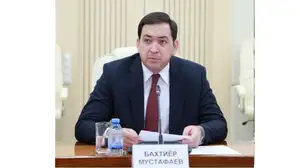
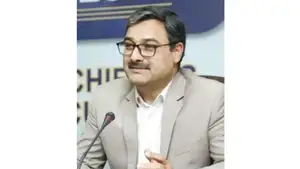
In his speech at the Forum's plenary session and comments to Azerbaijani media, Eldor Aripov, Director of the Institute for Strategic and Regional Studies under the President of Uzbekistan (ISRS), noted that relations between Uzbekistan and Azerbaijan are at a historic high. He described them as a systemic partnership based on political trust, economic pragmatism and shared long-term interests.
Eldor Aripov emphasized the high level of trusting personal relations between the two countries' leaders, which create a solid political foundation for further deepening cooperation. “The bilateral agenda is developing consistently and comprehensively. Uzbek-Azerbaijani cooperation encompasses not only traditional areas such as trade, industry and energy, but also new areas, including digital technologies, innovation, and modern forms of industrial cooperation”, - ISRS Director stated.
During his speech at the session “China and the Global Governance Initiative”, - Eldor Aripov drew attention to the deepening crisis of the global governance system. He stated that existing international mechanisms are increasingly proving incapable of ensuring coordinated decision-making among the world's leading powers.
Under these conditions, the head of the ISRS noted, the international community is effectively faced with a serious choice regarding the future development trajectory of the global system. “Either we succeed in restoring effective mechanisms of multilateral cooperation, or the world order will be shaped by a balance of power and the logic of strategic deterrence - trends we are already observing in many regions of the world”, - he stated.
Against this backdrop, Eldor Aripov emphasized, it is especially important not to miss opportunities for constructive dialogue and the search for compromises.
According to the Uzbek expert, the initiatives proposed by Beijing make a significant contribution to the development of the international debate on the future of the global system. Their meaningful discussion could contribute to the development of new approaches to strengthening multilateral cooperation and the search for balanced solutions to key global challenges of our time.
Director of the Institute elaborated that China is presenting not just an alternative view of the global order, but a fundamentally different governance philosophy. “Beijing advocates universal principles, where the voice of smaller nations carries equal weight to that of major powers, and international law is applied without double standards”, - he stressed.
Expanding on this point, Eldor Aripov presented an assessment of China’s evolving role in Central Asia. He noted that in recent years, China has become a key economic partner for the countries of the region.
Thus, by the end of 2025, the volume of trade between China and the Central Asian states had exceeded $100 billion. At the same time, the intensification of economic interaction has been accompanied by steady growth in investment cooperation. Over the past ten years, the volume of Chinese direct investment in the region’s countries has more than doubled, reaching almost $40 billion, he noted.
Eldor Aripov also noted the development of a new institutional architecture for cooperation. While cooperation with China was previously primarily conducted within the Shanghai Cooperation Organization, a separate “Central Asia – China” format has now been established, along with a permanent secretariat.
According to the director of the Institute, infrastructure development and transport connectivity represent a key area of cooperation between Central Asia and China. He cited the construction of the China – Kyrgyzstan - Uzbekistan railway as an example. According to him, this project has significant potential for integration with the Middle Corridor, which connects Central Asia via the Caspian Sea to Azerbaijan, Georgia, Turkiye and further on to European markets.
As Eldor Aripov noted, “the infrastructure being developed with China’s involvement is helping to integrate the region into wider transcontinental networks and opening it up to a wide range of partners, including international investors, logistics operators and financial institutions”.
“Such connectivity creates new opportunities, and these opportunities, in turn, strengthen strategic autonomy”, - said the Institute’s director.
At the same time, Eldor Aripov emphasised that the long-term success of this model depends largely on the transparency of projects, their compatibility with other international institutions and respect for national development strategies.
In summary, ISRS Director noted that the nature of this cooperation and China’s growing role in Central Asia reflect a broader transformation of the global governance system, which is becoming more pluralistic and interconnected.
Eldor Aripov pointed out that Central Asia is currently engaging actively with Russia, China, Europe, Turkiye, the Gulf states and international institutions. At the same time, it remains essential that the emerging mechanisms of cooperation complement one another rather than compete, and that the development of partnerships contributes to the strengthening of sovereignty. “And Central Asia’s experience shows that such a balance is entirely possible”, - he concluded.
It should be noted that the Nizami Ganjavi International Centre is a leading Azerbaijani think tank specialising in international relations, regional security and intercultural dialogue.
A distinctive feature of this platform is its multi-level format, bringing together current and former heads of state, representatives of international organisations and the expert community.

See all