
“Forschung und Wissen”: Finds at the Obi-Rakhmat Rock Shelter in Uzbekistan offer new insights into the history of ancient hunting technologies
September 23, 2026. 14:55 • 2 min
• 145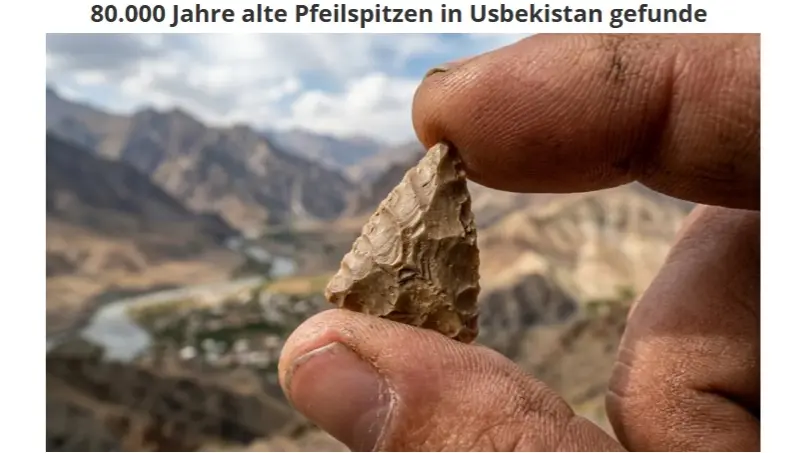
BERLIN, September 23. /Dunyo IA/. Archaeological finds at the Obi-Rakhmat rock shelter in Tashkent Region offer new insights into the development of long-range weapon technologies during the Palaeolithic, reports Dunyo IA correspondent, citing with the German popular-science publication “Forschung und Wissen”.
In the course of research involving specialists from Uzbekistan, France and Russia, lithic microliths from the oldest layers of the archaeological site, dating back approximately 80,000 years, were studied. Measurement tests and microscopic traceological analysis showed that the small triangular flakes, weighing less than two grams, bear characteristic impact damage caused by high-velocity impacts. According to the researchers, their size and weight are consistent with light projectile points used on shafted throwing weapons, including arrows.
If their use as arrowheads is ultimately confirmed, these artefacts would predate comparable finds from Ethiopia, dating back 74,000 years, Mandrin Cave in France, dating back 54,000 years, and Sri Lanka, dating back 48,000 years.
As “Forschung und Wissen” notes, the research provides a scientific basis for studying Central Asia not only as a transit region for the migration of ancient populations, but also as one of the key centres for the emergence of complex technologies and innovations in human history.

Latest News




See all
Read also


“Liga Hispano Arabe”: Uzbekistan and Egypt strengthen integration between Research Centers and the Private Sector in the Livestock Sector