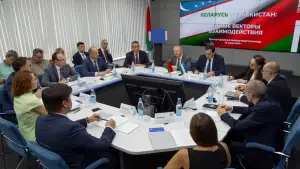
Primary task of cooperation between Uzbekistan and Kyrgyzstan is becoming the jointly shaping of the future
July 22, 2026. 19:15 • 4 min
• 70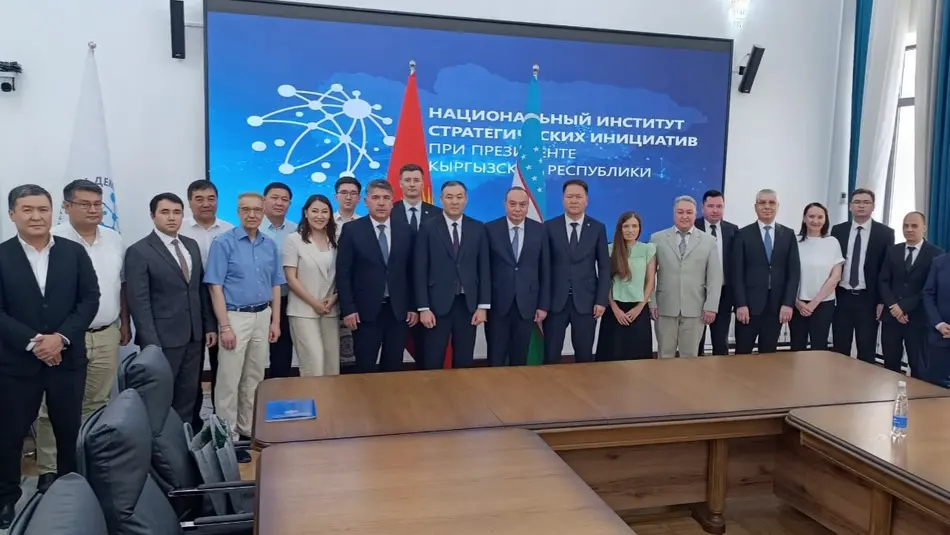
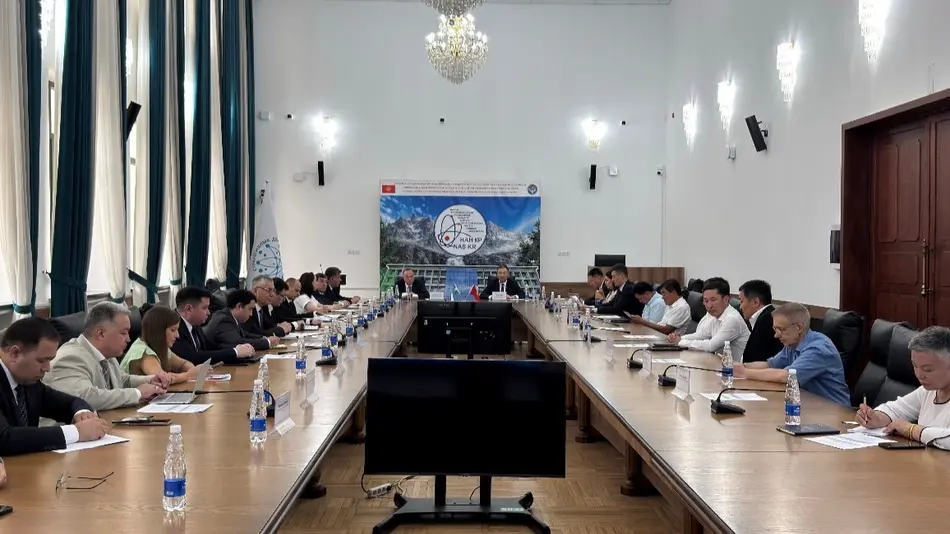
BISHKEK, July 22. /Dunyo IA/. Yesterday, Bishkek hosted the Second Meeting of the Uzbekistan–Kyrgyzstan Expert Council under the theme “Uzbekistan and Kyrgyzstan: Strategic Partnership and Prospects for Its Further Development”, reports Dunyo IA correspondent.
Uzbek delegation included representatives of the country’s leading think tanks, relevant ministries and government agencies, sectoral organizations and the business community.
Opening the meeting, Eldor Aripov, Director of the Institute for Strategic and Regional Studies (ISRS) under the President of the Republic of Uzbekistan, and Shumkarbek Adilbek uulu, Director of the National Institute for Strategic Initiatives under the President of the Kyrgyz Republic, underscored the Council’s growing importance as a platform for bilateral dialogue. They noted that the Expert Council serves not only to monitor and assess the current state of bilateral relations but also to develop forward-looking initiatives aimed at deepening the strategic partnership between the two countries.
Eldor Aripov emphasized that Uzbekistan and Kyrgyzstan have entered a qualitatively new phase of cooperation, in which the primary task is no longer to resolve the issues inherited from the past but to shape a shared vision for the future. The high level of mutual trust achieved in recent years, he noted, provides a solid foundation for implementing large-scale joint projects and building a common space for sustainable development.
The meeting agenda focused on strengthening the strategic partnership, coordinating approaches to regional stability and security, expanding trade and economic cooperation, promoting industrial collaboration and entrepreneurship, and enhancing transport and energy connectivity.
Particular attention was devoted to the dynamic growth of bilateral economic cooperation. Participants noted that trade is experiencing not only rapid expansion but also profound structural transformation. While bilateral trade amounted to approximately USD 50 million in 2016, it reached USD 1.2 billion last year - an almost twenty-four-fold increase. Moreover, trade grew by a further 40 percent during the first half of the current year. It was also emphasized that the leaders of the two countries have set a new target of increasing bilateral trade to USD 2 billion.
The structure of bilateral trade has also changed significantly. Whereas it was previously dominated by agricultural products, it is now largely composed of higher value-added goods. Around 85 percent of exports consist of finished products (37 percent), industrial goods (36 percent), chemical products, and foodstuffs.
Participants also highlighted the important role played by the Intergovernmental Commission, which has already held twelve meetings, the latest taking place on 22–23 June 2026 in Cholpon-Ata, as well as by the Business Council, both of which have provided strong momentum for bilateral economic cooperation. The Uzbekistan–Kyrgyzstan Development Fund and the expanding network of joint ventures were likewise recognized as key drivers of an improved business environment.
Participants also emphasized the growing intensity of interregional cooperation. The four meetings of the Council of Heads of Border Regions have laid the groundwork for launching a new format of engagement - a full-scale Forum of the Regions of Uzbekistan and Kyrgyzstan, scheduled for the fourth quarter of 2026.
Special attention was given to the implementation of strategically important infrastructure projects for the entire Central Asian region, including the China–Kyrgyzstan–Uzbekistan railway and the Kambarata-1 Hydropower Plant. Participants stressed that ensuring the timely implementation, predictability, and security of these projects would enhance the competitiveness of the region as a whole.
Meeting concluded with participants highlighting that the solid foundation of bilateral relations is further reinforced by active cultural and humanitarian cooperation, as well as record levels of tourism. In 2025, Uzbekistan welcomed 3.31 million visitors from Kyrgyzstan, while 1.53 million Kyrgyz citizens visited the country during the first five months of 2026 alone.
Uzbek delegation’s visit to Bishkek also includes meetings between representatives of relevant ministries and government agencies, an expert seminar on Central Asian regional identity, and discussions with business representatives from both countries.
Following the meeting, Institute for Strategic and Regional Studies (ISRS) under the President of Uzbekistan and the National Institute for Strategic Initiatives under the President of the Kyrgyz Republic signed a Cooperation Plan. The document provides for the further development of expert dialogue, the implementation of joint research projects, the exchange of analytical materials, and the regular organization of conferences, seminars and other expert-level events.

Latest News




See all