How China–Kyrgyzstan–Uzbekistan railway is redrawing the economic map of the continent
August 05, 2026. 20:00 • 14 min
• 62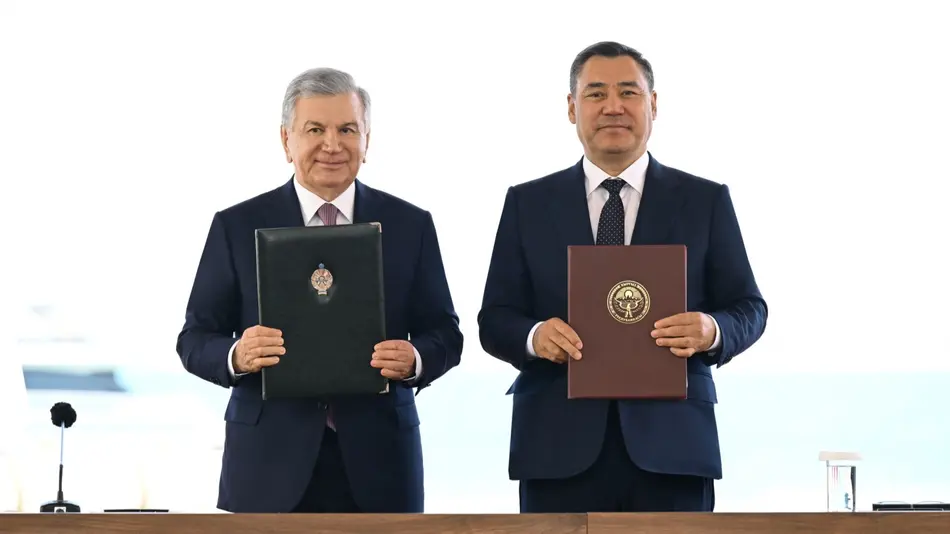
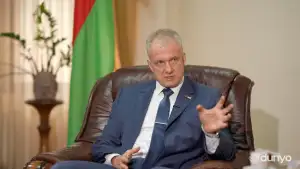
TASHKENT, August 5. /Dunyo IA/. Interview of Akramjon Nematov, First Deputy Director of the Institute for Strategic and Regional Studies under the President of Uzbekistan (ISRS), with Dunyo IA.
- The historic state visit of the President of Uzbekistan to the Kyrgyz Republic has once again drawn considerable attention within the expert community to the construction of the China–Kyrgyzstan–Uzbekistan railway. What place did this project occupy during the high-level talks in Bishkek and which aspects were at the center of the discussions between the two leaders?
- Indeed, recent state visit was truly a historic event, opening a new chapter in the development of Uzbekistan–Kyrgyzstan relations. The high-level talks took place in an atmosphere of unprecedented trust, mutual understanding, and strategic partnership, confirming that bilateral cooperation has advanced to the fundamentally new level of an alliance.
A central item on the agenda was the practical implementation of what is already widely referred to as the “project of the century” - the China–Kyrgyzstan–Uzbekistan railway. Following many years of discussion, the project has entered the active construction phase and the two leaders held detailed discussions on the progress of this unprecedented undertaking.
Of particular significance was President of Uzbekistan Shavkat Mirziyoyev's emphasis on the need to accelerate construction of the China–Kyrgyzstan–Uzbekistan railway, describing it as one of the key drivers of the region's long-term economic development.
In essence, this is far more than another infrastructure project. A new architecture of Eurasian connectivity is taking shape - one that will enable Central Asia to strengthen its strategic agency, expand access to global markets, and diversify its external economic ties. This explains why the two leaders devoted such close attention to coordinating the practical implementation of the project and to the further development of regional transport infrastructure.
It is equally important to note that, thanks to close coordination at the highest political level, construction is progressing ahead of the original schedule. Although initially planned to take at least five years, the project is now expected to be completed one year earlier than originally anticipated.
This reflects an exceptional level of resource mobilization. More than 10,000 specialists and over 7,000 pieces of heavy construction equipment are already engaged on site. The railway is opening an entirely new chapter in the development of Central Asia, fundamentally reshaping both the geopolitical and geoeconomic landscape of the region.
- What is the geoeconomic significance of this corridor for Eurasia as a whole, and how will it transform the position of the region, particularly Uzbekistan and Kyrgyzstan?
- Project fundamentally redraws the transport and logistics map of Eurasia by creating the shortest and most efficient overland route between East and West a modern “Iron Silk Road”.
Traditionally, Central Asia has been viewed in global trade primarily as a landlocked region with limited transit potential. The commissioning of this railway will transform the region from a logistical cul-de-sac into one of the principal crossroads of Eurasian trade.
Projected annual capacity of the new railway will reach 15 million tonnes. To appreciate its scale, it is worth noting that the entire railway network of Kyrgyzstan transported 10.5 million tons of cargo in 2025. In other words, once the railway reaches its designed capacity, the China–Kyrgyzstan–Uzbekistan railway alone will be capable of handling a greater freight volume than the current throughput of Kyrgyzstan's entire national railway system.
For Uzbekistan, project represents a major step toward consolidating its position as a regional transit hub, providing direct and secure access to the markets of South Asia, the Middle East and, ultimately, Europe.
For Kyrgyzstan, it will facilitate the large-scale economic integration of previously hard-to-access mountainous regions, create new jobs, and stimulate national economic development.
Railway will shorten the route from China to Europe and the Middle East by approximately 900 kilometres, while reducing cargo delivery times by seven to eight days, thereby decreasing dependence on the limited number of northern and maritime transport corridors.
However, project's significance extends well beyond shorter routes and faster delivery times. Railway is becoming a key element in shaping the new economic geography of Central Asia. It will transform the region from a passive transit area into an active organizer of Eurasian transport flows. This fundamentally changes the position of our countries within the global economy.
- How does this railway fit into the broader architecture of Eurasian connectivity alongside the Middle Corridor, Trans-Afghan routes and transport corridors through Iran?
- Rather than competing with other transport routes, it complements them by forming a single, integrated network of connectivity. First, the railway will connect directly with the Middle Corridor or Trans-Caspian International Transport Route (TITR), creating a seamless freight corridor linking China through Kyrgyzstan and Uzbekistan, across the Caspian Sea and onward to the Caucasus and Europe.
Second, by integrating with the emerging Trans-Afghan transport projects and Iran's transport network, the railway will create a powerful north-south and east-west transport crossroads. Central Asia will become a pivotal hub for continental trade, where cargo flows from China to South Asia, the Middle East, and Europe converge.
Looking at the broader picture, it becomes clear that integrating the China–Kyrgyzstan–Uzbekistan railway with the Middle Corridor, Trans-Afghan route and transport links through Iran will establish an entirely new system of Eurasian connectivity.
Central Asia will no longer depend on just one or two external transport routes. Instead, it will gain the flexibility to redistribute trade flows across multiple corridors simultaneously. This will significantly strengthen the region's economic resilience while enhancing its strategic autonomy.
The greater the number of complementary transport corridors available to Central Asia, the greater its ability to determine its own development trajectory and the less vulnerable its economies will be to external geopolitical disruptions.
That is why this project should be viewed not merely as a transport initiative, but as a long-term investment in the resilience of Central Asia as an integrated economic space.
- You mentioned that, in the future, this corridor is expected to connect with the Trans-Afghan route. How is the implementation of the Termez–Naibabad–Maidanshahr–Logar–Kharlachi railway progressing today, and what impact could the success of the “project of the century” have on it?
- Work on the Trans-Afghan railway is also moving forward steadily. Active practical efforts are underway, and following the completion of field surveys, the feasibility study for this major transport corridor is expected to be finalized by the end of the year.
At the same time, the rapid pace of construction of the China–Kyrgyzstan–Uzbekistan railway and the scale of resources committed to the project clearly demonstrate Uzbekistan's capacity to successfully implement some of the world's most complex cross-border infrastructure projects.
The success of this “project of the century” significantly strengthens our engineering and organizational capabilities, demonstrates the country's unwavering political commitment and serves as a powerful catalyst for future initiatives.
Practical implementation of the China–Kyrgyzstan–Uzbekistan railway has established an exceptionally high benchmark in terms of both pace and execution, creating strong positive momentum for advancing the Trans-Afghan railway, which will provide Central Asia with the shortest overland access to the ports of the Indian Ocean.
- Some observers argue that the railway will primarily serve as a transit corridor. Will it also become a driver of industrial development and economic growth, particularly in the Fergana Valley?
- It is a misconception to view the railway solely as a transit pipeline for foreign goods. The project has been designed as both a multimodal transport corridor and an industrial development framework. Alongside its transit function, the railway will become a powerful catalyst for the development of domestic industry and manufacturing. Growth zones are already emerging around the railway's key junctions.
A good example is the construction of the Makmal freight transfer station in Kyrgyzstan. It is being designed not merely as a technical railway facility but as a fully-fledged regional transport and logistics hub, incorporating cargo terminals, warehouses, manufacturing and processing facilities, and a wide range of service infrastructure.
Industry will benefit from reliable and efficient logistics for both raw materials and finished products, reducing transportation costs while enhancing competitiveness. The Fergana Valley will be among the principal beneficiaries of the project.
As one of the most densely populated and economically dynamic regions of Central Asia and historically the heart of the region - Fergana Valley has been presented with a unique opportunity to reclaim the pivotal role it played for centuries.
Historically, some of the most important branches of the Great Silk Road passed through this region. Today, thanks to the new railway, the Fergana Valley is once again becoming a center of Eurasian connectivity. Rather than remaining on the periphery of the regional transport system, the valley will evolve into a major production, logistics, and investment hub for the entire continent.
Running through Kashgar, Torugart, Arpa, Makmal, Jalal-Abad and Andijan, the railway will connect the key nodes of this macro-region, attracting investment, revitalizing cross-border trade and removing longstanding logistical bottlenecks. This fundamentally transforms the development model of border regions. Instead of peripheral territories, they will become dynamic zones of economic growth, industrial cooperation and business activity.
Ultimately, these developments elevate Uzbek–Kyrgyz relations to an entirely new level of alliance, where jointly overcoming some of the world's most demanding engineering challenges in the high mountains fosters profound mutual trust and transforms the border into a zone of peace and shared prosperity.
- Will this corridor also be used for passenger transport and what impact could it have on tourism and business?
- From the outset, the project has been designed not only as a freight corridor but also as a passenger railway. Its technical specifications provide for passenger train speeds of up to 120 km/h, even in the challenging mountainous terrain. In practical terms, this represents a genuine transformation. Businesspeople, engineers, and executives will be able to travel quickly and comfortably between the major commercial centers of China, Kyrgyzstan and Uzbekistan, helping to create a more integrated investment environment.
It is worth recalling that the number of joint ventures between Uzbekistan and Kyrgyzstan has already reached 450, and the launch of the railway is expected to stimulate business activity many times over. The railway will also connect the spectacular mountain landscapes of the Tian Shan, iconic destinations such as Issyk-Kul, the historic cities of the Fergana Valley, as well as Samarkand and Bukhara, through a single high-speed rail network. Tourists will be able to cross borders within a matter of hours, generating a substantial multiplier effect for tourism, the service sector, and people-to-people exchanges.
- Some experts have expressed concerns that the railway could simply turn Central Asia into a market for Chinese goods. How would you respond to such assessments?
- Such views are based on an outdated perception of Central Asia as merely a supplier of raw materials. Today's reality is fundamentally different.
First, the countries of the region are implementing ambitious industrialization programs. In recent years, Central Asia has recorded some of the highest rates of industrial growth across Eurasia. In Uzbekistan, industrial output has increased by more than 70 percent over the past eight years, while manufacturing production has nearly doubled. Today, the manufacturing sector accounts for around 80 percent of the country's total industrial output. The fastest-growing industries include machinery manufacturing, electrical engineering, chemicals, pharmaceuticals, metallurgy and textiles. At the same time, the production and export of higher value-added manufactured goods continue to expand steadily.
Kyrgyzstan has likewise demonstrated impressive industrial growth. In 2025, industrial production increased by 10.6 percent, while total industrial output has more than doubled over the past five years. Manufacturing accounted for 79.7 percent of the country's total industrial production. The strongest growth has been recorded in the food processing, chemical, pharmaceutical, construction materials, and manufacturing industries. Meanwhile, new production facilities, industrial zones, and logistics centres are being established to support international transport corridors.
Second, the benefits are mutual. Our countries will gain exceptionally fast access to China's market of more than 1.4 billion consumers, creating significant new export opportunities for agricultural products, textiles, non-ferrous metals, chemicals, electrical equipment, construction materials, and other value-added manufactured goods.
Moreover, during the recent state visit, considerable attention was devoted to the proactive development of modern industrial zones, logistics hubs and manufacturing facilities along the entire railway corridor. Uzbekistan's initiatives are specifically aimed at promoting joint manufacturing, industrial cooperation and the localization of new production chains - not at turning the region into a mere transit corridor.
In effect, a new industrial belt of Eurasia is taking shape, with Central Asia emerging not as a final consumer market but as an integral participant in global value chains. Consequently, the railway is needed not only to transport raw materials but increasingly to support the rapidly expanding industrial production of our countries. It is becoming far more than a transport corridor - it is laying the foundation for a new model of economic development in Central Asia based on industrial cooperation, higher value-added production, and deeper integration into the global economy.
- What has been accomplished on the ground so far and is there still scope to maximize the project's benefits?
- The scale of the work already underway is truly impressive and clearly demonstrates that the “project of the century” has entered its most intensive implementation phase. Construction activities are currently being carried out simultaneously at 83 of the 107 planned sites along the Kyrgyz section of the railway. More than 10,000 specialists and over 7,000 pieces of heavy construction equipment are working around the clock.
To appreciate the magnitude of this undertaking in the exceptionally challenging terrain of the Tian Shan Mountains, where construction is taking place at elevations exceeding 3,000 metres, it is enough to look at the figures. To date, more than 19.6 million cubic metres of earth have been excavated, including over 5.26 million cubic metres for the construction of the strategically important Makmal station.
At the same time, a network of 26 tunnels is under construction. More than 13.5 kilometres of the main tunnels have already been excavated, while excavation of the auxiliary adits has exceeded 51 percent of the planned volume. Approximately one-third of the tunnelling work is being carried out using advanced mechanized methods without the use of blasting technology. Construction is also underway on 38 of the 50 bridges envisaged under the project—equivalent to 76 percent of the total - with nearly 2,400 foundation piles already installed.
In other words, highly complex engineering challenges virtually unprecedented in the region - are being solved every day. The implementation of the project is simultaneously becoming the largest platform for training engineering specialists, introducing advanced construction technologies and developing new expertise in the transport sector.
Cooperation with Chinese partners, who possess world-class experience in delivering large-scale infrastructure projects under extremely challenging conditions, enables our specialists to master cutting-edge technological solutions that will subsequently be applied to other major infrastructure projects across Central Asia.
At the same time, the construction of the railway represents only the first stage of the initiative. It is equally important to begin creating the conditions that will allow the new transport corridor to generate the greatest possible economic benefits for all participating countries.
With this objective in mind, experts from the Project Office for the Development Strategy of International Digital Transport Corridors have prepared a number of practical initiatives aimed at maximizing the railway's operational efficiency.
One proposal calls for the establishment of neutral cross-border free technological zones along both the Kyrgyz–Chinese and Kyrgyz–Uzbek borders, operating under the principle of “one stop, one control”. Such an approach would substantially reduce border-crossing times while streamlining customs procedures.
A second initiative involves creating a modern cross-border free economic zone on the Kyrgyz–Uzbek border, incorporating logistics terminals, industrial facilities and processing industries. This would transform freight traffic into a source of higher value-added production, new employment opportunities, and integrated cross-border manufacturing value chains.
In addition, it has been proposed to establish a joint engineering and design bureau that would serve as a center for developing advanced technical solutions for the operation of high-altitude railways.
Another proposal envisions introducing a single digital transport document, integrating the railway administrations and customs authorities of the three participating countries into a unified digital system.
However, the project's greatest value extends far beyond transport infrastructure. The China–Kyrgyzstan–Uzbekistan railway is, in effect, creating a new model of regional development based on interconnected economies, industrial cooperation, technological partnership, and the joint utilization of the competitive advantages of our countries. It creates the conditions for Central Asia to move beyond its traditional transit role and emerge as an independent centre of manufacturing, logistics, and value creation.
Its political significance is equally important. Only a decade ago, the implementation of such an ambitious initiative would have seemed virtually impossible due to accumulated disagreements and a lack of trust among the countries of the region. Today, thanks to a consistent policy of good-neighbourliness, open dialogue, and mutual support, Central Asia is demonstrating an entirely new level of regional cooperation.
In this sense, the railway is becoming not only a symbol of transport connectivity but also a tangible embodiment of a new political culture in the region one founded on trust, pragmatism and shared responsibility for the future.
For this reason, the significance of the project will ultimately be measured not only by the millions of tons of cargo transported or the kilometres of railway constructed, but above all by the fact that it lays a durable foundation for the sustainable development, economic self-reliance, and strategic agency of Central Asia as a whole.
Photo from the archive of the Press Service of the President of Uzbekistan

Latest News

See all
Read also
“Aviation.Direct”: Transformation of “Uzbekistan Airways” could increase company’s value by nearly 40%
Duyshenkul Chotonov: Kyrgyzstan and Uzbekistan are jointly shaping a new model for the development of bilateral cooperation and regional interaction