Who will safeguard the truth in the age of digital reality?
March 31, 2026. 10:01 • 4 min
• 125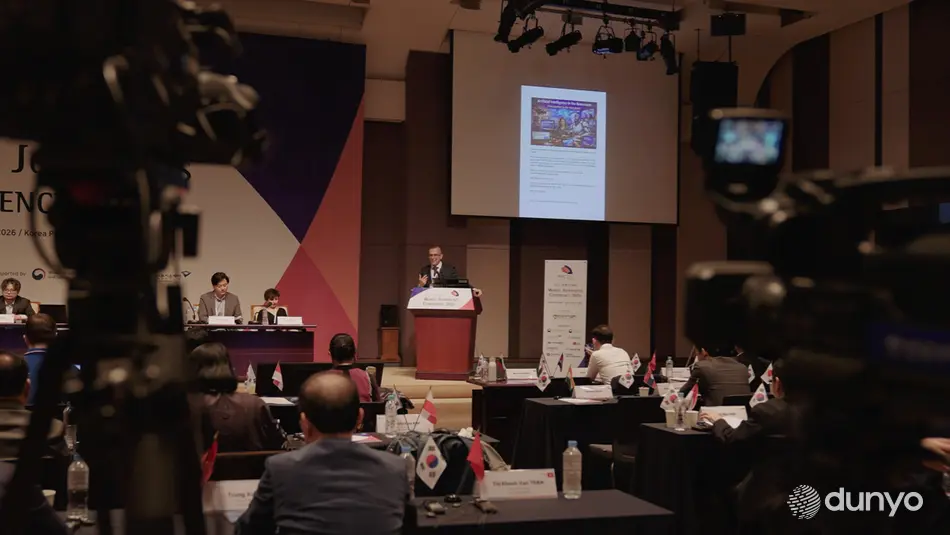
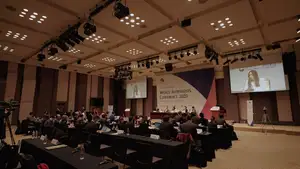
SEOUL, March 31. /Dunyo IA/. Within the framework of the World Journalists Conference, the second session titled “AI in the Newsroom: From Practice to the Next Stage” was held yesterday, reports Dunyo IA correspondents, participating in the conference.
Discussion was moderated by Kim Tae-gyun, a reporter for the South Korean news agency “Yonhap News”.
Session was one of the most practice-oriented, focusing not so much on theoretical aspects as on the real experience of implementing artificial intelligence in editorial activities and its impact on the journalistic profession.
Martin Georgiev, a member of the Board of Directors of the Union of Bulgarian Journalists, set the general context for the discussion, noting that journalism today operates under the simultaneous pressure of technological and political factors. According to him, digital transformation has amplified not only opportunities but also threats.
“Manipulation and disinformation are becoming systemic phenomena, and the development of AI only complicates the situation by allowing the creation of convincing but unreliable content”, - he emphasized.
Under these conditions, in his view, trust remains the key asset of journalism, directly depending on accuracy, fact-checking and professional responsibility.
Zheng Kaijun, Head of the Social Media Department at “Xinhua” News Agency’s International News Service, highlighted the global dimension of the issue. He noted that the rapid development of artificial intelligence presents new challenges for the entire global media system.
“Today, the boundary between truth and fiction is becoming increasingly blurred. This requires not only professional responsibility from journalists but also the development of transparent international rules for the use of AI”, - he stated.
According to him, journalism must maintain its core function - to be a guarantor of reliable information, regardless of the level of technological development.
Woo Seung-Ho, Deputy Director of the Future and Strategy Department at the South Korean daily “Seoul Economic Daily”, presented a practical case study on AI implementation in the newsroom. He emphasized that the success of digital transformation depends not on the technologies themselves, but on how they are integrated into workflows.
According to him, AI is used in the newsroom to perform routine tasks - transcribing interviews, analyzing data, and preparing draft texts - allowing journalists to focus on analytics and substantive work.
“We didn’t implement AI from the top down. It became part of the newsroom once the journalists themselves saw its value. However, no content is published without human verification”, - he noted.
Renata Ewa Kim, a journalist from the Polish publication “Newsweek Polska”, drew attention to changes in the daily operations of newsrooms. According to her, AI has already become a tool that fundamentally accelerates news production processes.
“Tasks that used to take hours are now completed in minutes. However, this does not eliminate the need for verification. The responsibility for the final material always lies with the journalist”, - she emphasized.
At the same time, the session participants agreed that, along with its advantages, artificial intelligence carries serious risks. These include algorithmic errors, data bias, the loss of authorial style and the threat of over-reliance on technology.
Particular attention was paid to the need for developing editorial standards for AI use. This includes transparency, a clear division of responsibility and mandatory verification of all materials.
Experts emphasized that amid the rapid development of technology, journalism is not losing its essence but, on the contrary, is becoming even more significant.
“AI can enhance journalism, but it cannot replace its core values -independence, responsibility and critical thinking”, - it was stated during the discussion.
Based on the session's results, participants concluded that the future of the industry lies in the formation of a hybrid model, where technology serves as a tool, while the key role in ensuring the accuracy of information remains with humans.
“World Journalists Conference” continues its work.

See all