Scientific solutions for a climate-resilient Central Asia discussed in Tashkent
August 17, 2026. 15:30 • 5 min
• 129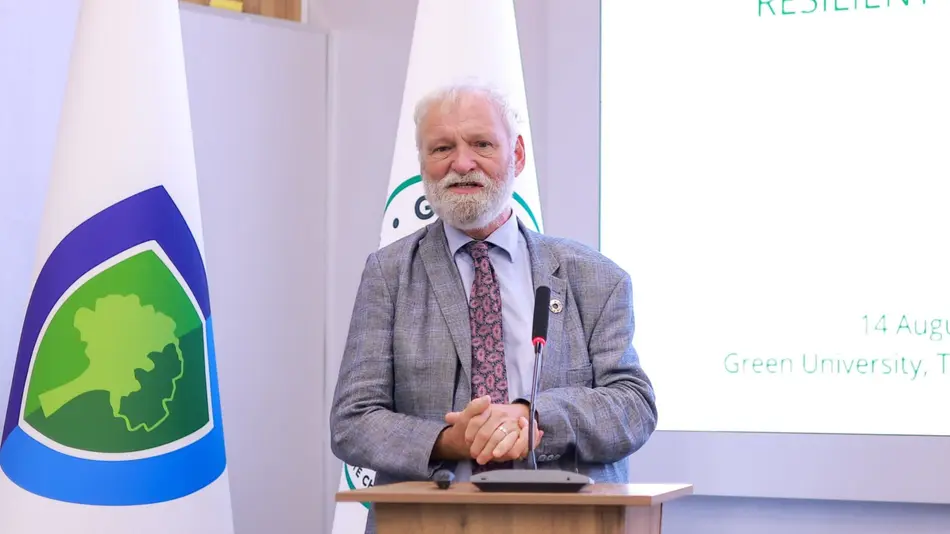
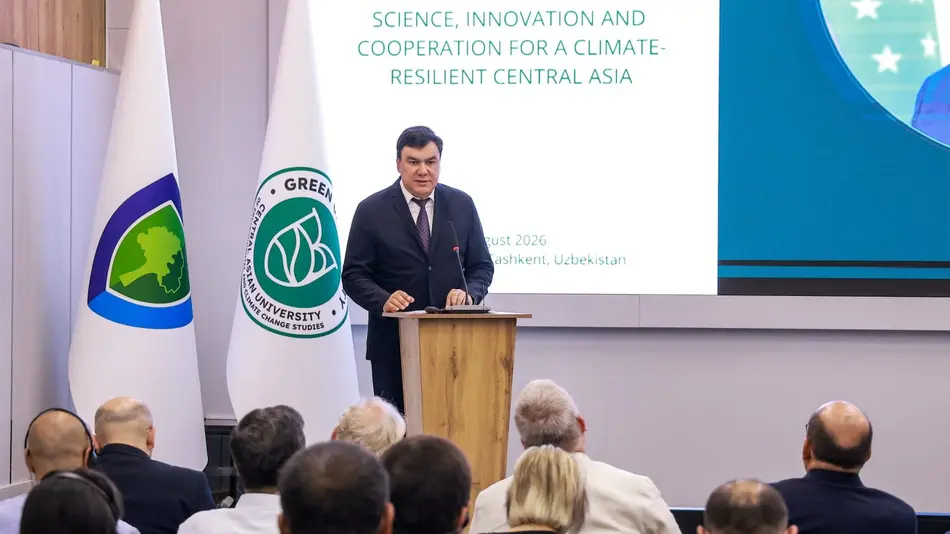
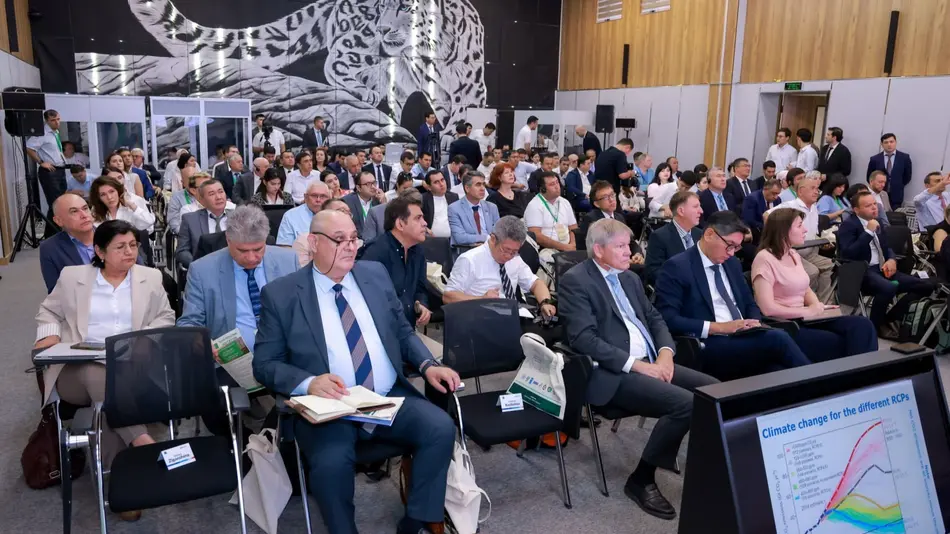
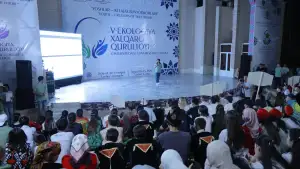
TASHKENT, August 17. /Dunyo IA/. Central Asian Climate Change Dialogue, entitled “Science, Innovation and Cooperation for a Climate-Resilient Central Asia”, was held at Green University in Tashkent, reports Dunyo IA correspondent.
According to the National Committee for Ecology and Climate Change of Uzbekistan, one of the key events of the opening was the report by Nobel Prize laureate, professor at Wageningen University and Research Centre (Netherlands) Rik Leemans on the topic “Past and current developments of climate scenarios and their application”.
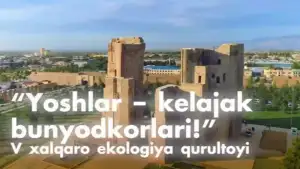
The event, organized as part of the legacy of the Samarkand Climate Forum, focused on scientific cooperation, climate resilience, innovation and regional collaboration.
Opening session was attended by Aziz Abdukhakimov, Adviser to the President of Uzbekistan on Environmental Issues and Chairman of the National Committee on Ecology and Climate Change; Sherzod Umarov, Deputy Representative of the Food and Agriculture Organization of the United Nations (FAO); Antti Karttunen, Ambassador and Head of the OSCE Project Co-ordinator in Uzbekistan; and Ismail Belen, Chief Inspector at the General Directorate for Combating Desertification and Erosion under Türkiye’s Ministry of Forestry and Water Affairs.
In his address, Aziz Abdukhakimov emphasized that climate change is becoming one of the most serious challenges to sustainable development in Central Asia, affecting water resources, agriculture, energy, ecosystems, and the well-being of the population. He noted that the region must transform climate challenges into opportunities for advancing scientific cooperation, technological innovation, water security and the transition to a green economy. Uzbekistan has already taken concrete steps in this direction. Under the “Yashil Makon” nationwide initiative, nearly one billion trees and shrubs have been planted across the country, water-saving technologies now cover approximately half of irrigated agricultural land and the share of renewable energy has reached around 30 per cent.
Particular emphasis was placed on the need to move beyond isolated initiatives towards joint regional scientific programs capable of generating practical and scalable solutions for climate change adaptation. In this regard, a number of proposals were put forward, including the establishment of a network of experimental climate adaptation laboratories across Central Asia’s diverse natural and climatic zones; the “100 Climate-Resilient Solutions for Central Asia” programme; a scholarship programme for climate research; expanded scientific cooperation in the fields of the circular economy, Zero Waste and methane emissions reduction; and the establishment of a Central Asian Climate Data Hub. Special attention was also given to the proposed Central Asian Climate Leadership Programme at Green University, aimed at preparing a new generation of specialists capable of translating scientific knowledge into practical solutions, investment opportunities and effective climate action.
Presentation highlighted how climate scenarios make it possible to explore alternative pathways for the future under conditions of uncertainty and assess the implications of different policy and development choices. The discussion covered qualitative and quantitative scenarios, exploratory and normative approaches, as well as the evolution of scenario analysis - from the early IPCC emissions scenarios to contemporary frameworks based on Representative Concentration Pathways (RCPs) and Shared Socio-economic Pathways (SSPs). The importance of combining qualitative storylines with quantitative modelling to assess system vulnerabilities and develop effective climate responses was also emphasized.
Particular attention was given to the role of scenarios in assessing the potential consequences of different policy choices. As highlighted during the presentation, scenario analysis helps improve understanding of the behaviour of complex systems and the potential consequences of action or inaction. Modern climate science also relies on interconnected approaches that integrate socioeconomic scenarios, emissions pathways, climate modelling and climate data.
Following the opening session, Green University Climate Residency Programme was presented. The programme is designed to create a platform for collaboration among scientists, government representatives, international experts and young researchers, enabling them to identify research priorities and develop joint projects.
During the first session, “The Science–Policy Interface: From Climate Data to Policy and Regional Cooperation”, participants discussed the use of scientific evidence in shaping climate policy, advancing climate change adaptation and strengthening regional cooperation. Particular emphasis was placed on the need to establish closer links between scientific research, public policy and practical action at the regional level.
A special session focused on the signing of memoranda of understanding and youth climate initiatives. In particular, a memorandum was signed with FAO within the framework of the Central Asian Climate Leadership Programme, alongside agreements on cooperation in combating desertification. The launch of the Central Asian Climate Leadership Programme was also announced. The programme aims to strengthen the professional capacity of young specialists and promote their active engagement in the region’s climate agenda.
The second session focused on the Aral Sea wetlands and water diplomacy in Central Asia. Participants discussed water resources management, ecosystem restoration in the Aral Sea region, the development of scientific cooperation and strengthened regional engagement on water security.
The third session explored the interconnections between climate change, water, agriculture and energy. Discussions addressed the technical and scientific dimensions of natural and climate systems, water resources management, climate risks and the adaptation of different sectors to changing conditions.
Concluding thematic session focused on innovation, the circular economy, and regional cooperation in support of climate resilience. Participants explored opportunities for applying innovative solutions, advancing green and circular economic models and strengthening cross-regional cooperation in addressing climate challenges.
Central Asian Climate Change Dialogue provided a platform for bringing together the scientific community, government institutions, international organizations and young professionals around shared climate challenges. Such initiatives contribute to the development of science-based solutions, the expansion of regional cooperation, and the advancement of a common agenda for strengthening climate resilience across Central Asia.

Latest News





See all