View from Israel: Over five years, the Tashkent International Investment Forum has turned into the largest investment platform in Central Asia
June 24, 2026. 18:00 • 5 min
• 94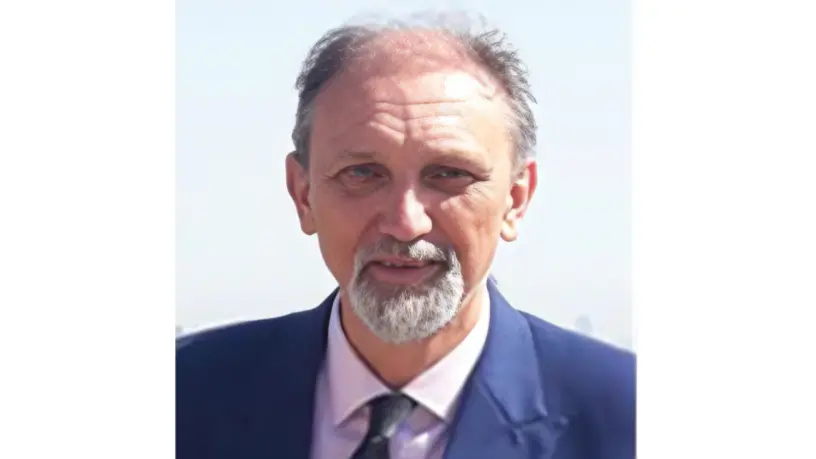
TEL AVIV, June 24. /Dunyo IA/. Doctor of Political Science, political analyst from Israel Yuri Bocharov, shared his views with Dunyo IA on the 5th Tashkent International Investment Forum, held in Uzbekistan’s capital on June 16–18.
— The Fifth Tashkent International Investment Forum was not just another business event. Over five years, it has become a kind of indicator of how much Uzbekistan’s position on the global economic map has changed. If in 2022 the forum was only beginning to build its reputation, today representatives of companies managing assets worth around $42 trillion come to Tashkent, and the number of participants has exceeded 8,000 people from 100 countries.
For a state that just ten years ago was perceived by many investors as a relatively closed Central Asian economy, such dynamics look quite significant. In many respects, the current indicators of success are the result of the course taken after Shavkat Mirziyoyev came to power as President of Uzbekistan in 2016. It was then that the republic gradually began opening its economy to the outside world, developing international cooperation, and creating more favorable conditions for attracting foreign investment and expanding business activity.
The success story of the Tashkent International Investment Forum largely reflects the broader transformation Uzbekistan has undergone in recent years. The first TFIIF in 2022 brought together about 2,000 participants from 56 countries. Already a year later, the number of countries increased to 70, then to 93, and in 2026 the forum united representatives from 100 countries.
Even more impressive is the dynamics of investment agreements. If at the first forum projects worth around $7–8 billion were discussed, in subsequent years the volume reached tens of billions of dollars. Behind this are not only protocol statements but also concrete projects in energy, infrastructure, industry, logistics, and the digital economy.
A distinctive feature of the TIF is that it has long gone beyond traditional conference formats. Alongside plenary sessions, separate business forums are held with the participation of the United States, China, Türkiye, South Korea, Saudi Arabia, the United Arab Emirates, and Azerbaijan. In essence, for several days Tashkent becomes a place where dozens of parallel negotiation processes take place between states, financial institutions, and the world’s largest corporations.
For the country, this means not only an inflow of capital but also stronger international ties, expanded export opportunities, and integration into global production chains.
It is also noteworthy that the structure of discussed projects is changing. If a few years ago investors focused mainly on traditional industries, today Uzbekistan offers opportunities in strategic areas such as artificial intelligence and digital transformation, future energy, Eurasian transport corridors, critical minerals, modern industrial clusters, and the attraction of global investment capital.
The main conclusion of the five-year journey is not the number of signed memoranda or the scale of the forum itself. More important is the change in the country’s international perception.
The open-door policy and active dialogue with foreign partners proclaimed by President Shavkat Mirziyoyev have allowed Uzbekistan to significantly strengthen its position on the global economic map.
If the early forums were seen as a promising regional platform, today Tashkent is perceived as a reliable and predictable partner with whom representatives of 100 countries, major international corporations, financial institutions, and investment funds managing tens of trillions of dollars seek to cooperate.
It is especially notable that interest in Uzbekistan continues not only from traditional regional partners but also from leading global companies from Europe, Asia, the Middle East, and North America. This demonstrates growing international business confidence in the country’s economic policy and ongoing reforms.
The main conclusion of the anniversary forum is that the country’s modernization strategy, consistently implemented under President Shavkat Mirziyoyev, is delivering concrete and measurable results. Growth in investment volumes, expansion of international cooperation, strengthening of the country’s business reputation, and a steady increase in forum participation all confirm the correctness and relevance of the chosen course in today’s global economy.
The Fifth Tashkent International Investment Forum has become a convincing confirmation that a policy of openness, good-neighborliness, and mutually beneficial cooperation can produce practical results. Today, Uzbekistan is increasingly establishing itself as one of the fastest-growing economic centers in Central Asia and an important partner for international business.
The combination of prudent state governance, consistent reforms, openness to the world, and traditional Uzbek entrepreneurship creates a solid foundation for the country’s further development. This approach has allowed Uzbekistan not only to strengthen its regional position but also to become one of the most promising centers of economic growth in Eurasia.
At the same time, the main goal of ongoing reforms is not investment attraction in itself, but the creation of new opportunities for citizens, improving living standards, developing modern infrastructure, creating jobs, and ensuring sustainable economic growth for future generations.
If the current momentum continues, in the coming years Tashkent will increasingly feature not only in regional but also in global discussions about new directions of capital, technology, and international business flows. And to a large extent, this will be the result of the country’s forward-looking leadership, consistently implemented reforms, and a commitment to peace, stability, and constructive development.

Latest News
See all
Read also
A view from Kazakhstan: TIIF–2026 strengthens Uzbekistan’s position as a dynamic investment hub
Attitude from Brussels: Uzbekistan is a promising market opening a wide range of new opportunities for investors