View from Moscow: Multi-Vector Policy of Uzbekistan and the OTS Strategy complement each other well
October 31, 2026. 14:30 • 2 min
• 225
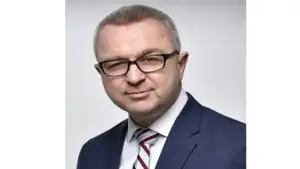
MOSCOW, October 31. /Dunyo IA/. Alexander Vorobyov, Research Fellow at the Institute of Oriental Studies of the Russian Academy of Sciences and Director of the Center for Public Diplomacy and World Politics Analysis, commented for Dunyo IA on the participation of the President of Uzbekistan in the 13th Summit of the Organization of Turkic States (OTS) in Ankara:
- Visit of the President of Uzbekistan to Türkiye is a significant event, as it is strategically important for Tashkent to strengthen the entire complex of ties with Ankara and other OTS member states.
This is linked both to Uzbekistan's interest in developing transport and logistics connectivity in the western direction (South Caucasus, Türkiye, South-Eastern Europe) and to the need to attract investment and technology to capital-intensive and labour-intensive sectors of industry and agriculture, as well as to develop cooperation in the humanitarian field.
For Türkiye, as well as for other participants of the organization, Uzbekistan today is important as a key state of Central Asia with significant economic, demographic, and cultural potential. In addition, the OTS development strategy and Uzbekistan's aspiration to build a prudent multi-vector policy simultaneously in several directions – northern (Russia), southern (Afghanistan, Pakistan, and India) and eastern (PRC) – complement each other well.
Objectively, the strengthening of Uzbekistan's ties with the OTS, including Türkiye, makes a significant and positive contribution to the formation of the global political and economic framework of Eurasia, creating conditions for stable and progressive development.
Outcomes of the talks within the OTS are expected to inject a new momentum into Uzbekistan's interaction with the organization simultaneously in several areas: logistics, trade, industrial cooperation and humanitarian-cultural cooperation.

Latest News

See all
Read also

View from Paris: Uzbekistan strives to transform OTS into an effective mechanism for international cooperation
View from Tehran: Uzbekistan infuses new momentum into integration processes within OTS