Muhammad Asif Noor: Pakistan and Uzbekistan are moving steadily from historical proximity to a strategic partnership
August 18, 2026. 15:00 • 8 min
• 45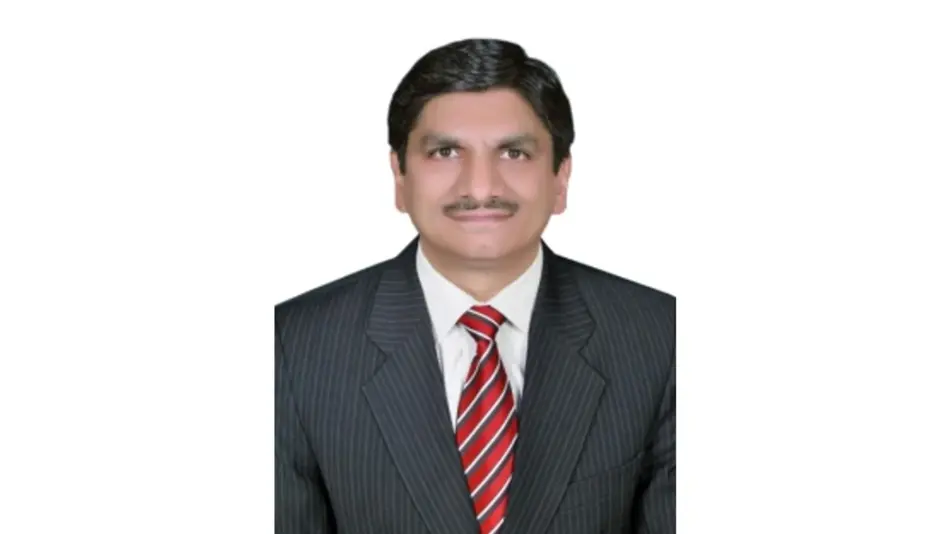
ISLAMABAD, August 18. /Dunyo IA/. In a comment to Dunyo IA, Muhammad Asif Noor, Executive Director of the Institute of Peace and Diplomatic Studies (IPDS) and CEO of Diplomatic Insight Group, noted the significant results achieved by Uzbekistan under the leadership of President Shavkat Mirziyoyev:
- In any other part of the world, light descends from heaven to earth; of Samarkand and Bukhara, however, it is said that from here, light rises to heaven.
For centuries, this image reflected the special place of Bukhara as a source of knowledge, faith and intellectual authority. Together with Samarkand, it transformed the lands of modern Uzbekistan into a space from which ideas, scientific knowledge, trade and the art of governance spread far beyond the region. Under President Shavkat Mirziyoyev, this historical image is acquiring a new political substance. Uzbekistan is once again expanding its influence beyond national borders now through domestic reforms, regional confidence-building and the shaping of a new geography of connectivity.
State policy of President Mirziyoyev can be viewed through three closely interconnected processes - opening of the state toward its citizens, a new rapprochement among the countries of Central Asia, and the restoration of the region’s links with the rest of the world. Each of these processes reinforces the others. Domestic reforms have strengthened Uzbekistan’s economic capabilities. Improving relations with neighbouring states has created a more stable regional environment. Meanwhile, expansion of transport and trade links is transforming this stability into a space of shared opportunities.
When President Shavkat Mirziyoyev took office in 2016, Uzbekistan possessed strong state institutions, a young population, and significant potential. At the same time, the country’s economy remained largely administratively regulated and cross-border trade was restricted. The New Uzbekistan program changed the direction of state policy, putting the interests of citizens, the development of entrepreneurship, the attraction of investments and the strengthening of social protection at the center of governance.
Results of these transformations are highly significant. In 2025, Uzbekistan’s gross domestic product exceeded $145 billion, exports reached $33.4 billion and the volume of foreign investment surpassed $43 billion. The economy grew by 7.7 percent over the year and in the first quarter of 2026, it demonstrated a growth of 8.7 percent in annual terms. The poverty rate during 2025 decreased from 8.9 to 5.8 percent, with about 1.5 million people successfully lifted out of poverty.
Uzbekistan is to continue creating productive jobs, improving the efficiency of energy and water resource management, strengthening the competitive environment and ensuring technology transfer through investment cooperation. However, the overall trajectory is already clear. The country is steadily transitioning from deficit management to the generation of new opportunities and the creation of an internationally competitive economy.
A pivotal dimension of President Shavkat Mirziyoyev’s foreign policy has been the strengthening of Uzbekistan’s relations with its immediate neighbours. His approach was guided by the understanding that the modernization of the country could not fully realize its potential as long as Central Asia remained divided by closed borders, unresolved disputes, and underdeveloped transport links. The response was a consistent and practical diplomacy.
Consultative Meetings of the Heads of State of Central Asia, initiated in 2017, established a platform for direct dialogue without the need for external mediation. Border crossings opened, transport links expanded, and cooperation in the fields of water resources, energy, and trade became increasingly pragmatic. The agreement among Uzbekistan, Kyrgyzstan, and Tajikistan on the tri-point of state borders, reached in March 2025, helped resolve an issue that for decades had remained one of the most sensitive for the Fergana Valley. It demonstrated that political will is capable of transforming disputed territories into spaces of joint economic development.
Economic impact of this policy is already tangible. Uzbekistan’s trade volume with other Central Asian states grew from $2.4 billion in 2016 to $7.2 billion in 2024. However, the political outcome is even more significant. Central Asia increasingly acts as a region with shared interests, a weightier collective voice, and growing confidence in its ability to engage with leading world powers without compromising its strategic autonomy.
President Shavkat Mirziyoyev continues to expand this horizon. At the meeting of the leaders of Central Asian states and Azerbaijan in Cholpon-Ata in July 2026, he proposed the formation of a unified development space linking Central Asia, the South Caucasus, and Afghanistan. Concurrently, emphasis was placed not only on transport infrastructure but also on creating industrial value chains, developing digital services, establishing investment platforms and deploying technology. In this understanding, modern connectivity means more than just building roads and railways - it integrates production, payment systems, knowledge and markets.
Uzbekistan’s initiative to develop ties between Central and South Asia represents the southern extension of this strategy. At the 2021 Tashkent Conference, Leader of Uzbekistan proposed viewing Central and South Asia not as two distinct strategic spaces, but as interconnected regions. Historically, their peoples were linked by trade, scientific and educational exchanges, migration, and cultural contacts. The modern separation of these regions was a consequence of conflicts, closed routes, and underdeveloped infrastructure.
Uzbekistan achieved international recognition for this concept through the 2022 UN General Assembly resolution on strengthening connectivity between Central and South Asia. The permanent “Termez” dialogue, launched in 2025 and held again in 2026, is steadily translating this diplomatic initiative into practical terms, establishing mechanisms for interaction among governments, businesses and regional institutions.
Afghanistan holds a central place in this concept. It will not be able to fully contribute to regional stability while remaining economically isolated, just as Central Asia will not be able to gain full access to South Asian markets without reliable transport routes through Afghan territory. Therefore, the proposed Uzbekistan–Afghanistan–Pakistan railway represents more than just a transport corridor. It is also an attempt to make economic engagement a part of Afghanistan’s path to stability.
Framework agreement signed in Kabul in July 2025, determination of the Termez–Kharlachi route and the joint financing of the feasibility study have given the project a more concrete shape. In combination with routes like the China–Kyrgyzstan–Uzbekistan railway, this corridor can provide the countries of Central Asia with more direct access to Pakistani seaports, while simultaneously creating opportunities for Afghanistan to generate transit revenues, create jobs and form economic incentives to maintain peace.
Pakistan is one of the key southern partners of this strategy. The two nations are linked by a shared civilizational heritage of the Great Silk Road and the Baburid era. Concurrently, in recent years, bilateral relations have expanded further, encompassing institutional engagement, trade, investments, and other areas of economic cooperation.
State visit of the President of Uzbekistan to Pakistan in February 2026 and the inaugural meeting of the High-Level Strategic Cooperation Council marked a new milestone in bilateral relations. By the end of 2025, trade volume reached nearly $500 million and about 230 enterprises with Pakistani capital were operating in Uzbekistan. The two countries set a target to increase mutual trade volume to $2 billion by 2029 and established a portfolio of joint projects with a total value of nearly $3.5 billion.
Expansion of the Preferential Trade Agreement, establishment of the Uzbek-Pakistani Business Council, the holding of the interregional forum, as well as cooperation in pharmaceuticals, textiles, agriculture, mining and technology create a practical foundation for further growth. Pakistan provides Uzbekistan with an outlet to the Arabian Sea and access to a market of over 240 million people. Uzbekistan, in turn, opens for Pakistan a gateway to Central Asian markets and broader Eurasian value chains.
Next phase must focus on the practical implementation of the agreements reached. The railway project requires secure financing, robust security mechanisms, and coordinated planning with Afghanistan. Trade development calls for streamlined customs procedures, compatible transit documentation, reliable banking channels and competitive transport tariffs. Success should be measured not by the number of signed agreements, but by the reduction of transaction costs, growth in investments and the steady movement of cargo.
One of the most significant outcomes of President Shavkat Mirziyoyev’s policy has been the transformation of Uzbekistan’s approach to its place and role in the world. Geography does not have to dictate destiny. History does not have to remain confined within the walls of monuments. And neighbouring countries are not bound to remain hostages to past contradictions. Uzbekistan can be a doubly landlocked country and simultaneously maintain a globally connected economy, preserve a profound national identity while actively engaging in regional cooperation and take pride in its past while resolutely building its future.
Ancient light associated with Bukhara and Samarkand once spread through knowledge, caravan routes, and cultural exchange. In New Uzbekistan, this light is now channelled through open borders, economic opportunities, railway corridors and diplomatic confidence.
Uzbekistan is not seeking to recreate its past. It is translating the finest qualities of that past - the pursuit of knowledge, openness to the world, trade, and exchange into a modern concept of national development and shared regional prosperity.

Latest News


See all
Read also
Elvan: New Uzbekistan stands out as a remarkable example of sustainable development and prosperity in Central Asia

Photo Exhibition dedicated to the historical and cultural heritage of Uzbekistan opens in Tokyo
Carol Miller: Today we are witnessing significant progress in expanding cooperation with Uzbekistan