Sergey Lebedev: Uzbekistan has become one of the main driving forces in the development of the entire CIS
August 26, 2026. 08:10 • 10 min
• 110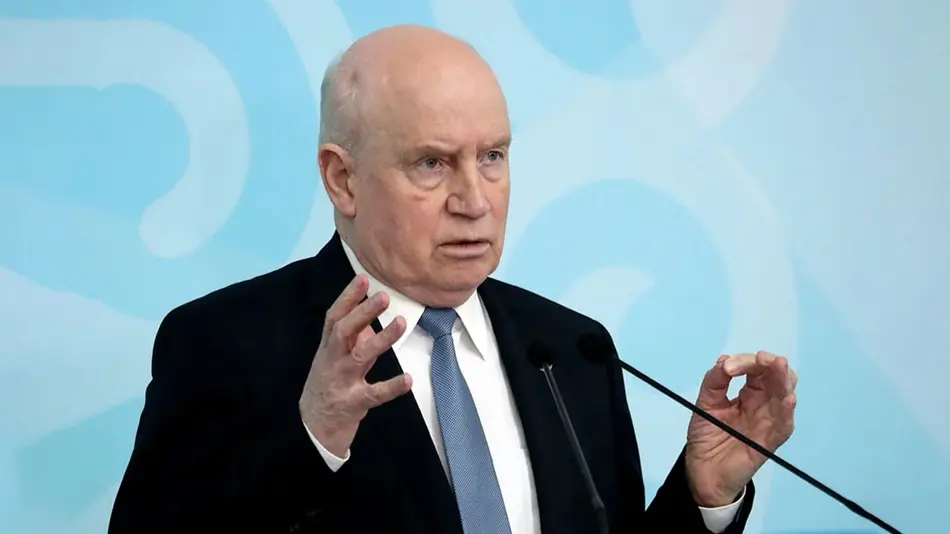
MOSCOW, August 26. /Dunyo IA/. Sergey Lebedev, Secretary General of the Commonwealth of Independent States (CIS), gave an interview to Dunyo IA ahead of the 35th Anniversary of the Independence of Uzbekistan.
- This year, Uzbekistan marks the 35th Anniversary of its State Independence. Country has travelled this path together with its partners in the Commonwealth of Independent States. How significant is the Republic’s role within the CIS as a whole and how has it evolved over time? What achievements of Uzbekistan are most notable across the Commonwealth?
- The anniversary of Uzbekistan’s state independence coincides with the 35th Anniversary of the Commonwealth, and this is no coincidence. The Republic stood at the origins of the CIS, signing, together with other member states, the Alma-Ata Declaration on December 21st, 1991, acceding to the Agreement on the Establishment of the Commonwealth and adopting its Charter.
Over the years, Uzbekistan has built an extensive system of relations with foreign states on the international stage, expanded its influence on regional and global processes and earned well-deserved international standing. At the same time, the Republic has continued to attach priority to cooperation with its traditional partners within the Commonwealth.
Uzbekistan has been particularly active in cooperation within the CIS over the past decade. This has become one of the key elements of the large-scale reforms being implemented in the country. In 2016, the Uzbek side participated in 29 key areas of cooperation within the CIS; today, it is represented in 51 sectoral bodies. In fact, representatives of relevant Uzbek government agencies, in various capacities, are engaged in all 66 areas of cooperation covered by the Commonwealth.
Today, Uzbekistan has become one of the key driving forces behind the development of the CIS as a whole. It is the Commonwealth’s second-largest country by population and third-largest economy. Uzbekistan has also demonstrated record economic growth rates: GDP increased by 7.7 percent last year and by 8.5 percent in the first half of this year. In terms of agricultural output, Uzbekistan confidently ranks second in the CIS after Russia, while it ranks third in industrial production.
Naturally, Uzbekistan’s contribution to the positive economic dynamics of the Commonwealth is substantial. The country has achieved these results primarily through the efforts of its citizens, more efficient use of human resources, as well as the introduction of new technologies and equipment.
– As a CIS member state, Uzbekistan advocates further expanding productive and mutually beneficial cooperation within the Commonwealth. Economic relations naturally occupy a central place in integration processes. How do you assess the Republic’s participation in economic integration across the CIS?
– Uzbekistan is one of the most active and proactive participants in developing cooperation within the CIS. It is worth noting that next year the Commonwealth will be chaired by Uzbekistan, while the Republic previously successfully assumed the principal coordinating functions within our association in 2020.
In other words, this decade was effectively opened by Uzbekistan, and it was during its first chairmanship that the fundamental documents setting the course for the organization’s development for years to come were adopted. These include the new edition of the Concept for the Further Development of the Commonwealth of Independent States and the Plan of Key Measures for its Implementation, adopted on December 18th, 2020, as well as the CIS Economic Development Strategy through 2030, approved on May 29th, 2020.
Uzbekistan’s strategic priorities within the Commonwealth over the past decade have remained unchanged – the comprehensive strengthening of mutually beneficial and mutually enriching economic and other ties among the CIS member states.
Relations between Uzbekistan and virtually all the countries of our Commonwealth can be characterized as strategic partnerships, as confirmed by the relevant bilateral declarations and documents concluded in recent years with Belarus, Russia and the Central Asian states.
It was Uzbekistan that proposed the development and adoption, several years ago, of the Concept for the Development of Industrial Cooperation among the CIS Member States and a Comprehensive Set of Measures for its Development through 2030.
Over the past 10 years, the country’s foreign trade turnover has quadrupled, from $20 billion to $81 billion. In 2025, the CIS countries accounted for one-third of Uzbekistan’s total foreign trade, while in the first half of 2026, their share reached 37.8%. Two CIS countries – Russia and Kazakhstan – rank among Uzbekistan’s top three trading partners by trade volume. In terms of Uzbekistan’s exports, however, Russia is the clear leader, significantly ahead of China.
Growth in Uzbekistan’s exports to CIS member states in recent years is particularly notable: in 2023, they increased by 4.1% year-on-year, by 11.9% in 2024, and by 19.4% in 2025. Demand for Uzbek goods and services is steadily growing across the Commonwealth, creating favourable conditions for expanding production in Uzbekistan, increasing employment, raising wages, and ultimately improving the living standards and quality of life of its citizens.
In the CIS bodies, Uzbekistan is also one of the key drivers behind the development and adoption of decisions on digitalization across economic sectors, as well as in public administration and social services. The country’s representatives have also demonstrated a strong interest in measures aimed at jointly strengthening innovation capacity. At last year’s summit of the CIS Heads of State in Dushanbe, President of Uzbekistan Shavkat Mirziyoyev outlined strategic plans to develop a “roadmap” to support and develop special economic zones and establish a CIS venture platform to promote startups and innovation. He also proposed developing a CIS Programme for the Innovative Development of the Energy Sector. In April this year, at the initiative of President Shavkat Mirziyoyev, the Forum “Innovative Industry of the CIS: A New Model of Interstate Cooperation” was held as part of the INNOPROM. Central Asia International Industrial Exhibition.
Uzbekistan’s role in developing cooperation among the CIS countries in the economic and related spheres would not be fully reflected without highlighting the country’s particular contribution to strengthening interregional and cross-border cooperation. At the initiative of the President of Uzbekistan, the first Forum of Regions of the CIS Member States was held in Tashkent in 2025, bringing together representatives of regional authorities and business communities from across the Commonwealth.
– Each CIS member state pursues an independent foreign policy aimed at advancing and protecting its national interests. At the same time, participation in integration frameworks entails taking partner countries’ views into account on key issues of the international agenda, seeking compromises where necessary, and developing common positions. What significance does participation in the Commonwealth have for achieving Uzbekistan’s foreign policy objectives? And what influence does the Republic itself exert on the CIS’s activities in this area?
– Within the framework of political cooperation among the CIS member states, Uzbekistan demonstrates a consistent commitment to closely coordinating positions at major universal and regional platforms.
Over the past several years alone, more than 10 special resolutions proposed by Uzbekistan have been adopted by the UN General Assembly. One of the latest such documents, adopted in July 2026, was the resolution “Strengthening the Role of Parliaments in Accelerating Social Development”. The support of CIS countries plays an important role in facilitating the adoption of such decisions. This contributes to strengthening Uzbekistan’s international standing, while its voice is now being heard more prominently on the international stage.
In the interests of the country’s development and prosperity, Uzbekistan’s leadership seeks to make full use of the opportunities offered by a broad range of regional organizations and integration frameworks. Uzbekistan holds observer status in the Eurasian Economic Union (EAEU), is an active member of the Shanghai Cooperation Organization (SCO) and develops various formats of cooperation with other international organizations.
– Uzbekistan is pursuing a policy of broad openness, aimed at comprehensively strengthening not only economic, but also humanitarian ties with its closest partners and other countries around the world. Which steps taken by the Republic in this area have been most notable within the Commonwealth?
– It is encouraging to see that Uzbekistan fully shares our common conviction that no economic or political cooperation can develop dynamically without sustained efforts to strengthen trust among our countries. Such trust can be built only on a profound knowledge of and mutual engagement with the cultures of our peoples, a shared understanding of our commitment to common values and traditions, and the preservation of historical memory of our victories and achievements. This is the fundamental objective of developing humanitarian cooperation within the CIS, and the Republic attaches the utmost importance to this area.
One of the most notable events in the life of our Commonwealth was the implementation of the interstate programme “Cultural Capitals of the Commonwealth” in Samarkand in 2024. For an entire year, the Uzbek city brought together a remarkable array of cultural events. The program’s grand opening was particularly memorable, featuring creative groups and performers from across the CIS countries. This was followed by the Week of Culture, Arts and Cinema of the CIS Countries, a series of literary and educational meetings and presentations and the Conference of Librarians of the Commonwealth.
Uzbekistan also successfully launched the international project “CIS Youth Capital”. Tashkent, which held the title of CIS Youth Capital in 2024, convincingly demonstrated to young people from across the Commonwealth the city’s broad opportunities for quality education, recreation, sports, creative expression, employment and meaningful activities.
At present, the Uzbek side chairs the Advisory Council on Labour, Employment and Social Protection of the Population of the CIS Member States. A landmark event of Uzbekistan’s current chairmanship is expected to be the consideration by the Heads of State in October 2026 of a decision, developed within the framework of the Advisory Council, to declare 2028 the Year of Social Development and Quality of Life in the Commonwealth.
– In our challenging times, the issue of defending the homeland has once again become more relevant than ever. Amid global turbulence and growing conflict potential in various regions of the world, threats to international security are becoming increasingly tangible. Which areas of cooperation between Uzbekistan and the CIS member states in addressing these contemporary challenges are developing most effectively?
– Across all areas aimed at strengthening external security, the relevant authorities of the CIS countries maintain close cooperation. Uzbekistan is directly involved in the implementation of most of these programs.
In particular, work along the external borders is based on the Programme of Cooperation among the CIS Member States in Strengthening Border Security at the External Borders for 2026–2030, adopted last year. Uzbekistan actively participates in joint measures under the programme aimed at strengthening border security and sharing practical experience.
Similar programmes are being implemented in the fight against crime, as well as terrorism and extremism. Notably, one of these documents, with a strong humanitarian focus, was initiated and developed by Uzbekistan. This is the Programme of Cooperation among the CIS Member States in the Field of Deradicalization for 2025–2027, aimed at addressing the causes and conditions contributing to the spread of radical views and methods, as well as supporting the return to normal life of individuals who have become involved in radical and extremist activities.
In conclusion, it can be noted that Uzbekistan is approaching the 35th Anniversary of its Independence with impressive achievements across all spheres of public life and promising prospects for the future. We are sincerely pleased that cooperation within the Commonwealth is one of the important components of this success. On the occasion of this landmark anniversary, I would like to wish the people of Uzbekistan peace and prosperity and assure them that the CIS will make every effort to help turn these wishes into reality.

Latest News




See all
Read also
Oh Young-jin: Uzbekistan is one of the key and dynamically developing countries in Central Asia, playing an increasingly prominent role in regional and international processes

Ma Bin: Today’s achievements of Uzbekistan reflect the revival and transformation of its historical and cultural heritage amid a new wave of modernization