Leah Gutierrez: Uzbekistan is becoming increasingly attractive for investment
May 02, 2026. 10:00 • 6 min
• 771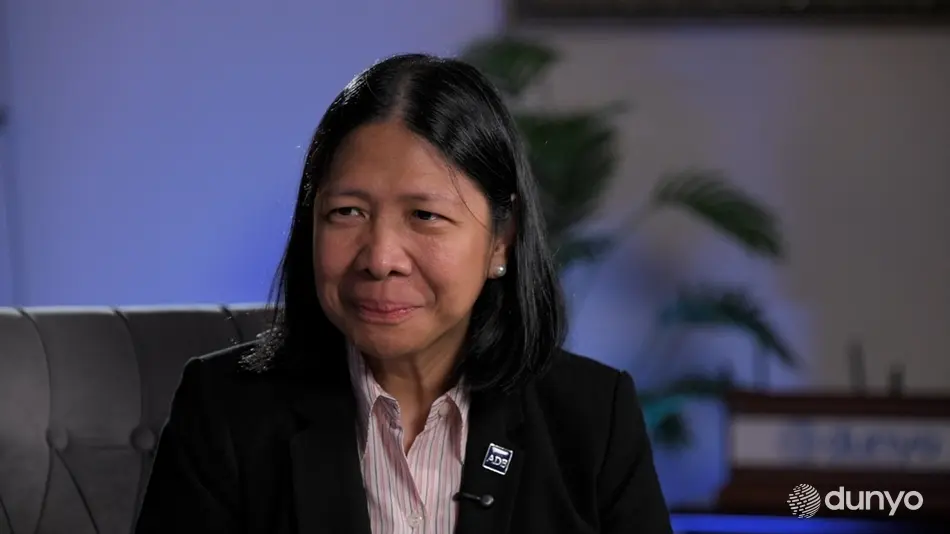
TASHKENT, May 2. /Dunyo IA/. On the eve of the 59th ADB Annual Meeting opening in Samarkand, Leah Gutierrez, Director General of the Central and West Asia Department of the bank, gave an exclusive interview to a correspondent for the Dunyo Information Agency.
– Samarkand is hosting the 59th Annual Meeting of the ADB Board of Governors. Could you clarify why Uzbekistan was chosen as the host country for such a significant event for the bank?
– The selection of Uzbekistan was based on a decision by the Board of Governors itself. It was also a response to the invitation from the Government of Uzbekistan to host the event and reflects the strong partnership with the bank.
In recent years, Uzbekistan has become one of ADB’s most active and strategically important partners in the region. As is well known, the country is implementing large-scale reforms, including institutional transformations, with a clear focus on sustainable growth, enhancing regional connectivity, developing human capital and increasing climate resilience.
All of these areas are fully aligned with ADB's priorities. Furthermore, from an operational perspective, Uzbekistan has demonstrated a high level of readiness to host an event of such magnitude, including infrastructure development, logistics organization, security assurance and effective inter-agency coordination.
Equally important is that the country's government has demonstrated a high level of political commitment to hosting the annual meeting in Uzbekistan.
– Uzbekistan remains one of ADB’s largest partners in Central Asia. What are the key priorities of bilateral cooperation? Also, if possible, could you tell us what makes Uzbekistan attractive for investment?
– Uzbekistan remains one of ADB’s largest and most strategically important partners in Central Asia, and this partnership is built on a shared commitment to sustainable and inclusive development. The cooperation between ADB and Uzbekistan is anchored in the Country Partnership Strategy for the period 2024–2026.
Key priorities include strengthening human capital, increasing climate resilience, and improving the quality and efficiency of public services. As for Uzbekistan’s investment attractiveness, it is built upon several strong fundamental factors.
The country possesses a large and young population, with a significant portion under the age of 30. Furthermore, Uzbekistan occupies a strategic position at the very heart of Central Asia and holds substantial potential across various sectors, including energy, transport and industry.
In recent years, large-scale economic reforms have contributed to an improved regulatory environment, increased economic openness, and bolstered investor confidence. This is precisely what makes Uzbekistan particularly attractive for investment.
– Uzbekistan is objectively an important transport and logistics hub between Central and South Asia. Which regional infrastructure projects does ADB consider most promising for the coming years?
– For us, Uzbekistan plays a key role as a transport and logistics hub linking Central Asia with South Asia, as well as with the Caucasus and western routes. Regional connectivity remains one of ADB's priority areas of activity in the country.
Speaking of the most promising regional infrastructure initiatives, these are, first and foremost, projects within the Central Asia Regional Economic Cooperation (CAREC) Program. Within CAREC, special attention is paid to the development and modernization of transport corridors that facilitate trade expansion, reduce travel time, and enhance the sustainability of cross-border links.
One such project is the development of the CAREC Corridor 2. In particular, a resilience and modernization project is being implemented, which involves the reconstruction of a key section of the A380 highway between Bukhara and Nukus in western Uzbekistan.
This section is of strategic importance, as CAREC Corridor 2 connects Uzbekistan with Kazakhstan, Turkmenistan, Afghanistan, and onward to South Asia, as well as with the Caspian region, including the Trans-Caspian route, known as the Middle Corridor.
It is important to note that this project goes beyond simple road reconstruction. It includes the implementation of climate-resilient engineering solutions, intelligent transport systems, as well as modern traffic and axle load management mechanisms. All of this will ensure the corridor's reliability and efficiency in the face of growing trade flows and climate challenges.
– Central Asia is among the regions most vulnerable to the impacts of climate change. What climate projects does ADB plan to implement or expand in Uzbekistan?
– Central Asia is one of the regions most exposed to the consequences of climate change. We are talking about rising temperatures, increasing water scarcity, and a higher frequency of extreme weather events. In this regard, addressing climate challenges is one of the key priorities of ADB's activities in Uzbekistan.
In terms of climate support, the focus is placed on both mitigation and adaptation. Regarding mitigation, ADB is expanding investments in renewable energy, including solar and wind projects. Assistance is also being provided to improve energy efficiency. These measures simultaneously contribute to strengthening the country’s energy security.
In addition to implementing large-scale solar and wind energy projects, particular attention is paid to enhancing the efficiency of the electrical grid. A reliable and stable power system is essential for the full utilization of renewable energy sources, and active work is also underway in this direction.
Climate change adaptation is of equal importance. Projects aimed at increasing resilience in water resources management, agriculture, and urban development are being implemented. Specifically, this involves the modernization of irrigation systems, strengthening flood protection and integrating climate-resilient solutions into transport and municipal infrastructure.”
Furthermore, ADB is collaborating with the Government of Uzbekistan on enhancing climate-aligned planning and institutional development.
– ADB has traditionally supported the development of human capital. What projects in the fields of education, healthcare, and social services might be implemented in Uzbekistan in the coming years?
– As is well known, more than half of Uzbekistan’s population is under the age of 30. This makes investment in education, healthcare, and social services particularly vital for ensuring inclusive and long-term growth. Such a demographic structure creates the prerequisites for achieving what is known as the 'demographic dividend' and opens significant opportunities for the country’s future.
In the field of education, ADB places increased emphasis on improving the quality of teaching and aligning the workforce training system with the requirements of the market and the modern economy. This includes supporting technical and vocational education and training (TVET), developing digital learning, and strengthening links between the education system and the labour market.
A specific focus area is the development of STEM education - science, technology, engineering and mathematics. Initiatives aimed at improving the educational environment, enhancing teacher qualifications, and expanding access to STEM disciplines are being supported, especially for youth, including girls and women. This creates a foundation for developing a workforce ready for the challenges of the future and promotes innovation, productivity and competitiveness.
Healthcare remains a vital component of human capital development. Currently, ADB is supporting the strengthening of the primary healthcare system and expanding access to quality services. Priorities include the modernization of healthcare infrastructure, the implementation of digital solutions, and enhancing the system's resilience to public health risks and climate challenges.
– Thank you very much for the information.
– Thank you very much. It was a pleasure having this conversation.


See all