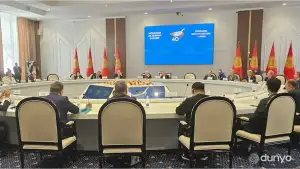
From regional rivalry to irreversible integration
July 09, 2026. 16:30 • 5 min
• 106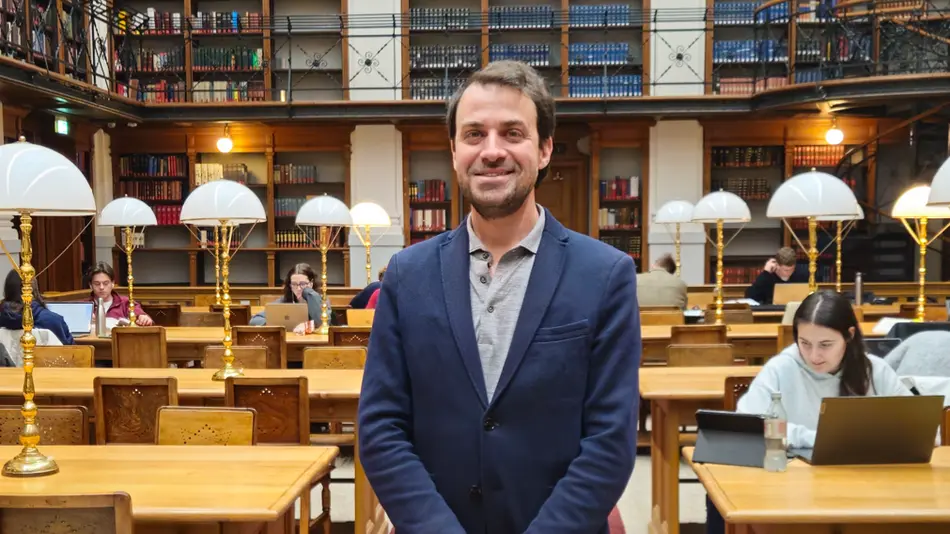
TASHKENT, July 9. /Dunyo IA/. British Central Asia scholar Filippo Costa Buranelli, Professor at the University of St. Andrews, has published an analytical article entitled “Connectivity as ‘Systemic Reasoning’ in Central Asia”, reports Dunyo IA correspondent.
For many years, the scholar has been conducting extensive research on international political developments in Central Asia. He is the author of numerous scholarly articles and monographs on regionalism, the international order, and the foreign policies of Central Asian states. A leading advocate of constructivist and systemic approaches to the study of international relations, he offers a fresh conceptual framework for understanding contemporary integration processes across Central Asia.
According to Filippo Costa Buranelli, Central Asia has witnessed an unprecedented level of regional consolidation over the past decade, encompassing virtually every area of interstate cooperation, including diplomacy, trade and economic ties, transport, environmental protection, industry, security, education, and humanitarian collaboration. In his view, this process is not merely situational but strategic in nature, reflecting the emergence of a fundamentally new model of regional development.
A particularly valuable contribution of the article is the author's introduction of several innovative conceptual propositions into the academic discourse. Foremost among them is the concept of "systemic reasoning," which he contrasts with the traditional logic of national interest. Whereas classical theories of international relations view states primarily as actors pursuing their own interests, systemic reasoning rests on the recognition that long-term national interests are best advanced through strengthening the resilience of the regional system as a whole. In this perspective, preserving regional stability, mutual trust, and cooperation becomes an intrinsic value that underpins the security and prosperity of every participating state.
The second major conceptual innovation lies in the author's broader interpretation of connectivity. He emphasizes that connectivity should not be reduced solely to transport infrastructure, logistics corridors, or trade routes. Rather, he views it as a far deeper—almost metaphysical—phenomenon reflecting the degree of interconnectedness among societies, institutions, political values, and shared visions for the region's future. Accordingly, connectivity encompasses not only roads, railways, and energy projects, but also political dialogue, educational cooperation, collaboration among universities and the academic community, interparliamentary engagement, youth initiatives, cultural exchanges, cross-border cooperation, and joint responses to environmental challenges. In the author's interpretation, connectivity evolves from a development instrument into a foundational principle of the regional order.
One of the article's central arguments is that perceptions of diversity within Central Asia have undergone a fundamental transformation. Whereas differences in levels of economic development, political systems, and national interests were once viewed as obstacles to integration, the countries of the region increasingly regard such diversity as a source of complementarity and cooperation. These differences, the author argues, enable states to reinforce one another while creating a common space for interaction without compromising their full sovereignty.
In this context, the author notes that the Central Asian states increasingly view regional cooperation not as a constraint on national sovereignty but, on the contrary, as one of its most effective safeguards. National and regional interests are no longer seen as competing priorities; instead, their interdependence is becoming increasingly evident, with regional stability recognized as an essential prerequisite for the security and development of each individual state. This gives rise to the notion of a distinct “regional interest”, which does not replace national interests but rather brings them together within a common strategic framework.
The article places particular emphasis on the human dimension of regional integration. According to Filippo Costa Buranelli, people-to-people ties provide the most solid foundation for sustainable long-term cooperation. To support this argument, he highlights the emergence of a shared educational space across Central Asia, the expansion of inter-university partnerships, the organization of forums of rectors and historians, the growth of academic exchange programs, the implementation of youth initiatives, and the strengthening of intercultural and cross-border cooperation. In his view, these developments are fostering a new regional identity built on mutual trust, respect, and a shared sense of responsibility for the future of Central Asia.
The author further demonstrates that the logic of systemic connectivity is gradually extending to such areas as environmental policy, water resources management, the climate agenda, and sustainable development. Addressing these issues is increasingly understood not as the aggregate of individual national policies, but as an expression of the collective responsibility of the region's states.
Particular attention is devoted to the role of Uzbekistan in reshaping regional dynamics. According to the author, the transformation of Uzbekistan's foreign policy following the election of President of Uzbekistan Shavkat Mirziyoyev served as the principal catalyst for positive change across Central Asia. By elevating good-neighbourliness to the foremost priority of its foreign policy, intensifying political dialogue with neighbouring countries, and advancing the concept of shared responsibility for regional security and prosperity, Uzbekistan helped create a fundamentally new atmosphere of trust. In the author's assessment, this strategic shift enabled the region to move from a model of competitive regionalism to one of cooperative pluralism, in which the Central Asian states increasingly perceive the region as a cohesive political entity.
Among the article's principal conclusions is the assertion that regional cooperation in Central Asia has become not only progressively deeper but also irreversible. The author interprets these developments as evidence of the emergence of a new regional order founded on interdependence, mutual trust, respect for sovereignty, and shared responsibility for regional development. Within this conceptual framework, connectivity is no longer viewed as a standalone policy area but rather as a foundational principle governing the regional system as a whole, bringing together infrastructure projects, economic cooperation, humanitarian ties, and political engagement within a unified vision of the sustainable development of Central Asia.

Latest News
See all
Read also


Two Kazakhstan–Uzbekistan Border Crossing Points to receive International Status

Eldor Aripov: Uzbekistan is consistently strengthening the regional nuclear security architecture