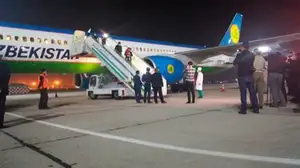
Signing of the Declaration on the Establishment of Strategic Partnership Relations between Uzbekistan and Georgia signifies a qualitatively new era in bilateral ties
July 03, 2026. 20:46 • 11 min
• 1043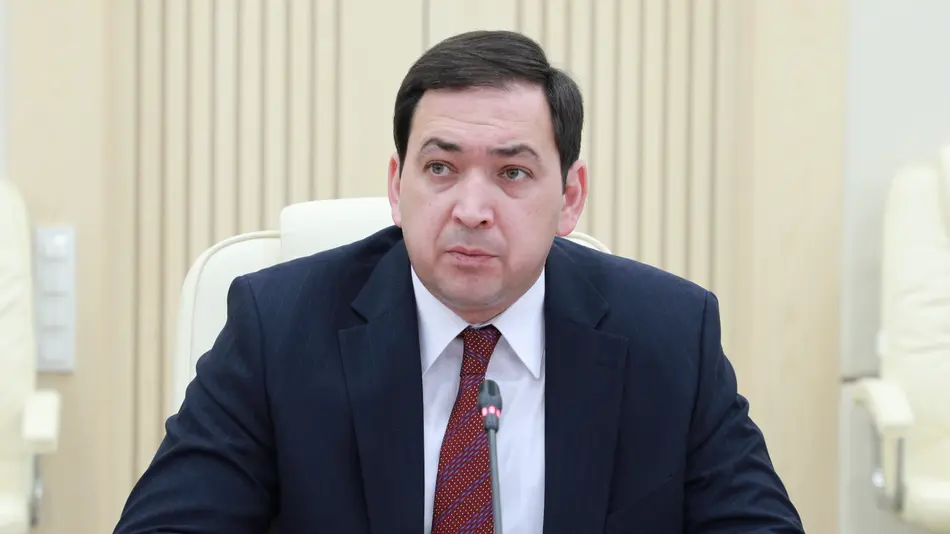
ТАSHKENT, July 3. /Dunyo IA/. Bakhtiyor Mustafayev, Deputy Director of the Institute for Strategic and Regional Studies under the President of Uzbekistan (ISRS), provided commentary on the outcomes of the Uzbekistan–Georgia high-level summit to the Dunyo Information Agency.
- What were the outcomes of the state visit of the President of Uzbekistan to Georgia and how do you assess the current stage of bilateral cooperation?
The recent state visit of the President of Uzbekistan Shavkat Mirziyoyev, to Georgia the first in the past 23 years became a landmark confirmation that relations between Uzbekistan and Georgia are experiencing one of the most dynamic periods in the entire history of bilateral cooperation. In recent years, they have significantly evolved in terms of content.
Although diplomatic relations between Uzbekistan and Georgia were established back in 1994, cooperation was mainly limited to occasional diplomatic contacts and relatively modest trade within the range of 50 million US dollars. Today, however, we see a comprehensive agenda that includes political dialogue, economic cooperation, transport and logistics projects, investment, and humanitarian cooperation.
A turning point came in 2017, when, after a long pause, the first high-level meeting took place: President of Uzbekistan Shavkat Mirziyoyev met with Prime Minister of Georgia Giorgi Kvirikashvili on the margins of the UN General Assembly session in New York. Essentially, at that time, both sides expressed their readiness to revitalize relations and give them new momentum.
Since then, political contacts have been developing on a regular basis. Intergovernmental mechanisms have become more active, and parliamentary, foreign policy and governmental ties have become sustainable. In fact, cooperation has ceased to depend on individual meetings and has acquired a systemic character.
Equally important is that political dialogue has begun to deliver tangible results. In recent years, trade turnover has increased several times and reached 270 million US dollars in 2025. The peak of trade relations was in 2024, when trade grew by almost 50% compared to the previous year and reached a record 326 million US dollars. Notably, since the beginning of the current year, mutual trade has already exceeded 100 million US dollars. Following the high-level talks, an agreement was reached to prepare a separate “road map” to bring this figure to 1 billion US dollars in the coming years.
A special sign of the new quality of relations was the signing, following the visit, of the Declaration on the Establishment of Strategic Partnership between Uzbekistan and Georgia, as well as the awarding of Uzbekistan’s President with Georgia’s highest state award the Order of the “Golden Fleece” for his outstanding contribution to deepening Uzbek-Georgian relations.
- What role does Georgia play in Uzbekistan’s foreign policy and foreign economic strategy?
Today, Uzbekistan’s foreign policy course is aimed at expanding external economic ties, developing transport connectivity, and diversifying international partnerships. In this strategy, Georgia, as one of the countries of the South Caucasus, occupies an important place, not only in terms of bilateral relations but also in a broader regional context.
First and foremost, this is explained by Georgia’s geographical attractiveness, as it serves as a natural link between Central Asia and Europe. The country also has a developed transport infrastructure and a favorable business climate, consistently strengthening its economy.
For Uzbekistan, which is actively expanding the geography of its foreign trade, this opens additional opportunities for promoting exports, implementing joint infrastructure projects, and developing new logistical solutions.
In addition, Tashkent’s interest in Georgia is driven by the long-term economic potential of bilateral partnership. That is why in recent years the focus has increasingly shifted toward concrete projects, business contacts, and systematic interaction between business communities and state institutions of both countries. The Declaration on Strategic Partnership signed during the visit consolidates this logic at the institutional level.
- Which areas of cooperation between Uzbekistan and Georgia, in your view, remain insufficiently developed?
In my view, the main untapped potential lies in transitioning from trade growth to deeper industrial and investment cooperation. The necessary legal and institutional framework has already been established between the two countries. In particular, agreements on free trade and mutual promotion and protection of investments, signed back in 1995, are in force.
These documents provide a solid foundation for business relations. With more active use of existing mechanisms, Uzbekistan and Georgia could significantly expand mutual trade and increase the volume of joint investments. It is important to ensure that this existing foundation is transformed into a greater number of joint projects with high added value.
I am referring primarily to the establishment of joint production facilities, development of industrial cooperation, localization of certain types of products, and cooperation in the agro-industrial complex, pharmaceuticals, chemical industry, textile sector, and logistics. A practical step in this direction was the signing, following the joint business forum, of a Cooperation Program until 2027, as well as an agreement to establish a Joint Investment Fund to support new project initiatives. Such projects are capable not only of increasing trade turnover but also of enhancing the resilience of economic ties to external conditions.
Tourism is another area with significant untapped potential. In recent years, this segment has shown steady growth. In particular, tourist flows from Uzbekistan to Georgia have almost doubled—from 11,500 people in 2024 to more than 21,600 in 2025.
At the same time, interest from Georgian tourists in Uzbekistan is also growing. If in 2019 fewer than 3,000 Georgian citizens visited Uzbekistan, in 2025 this figure reached almost 6,800, and in just the first five months of 2026 it exceeded 3,300 people. Nevertheless, current figures do not fully reflect the real potential. With their rich historical and cultural heritage and significant experience in tourism, Uzbekistan and Georgia have all the conditions for a multiple increase in mutual tourist flows. An additional impetus will be given by the planned joint tourism forum, agreed upon following the visit.
I am confident that active familiarity of Georgian citizens with the historical cities of Uzbekistan will contribute to bringing our peoples closer together and strengthening people-to-people contacts. Such a dialogue of cultures will serve as an additional stimulus for deepening interstate partnership.
- What factors currently constrain the further development of Uzbek-Georgian cooperation?
I would not say that there are any obstacles today that hinder the development of Uzbek-Georgian relations. Rather, we are speaking about objective limitations typical of states that do not share borders and pursue policies based on national interests.
In my view, the key issue today is not the presence of obstacles, but the need for a deeper understanding of each other’s interests, as well as joint identification of growth points. The better we understand each other’s needs and competitive advantages, the faster we will be able to initiate projects in new areas of cooperation.
We see that there is mutual interest in expanding the partnership. Therefore, time is required to fully unlock the existing potential.
At the same time, there are objective constraints beyond the control of Tashkent and Tbilisi, primarily in the transport and logistics sphere.
It should be noted that the development of transportation along the Trans-Caspian International Transport Route is accompanied by a number of infrastructural challenges. In recent years, the level of the Caspian Sea has continued to decline. According to various estimates, over the past two decades it has dropped by more than 2 meters, and in some ports additional dredging works are already required.
In addition, there are issues related to the capacity of ferry crossings, uneven fleet utilization, the need to coordinate schedules, as well as the multimodal nature of transport, where cargo is transshipped several times between rail, sea, and road transport. All this increases delivery times and logistics costs.
However, it is important to understand that such challenges are of a general nature and affect practically all countries using Trans-Caspian routes. That is why coordination of efforts, modernization of transport infrastructure, digitalization of logistics processes, and closer cooperation among all transport participants are required.
This objective is reflected in the agreement reached during the visit on the establishment of a logistics hub based on the ports of Poti and Batumi, with the creation of an industrial zone and a showroom for Uzbek products on its territory.
Uzbekistan and Georgia are already working in this direction, and we believe that as infrastructure projects are implemented, the efficiency of transport corridors will continue to increase.
- What is the strategic significance of the South Caucasus for Uzbekistan?
Today, the South Caucasus occupies an important place in Uzbekistan’s foreign policy strategy, due to a number of factors.
First, as mentioned, Tashkent is consistently pursuing a course of diversifying external economic relations and seeks to expand cooperation with various regions of the world.
Second, the South Caucasus is becoming one of the key directions for the formation of new transport and logistics routes connecting Central Asia with European and other international markets. Finally, Uzbekistan is interested in strengthening stability and predictability in neighboring regions, as this directly affects trade, investment, and regional connectivity.
At the same time, it is fundamentally important to understand that Uzbekistan’s policy in the South Caucasus is not built around interaction with any single country. Tashkent consistently develops relations with all states of the region based on the principles of mutual respect, equality, and consideration of each partner’s interests. Such a balanced approach allows not only the expansion of bilateral cooperation but also the creation of conditions for multilateral economic and infrastructure initiatives.
Therefore, in its interaction with the countries of the region, Uzbekistan pays special attention to developing transport connectivity, expanding trade and economic partnerships, attracting investment, promoting industrial cooperation, and strengthening humanitarian ties. The recent state visit to Georgia clearly confirmed the relevance of this course.
- What role can Georgia play in realizing Uzbekistan’s strategic interests in the South Caucasus?
For Uzbekistan, as a landlocked country, the issue of reliable and diversified transport routes is of strategic importance. In this context, Georgia represents an important partner due to its favorable geographical location, developed transport infrastructure, and access to the Black Sea. All this creates additional opportunities for expanding Uzbekistan’s foreign trade and access to international markets.
A special role is played by the Middle Corridor, whose importance has significantly increased in recent years. For Uzbekistan, it is no longer just a prospective route but a functioning international transport direction. It should be noted that over the past five years, the volume of Uzbek cargo transported along this route has doubled and reached 1.2 million tons in 2025. In this logistics chain, the ports of Poti and Batumi are key elements of transport infrastructure ensuring further access to international markets. Additional opportunities are created by the launched Baku–Tbilisi–Kars railway corridor, the issue of its synchronization with the planned China–Kyrgyzstan–Uzbekistan railway line was discussed during the visit and could further enhance regional connectivity.
- What measures, in your opinion, could elevate Uzbek-Georgian cooperation to a qualitatively new level?
In my view, the next stage of development of Uzbek-Georgian relations should be associated with the launch of new cooperation formats. For example, a good initiative would be the holding of a Forum of Regions of Uzbekistan and Georgia. This practice has already proven effective in Uzbekistan’s cooperation with a number of other countries. It allows for direct contacts between regions, identification of partners for joint projects, expansion of cooperation between enterprises, and greater involvement of small and medium-sized businesses in bilateral cooperation.
Another important direction is the development of air connectivity. Today, there are 13 direct flights per week between Tashkent, Tbilisi, and Batumi, which already creates good conditions for business and tourism travel.
At the same time, the next logical step could be the opening of direct flights between major cities of the two countries bypassing the capitals. This would make travel more convenient for business and tourists, contributing to growth in mutual tourism, expansion of business contacts, and development of interregional cooperation.
Education is another promising area. In recent years, both Uzbekistan and Georgia have accumulated significant experience in modernizing higher education systems and developing international academic partnerships. A practical step in this direction will be the planned joint education forum, agreed upon following the visit.
The activation of ties between universities and research centers of the two countries also appears to be a promising vector. Key instruments here should include student and faculty exchange programs, joint research, and the development of educational programs in priority areas.
Strengthening expert-level cooperation also holds clear value for bilateral relations. The establishment of a permanent Uzbek-Georgian expert forum would elevate the dialogue to a qualitatively new level. Think tanks and research institutions, jointly studying prospects for transport corridors, industrial cooperation, trade, and investment, could provide practical recommendations to government bodies and businesses. Such a mechanism would serve as an important tool for generating new initiatives and ensuring long-term intellectual support for Uzbek-Georgian partnership.
A separate confirmation of the new quality of relations is the decision to establish the Embassy of the Republic of Uzbekistan in Georgia, adopted following the visit, which will provide additional momentum to the development of bilateral relations across all areas.

Latest News



See all
Read also
Energy Sector of Uzbekistan: A New Stage of Reform - From Investment to Efficient Governance