“Diplomatic Society”: The Legacy of Amir Temur Holds Important Significance in Foreign Policy and World Diplomacy
April 12, 2026. 09:15 • 3 min
• 155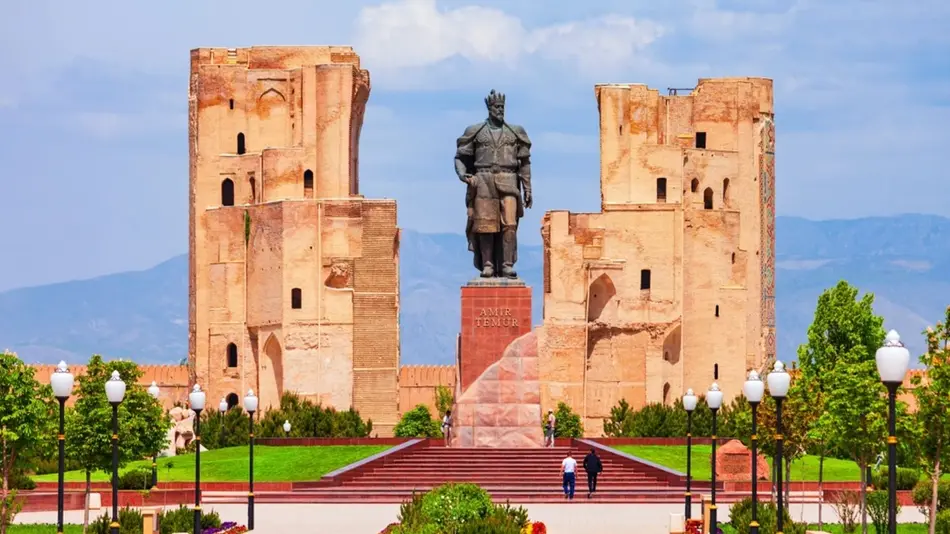
VIENNA, April 12. /Dunyo IA/. The Austrian publication “Diplomatic Society” has published an article titled “The Legacy of Amir Temur at the Center of Islamic Civilization in Uzbekistan: The Intellectual Foundation of the Third Renaissance,” reports Dunyo IA correspondent.
The article notes that on April 9, 2026, Uzbekistan widely celebrated the 690th anniversary of the birth of statesman, military commander, and patron of science and culture Amir Temur.
It emphasizes that the history of humanity shows that great civilizations are built on a combination of intellectual achievements, spiritual values, and cultural heritage. Central Asia has long been an important center of science, art, and philosophy, shaping the development of global civilization.
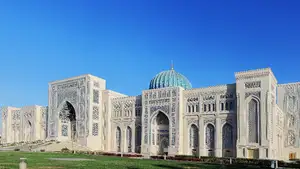
Today, this potential is embodied in the Center of Islamic Civilization in Uzbekistan, which not only preserves historical heritage but also serves as a platform for science, education, and spiritual development. It is noted that the center, established on the initiative of the President of Uzbekistan Shavkat Mirziyoyev, attracts researchers and visitors from around the world.
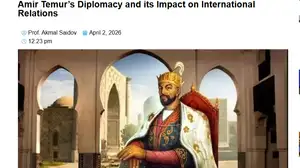
The publication states that Amir Temur holds a special place in world history as the founder of a major state. In the late 14th and early 15th centuries, he managed to unite vast territories from India to the Middle East and create a strong system of governance.
Particular attention is given to diplomacy in his policy. Temur maintained relations with France, England, and Castile. In 1404, Spanish envoy Ruy González de Clavijo, who visited Samarkand, noted the high level of organization of the state and the respect shown to foreign ambassadors.
The article also refers to the legal system reflected in the “Tuzuk-i Temuri,” where governance was based on consultation, advisory councils, careful planning, and decisiveness, with diplomacy and rational decision-making considered more important than military force.
After the death of Amir Temur, his heirs—the Timurids—continued the development of the state, placing great emphasis on science and culture. This period is referred to as the Second Eastern Renaissance.
Special attention is given to the contribution of Mirzo Ulugbek, a ruler, scholar, and astronomer. In Samarkand, one of the largest scientific centers of its time and the famous observatory was established under his rule, where the astronomical catalog “Zij-i Sultani” was compiled, containing coordinates of more than a thousand stars.

See all