ISRS Expert: From Strategic Partnership to Alliance
July 31, 2026. 20:00 • 6 min
• 93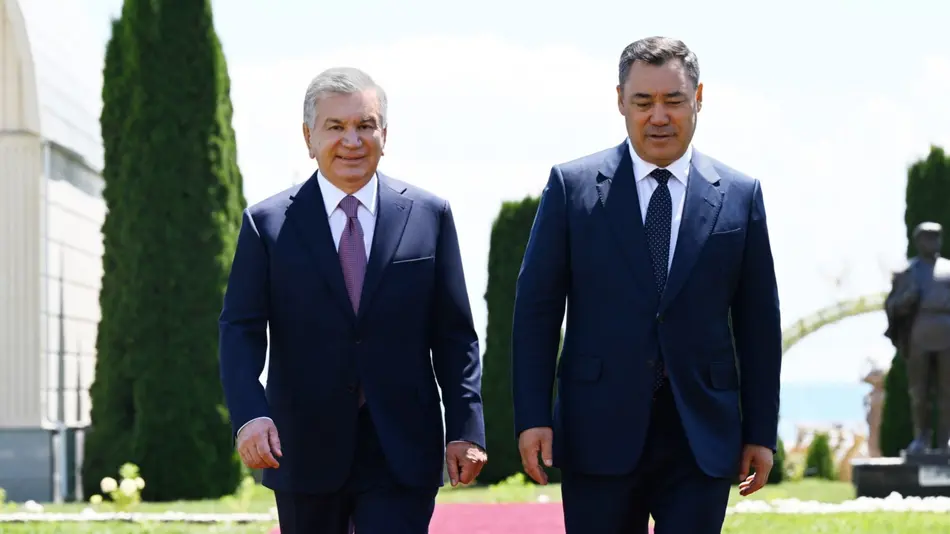
ТАSHKENT, July 31. /Dunyo IA/. Azamat Sulimanov, Head of Department at the Institute for Strategic and Regional Studies under the President of Uzbekistan (ISRS), commented for Dunyo IA on the outcomes of the concluded state visit of President Shavkat Mirziyoyev to Kazakhstan:
- State visit of President of Uzbekistan Shavkat Mirziyoyev to the Kyrgyz Republic marked the transition of Uzbekistan–Kyrgyzstan relations to a fundamentally new level. The principal outcome of the visit was the signing of the Treaty on Allied Relations, elevating bilateral cooperation beyond the framework of the strategic partnership that had previously defined relations between the two countries.
Whereas strategic partnership provided the foundation for political dialogue and expanded cooperation across key areas, an alliance implies a deeper level of mutual responsibility.
It reflects the readiness of both sides to support one another, coordinate approaches to regional security, jointly respond to emerging challenges, and implement long-term projects of strategic importance to both countries.
An important institutional feature of this new stage is the establishment of the Supreme Interstate Council, which will serve as the highest platform for the regular consideration of bilateral issues and provide additional momentum for implementing the agreements reached by the two sides.
Significantly, the visit took place against the backdrop of intensifying regional dialogue. During his stay in Kyrgyzstan, President Shavkat Mirziyoyev also participated in the Informal Consultative Meeting of the Heads of State of Central Asia and Azerbaijan.
The very fact that such meetings are taking place demonstrates that the countries of the region increasingly view Central Asia as a single space of shared interests, where issues related to security, economic development, transport, energy and sustainable development require coordinated approaches.
In recent years, a network of allied relations has gradually been taking shape across Central Asia. Kyrgyzstan has become the third Central Asian country - following Kazakhstan and Tajikistan with which Uzbekistan has formalized allied relations. Together with the Concept of Regional Security, Stability and Sustainable Development of Central Asia, adopted at the Tashkent Summit in November 2025, this development reflects the region's gradual transition to a new level of cooperation - the emergence of a regional security community.
This involves the creation of a regional space in which states jointly safeguard stability, coordinate their responses to common challenges, and view security as a comprehensive concept encompassing political stability, economic development, transport connectivity, water and energy cooperation, and environmental security.
Returning to the state visit itself, one of its most striking features is how profoundly the agenda of Uzbekistan–Kyrgyzstan relations has evolved.
Only a few years ago, much of the bilateral agenda focused on resolving outstanding issues related to the state border. Today, however, the priorities are fundamentally different. The two leaders are discussing industrial cooperation, expanding trade, launching major investment projects, modernizing transport infrastructure and deepening humanitarian ties. Such a transformation has been made possible by the exceptionally high level of political trust between the leaders of the two countries.
New status of bilateral relations has already been translated into concrete economic commitments. Following the talks, the two sides reaffirmed their intention to increase bilateral trade to $3 billion, establish new joint ventures, develop sustainable production chains, and jointly access third-country markets with products manufactured through bilateral industrial cooperation.
A logical continuation of these agreements was the signing of the Action Plan for Practical Cooperation in the Agro-Industrial Sector for 2026–2027. Its implementation is expected to facilitate the creation of integrated agro-industrial value chains, increase exports of high-value processed agricultural products, and enhance the competitiveness of producers in both countries.
Equally important is the fact that deeper cooperation in the agro-industrial sector will contribute to strengthening the food security of Uzbekistan and Kyrgyzstan by enhancing the resilience of supply chains, expanding joint production and making more efficient use of the agricultural potential of both countries.
In addition, the two sides agreed to further enhance the activities of the Uzbek-Kyrgyz Development Fund, thereby expanding financing opportunities for joint investment projects.
Strengthening transport connectivity remains one of the central priorities of bilateral cooperation. President Shavkat Mirziyoyev described the construction of the China–Kyrgyzstan–Uzbekistan railway as the “project of the century” that will transform the geopolitical landscape of the region. The significance of this project extends far beyond the creation of a new transit route.
Two countries agreed to jointly develop trade and logistics infrastructure along the railway corridor, actively introduce digital solutions into trade and transport procedures, and create more favorable conditions for road transport operators. These measures will facilitate the development of a fully integrated production and logistics hub, combining transport, warehousing, industrial and commercial infrastructure.
Development of border regions is also expected to receive additional impetus. The parties agreed to increase the number of border crossing points along the Uzbekistan–Kyrgyzstan border, upgrade their infrastructure, and simplify, on a reciprocal basis, the rules governing the stay of citizens in each other's countries.
These decisions will contribute to the expansion of cross-border trade, the development of tourism, the strengthening of business ties, and closer cooperation between the regions of the two countries.
In essence, the border is being transformed from a line of division into a space of active economic and humanitarian cooperation. An important continuation of this process will be the implementation of the Action Plan for Cultural Cooperation and the Joint Action Plan for Tourism Cooperation for 2026–2027. These documents will promote broader cultural exchanges, strengthen people-to-people ties, and create additional opportunities for further growth in tourist flows, which have already reached record levels.
In this context, the signing of the Agreement on the Joint Use of the Chashma Spring deserves particular attention. The agreement provides another example of the ability of the two countries to reach mutually acceptable solutions on sensitive issues through dialogue and careful consideration of each other's interests. Arrangements of this kind strengthen mutual trust and establish practical mechanisms for the joint management of shared resources in border areas.
The high level of mutual trust was further underscored by the decision to award the President of Uzbekistan the Order of “Manas”, First Class - the highest state decoration of the Kyrgyz Republic. The award recognizes his personal contribution to strengthening Uzbekistan–Kyrgyzstan relations and advancing the policy of good-neighbourliness in Central Asia.
Ultimately, significance of the visit lies not merely in the number of documents signed, but in the consolidation of a fundamentally new quality of bilateral relations. Allied relations provide a long-term foundation for the further rapprochement of Uzbekistan and Kyrgyzstan, opening new opportunities for expanding economic cooperation, implementing joint infrastructure projects, and strengthening humanitarian ties.
At the same time, this new format of relations creates favourable conditions for closer cooperation across Central Asia as a whole. As Uzbekistan continues to develop allied relations with Kazakhstan, Tajikistan, and Kyrgyzstan, a new model of regional cooperation is taking shape - one based on trust, mutual benefit, and the shared utilization of the region's opportunities.
In this context, the Uzbekistan–Kyrgyzstan alliance represents not only a significant milestone in bilateral relations but also an important contribution to the emergence of a more stable, interconnected and economically resilient Central Asia.
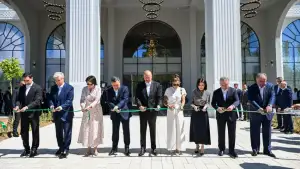
Photo from the archive of the Press Service of the President of Uzbekistan

Latest News


See all
Read also
Energy Sector of Uzbekistan: A New Stage of Reform - From Investment to Efficient Governance