Experts from Central Asia and Japan Discuss New Areas of Cooperation
September 24, 2026. 21:30 • 3 min
• 107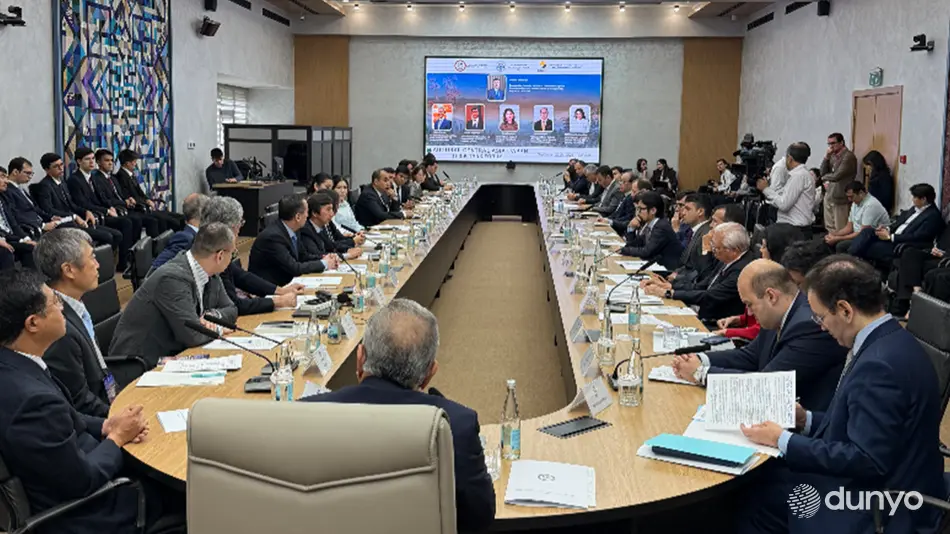
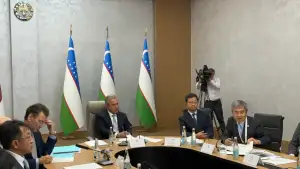
TASHKENT, September 24. /Dunyo IA/. The International Forum of Think Tanks in the Central Asia-Japan format was held today at the University of World Economy and Diplomacy, reports Dunyo IA correspondent.
The event was jointly organized with the International Institute for Central Asia and the Institute for Advanced Studies on Asia at the University of Tokyo.
During the forum, participants discussed a wide range of issues related to further developing cooperation between the countries of Central Asia and Japan, including transport and logistics, digitalization, energy, new technologies, tourism, education and human resource development.
Particular attention was paid to strengthening transport connectivity in the region. Participants emphasized the importance of the Middle Corridor, which connects Central Asia via the Caspian Sea with Azerbaijan, the South Caucasus countries, Türkiye and European markets.
In an interview with Dunyo IA correspondent, former Ambassador of Uzbekistan to Japan Alisher Shaykhov noted that one of the important outcomes of the forum should be the establishment of a permanent expert mechanism involving specialists from Central Asian countries and Japan.
“It is necessary for specialists from Central Asia and Japan to work together on each of the areas identified, develop specific proposals and determine the organizations, companies and ministries with which cooperation should be established,” he said. “It is important to move from expert dialogue to the implementation of practical projects. The proposals should include not only strategic objectives, but also specific implementation mechanisms, a list of potential partners and formats for engagement with government and private-sector institutions.”
He also stressed the need to focus on training specialists and transferring Japan’s technological expertise. One promising area is the implementation of joint educational projects, including the possibility of establishing a new university or specialized institutes focused on Japanese technologies and the training of highly qualified specialists for the Central Asian countries.
Jin Sato, Director and Visiting Professor at the Institute for Advanced Studies on Asia at the University of Tokyo, noted that this was his first visit to Central Asia and expressed his appreciation for the region’s historical and cultural heritage.
“Today, we discussed a wide range of issues, including telecommunications, energy, sanitation infrastructure, artificial intelligence and other areas, as well as opportunities to use Japanese technologies to improve living conditions in Central Asia,” Jin Sato emphasized. “Such expert dialogue contributes to deeper mutual understanding between Japan and the Central Asian countries and helps identify new practical areas of cooperation.”
The International Forum of Think Tanks provided a platform for exchanging views and developing concrete proposals for further cooperation in digitalization, transport and logistics, energy, tourism, education and technological cooperation.

Latest News


See all
Read also
International Forum of Analytical Centers in the “Central Asia – Japan” format is being held in Tashkent