Spanish Photographer draws a striking parallel between Uzbekistan in 1890 and 2026
September 10, 2026. 21:00 • 3 min
• 143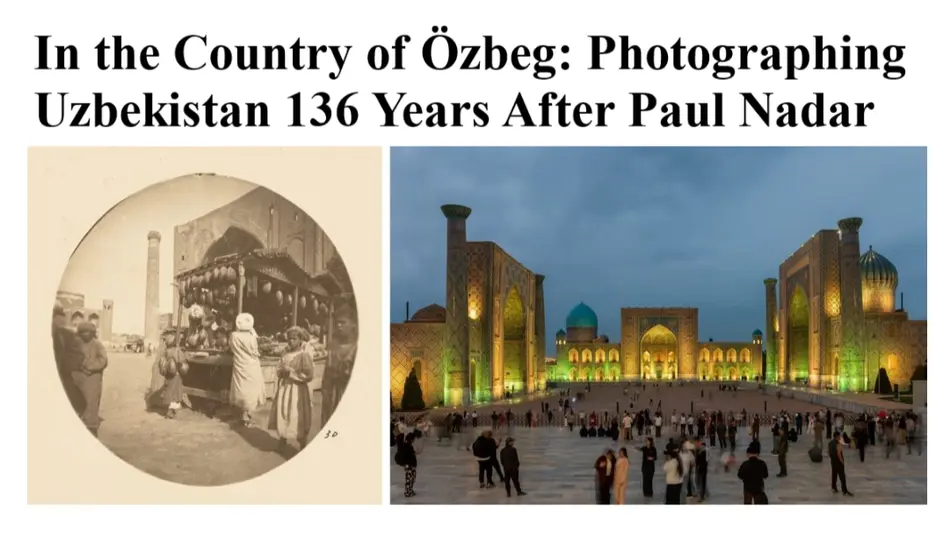
MADRID, September 10. /Dunyo IA/. With the support of the Tourism Committee of Uzbekistan and assistance from the Embassy of Uzbekistan in Spain, Spanish photographer and researcher specialising in the history of 19th-century photography Pablo Martínez Muñiz visited Uzbekistan to retrace part of the route taken by French photographer Paul Nadar in 1890, reports Dunyo correspondent.
Following his visit, the Spanish photographer published an article on the “Novastan” portal titled “Uzbekistan Through the Lens of Paul Nadar, 136 Years Later”, comparing archival photographs by the French photographer with his own contemporary images. The original Novastan article is titled “In the Country of Özbeg: Photographing Uzbekistan 136 Years After Paul Nadar”.
In 1890, Paul Nadar undertook a two-month journey from Paris to Tashkent via Constantinople, Batumi, Tiflis, Baku, Bukhara and Samarkand. During the trip, he took around 1,800 photographs, documenting cities, architecture, the railway, markets, local people and everyday life in Central Asia.
In 2026, Martínez Muñiz visited Tashkent, Samarkand, Bukhara and Khiva. His project did not seek to literally reproduce the historical photographs, but rather to show the changes the country has undergone and create a visual dialogue between the past and the present.
Photographer paid particular attention to architecture. He noted the combination of traditional heritage with Soviet modernist architecture and contemporary buildings, as well as the reinterpretation of historical forms in new cultural and religious complexes.
A separate example was Samarkand’s Registan Square. While in 1890 the square was part of the city’s everyday life, today it has become one of Uzbekistan’s main symbols and a centre of the country’s tourism industry.
Contemporary photographs also show changes in society – from representations of Uzbek women of different generations to the coexistence of local culture with global symbols. Among the examples cited by the author is a young Uzbek man wearing an FC Barcelona shirt against the backdrop of Bukhara’s historic architecture.
Concluding the project, Martínez Muñiz juxtaposed Paul Nadar’s photograph of the Trans-Caspian Railway with an image of the walls of Khiva. In his view, this makes it possible to connect the journey of the 19th-century French photographer with a contemporary itinerary and present Uzbekistan as a space where historical heritage, the Soviet past and globalisation coexist.

Latest News




See all