Scholar of Bukhara origin explores Timurid heritage in European archives
June 27, 2026. 11:30 • 4 min
• 48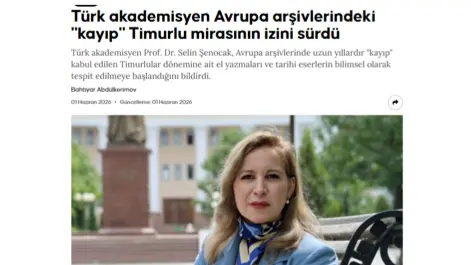
ANKARA, June 27. /Dunyo IA/. Turkish scholar Professor Selin Şenocak, whose family traces its roots to Bukhara and who is currently conducting research in Europe, has shared details of her long-term studies on Temurid-era manuscripts and historical artifacts in an interview with Anadolu Agency, reports Dunyo IA correspondent.
According to Professor Selin Şenocak, the history of the Temurid period and Uzbekistan has become an increasingly important subject of international academic research.
“As part of the In the Footsteps of Our Ancestors project, I conducted research in universities and archives in Oxford, Edinburgh, Paris, Berlin, and Vienna, examining manuscripts and historical artifacts dating back to the 14th and 15th centuries. The aim of this work is not only to study these documents but also to restore them to the broader cultural and academic discourse”, - she said.
The scholar noted that numerous manuscripts related to the history of Turkestan and Uzbekistan preserved in European libraries remain insufficiently explored. Among them are Alisher Navoi’s Chagatai-language divans and copies of The Code of Temur (Temur tuzuklari), which are housed in major research centers, including those in Oxford and Berlin.
She also pointed out that European archives contain epic works describing the conversion of Satuk Bughra Khan — the first Muslim Turkic ruler to Islam. According to the interview, many such manuscripts were removed from Uzbekistan during the Tsarist Russian and Soviet periods and are now accessible to researchers.
Professor Şenocak emphasized that one of the greatest challenges for historians is the dispersion of historical documents across different countries.
“A single manuscript may have one copy in Paris, another in Vienna, while its complete description is listed in a catalog in London. Therefore, researchers must go beyond catalogues, actively engage with international academic networks, and conduct systematic archival work,” she said.
The interview also highlights that in recent years several European universities have introduced academic programs dedicated to Chagatai, the classical literary language of the Uzbek people, enabling more in-depth research into the written heritage of Turkestan. According to Professor Şenocak, this reflects Europe's growing recognition of the historical and cultural value of the Turkestan collections preserved in its archives.
She also praised Uzbekistan’s ongoing efforts to preserve and study the Temurid legacy. According to the scholar, the reforms being implemented under the leadership of President Shavkat Mirziyoyev have placed renewed emphasis on restoring national historical memory and safeguarding cultural heritage. In this context, her research envisages cooperation with Uzbek scholars to establish a digital library that will help preserve historical sources for future generations.
Although born in France and a native French speaker, Professor Şenocak pursued her education in Türkiye to maintain close ties with Turkic language and culture. She later continued her academic career in Europe, serving as Head of Department and Vice Dean at the Swiss Federal Institute of Technology, and currently heads UNESCO’s Cultural Diplomacy Department.
Speaking about her family background, Professor Şenocak said that Turkestan has never been a distant land for her, as her ancestral roots lie in Bukhara. Her great-grandfather, Sheikh Shakir Afandi, migrated from Bukhara to the Ottoman Empire in 1862 at the invitation of Sultan Abdulaziz and became a respected scholar in Türkiye’s Ordu province.
“My great-grandfather’s grave in Ordu continues to be visited with deep respect by local residents. Every effort I make is a tribute to his aspirations. Uzbekistan is not a foreign country to me—it is the ancient homeland where my ancestors originated and where an important part of my identity was formed”, - she said.
Professor Selin Şenocak concluded that her research in European archives is intended to promote the Temurid heritage and the history of Uzbekistan within the international academic community, facilitate the reintegration of historical documents into scholarly circulation, and contribute to the creation of digital knowledge resources for future generations.

Latest News



See all
Read also
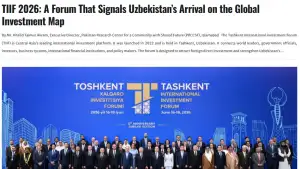
Pakistani Media: Uzbekistan continues to strengthen its position in the global investment landscape
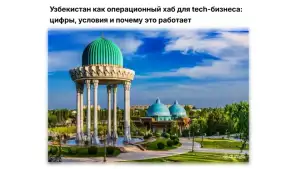
“Orient” IA: Uzbekistan continues to strengthen its position as a regional hub for International Business Expansion