Pakistani Media: The Council of Elders may be regarded as an instrument for strengthening the resilience and strategic agency of Central Asia
December 24, 2025. 08:15 • 4 min
• 1138
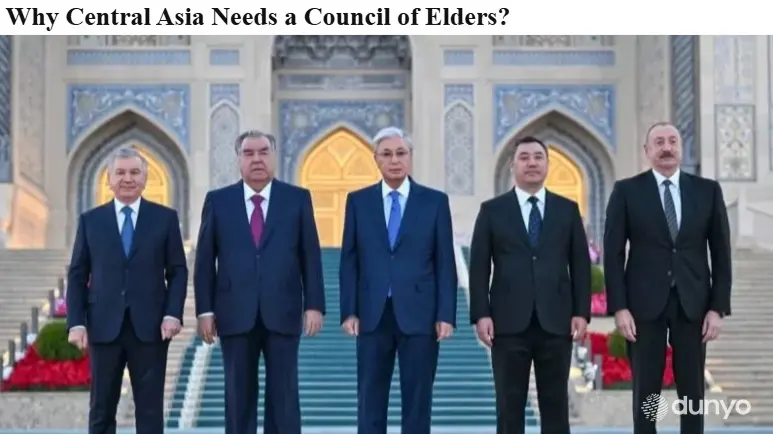

ISLAMABAD, December 24. /Dunyo IA/. Analytical commentary on President Shavkat Mirziyoyev’s initiative to establish the Council of Elders of Central Asia has been published in leading Pakistani newspapers, including “Pakistan Today” and “Daily Ittehad” as well as prominent online outlets such as “The Diplomatic Insight”, “MNN News”, “Diplomatic Affairs”, “Urdu.MNN News” and “News Network Pakistan”, prepared by Akramjon Ne’matov, First Deputy Director of the Institute for Strategic and Interregional Studies (ISRS), reports Dunyo IA correspondent.
“The proposal put forward by the President of Uzbekistan to create a Council of Elders of Central Asia warrants particular attention, as it transcends standard institutional approaches and draws on the region’s profound social and cultural foundations. It is not intended as a formalized body or an additional political layer, but as a return to time-tested mechanisms of social consensus that have historically underpinned stability and internal cohesion in Central Asian societies”, - noted the First Deputy Director of the Institute for Strategic and Interregional Studies (ISRS).
He added that throughout history, societies in the region have relied on the institution of elders as an effective mechanism for maintaining social peace, resolving conflicts and developing mutually agreed decisions.
Traditionally, the institution of elders has played a central role in Central Asia as a means of preserving social harmony, mediating conflicts and reaching broadly accepted decisions. Unlike formal legal frameworks, elders enjoyed legitimacy grounded in trust, wisdom, familiarity with local traditions and broad societal recognition. This form of community-based arbitration proved instrumental in safeguarding societal stability during periods of political change, external pressures and internal tensions.
According to the expert, applying this logic at the regional level opens the possibility of creating a unique informal channel for interstate dialogue, free from the pressures of current political dynamics, ideological disagreements and external influences. The Council of Elders does not replace official institutions or compete with state bodies; rather, it complements them by providing a trust-based platform for discussing sensitive issues that are not always ready for formalization.
The publication notes that in terms of regional security, the Council of Elders has the potential to function as a mechanism of preventive diplomacy. Drawing on their moral authority and intimate knowledge of regional realities, its members could help detect early signs of escalation, contribute to de-escalation efforts, mediate in crisis situations, and put forward compromise solutions before tensions evolve into open confrontation. This model aligns with internationally recognized early-warning and conflict-prevention practices, while remaining deeply embedded in Central Asia’s indigenous traditions.
In this regard, the Council of Elders could act as a key vehicle for articulating and promoting regional values—good neighborliness, mutual respect, tolerance, compromise, and peaceful coexistence.
In addition, the consultative function of the Council of Elders supports more prudent and forward-looking policy choices. Grounded not in immediate political expediency, but in historical experience, cultural continuity and awareness of societal attitudes, elders can provide guidance oriented toward the long-term and sustainable development of the region. This is especially important in addressing issues related to water and energy security, environmental pressures, migration, transport connectivity and humanitarian cooperation.
Overall, the Council of Elders may be regarded as an instrument for strengthening the resilience and strategic agency of Central Asia - an integrated space bound together by a common historical legacy, shared challenges and responsibility for a collective future. This is precisely where the strategic significance of the initiative lies.

Latest News



See all
Read also
“The Gulf Observer”: Uzbekistan and Azerbaijan promote important environmental initiatives on the international stage
Popular Spanish newspaper describes Bukhara and Tashkent as symbols of Uzbekistan’s past and future