Smita Pant: When it comes to relations between India and Uzbekistan, even the sky is not the limit for us
August 30, 2026. 09:10 • 6 min
• 56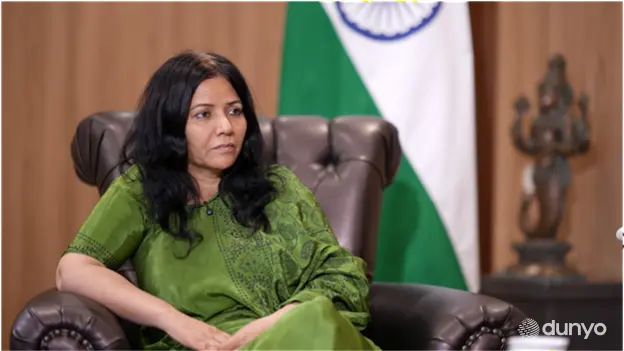
TASHKENT, August 30. /Dunyo IA/. On the eve of the State Visit of Prime Minister of India Narendra Modi to Uzbekistan, which began yesterday, Ambassador of India Smita Pant gave an exclusive interview to a correspondent of Dunyo IA.
– Madam Ambassador, political dialogue between Uzbekistan and India has intensified considerably in recent years. What would you identify as the most significant achievements of bilateral cooperation and which areas are currently considered priorities for Tashkent and New Delhi?
– In my view, when it comes to relations between India and Uzbekistan, even the sky is not the limit for us, because our cooperation is multifaceted. We are bound by historical and civilizational ties that date back centuries. The strong cultural and spiritual bonds between our peoples provide a solid foundation for further developing our relations.
At the same time, cooperation is expanding in trade and investment, science and technology. Today, thousands of young Indians come to Uzbekistan to pursue their education. We are also working together in such areas as information technology, artificial intelligence, startups and agriculture.
Our two countries fully understand and highly value the importance of a strategic partnership. We are now exploring the prospects of elevating it to a new level – that of a comprehensive strategic partnership. At its core is a people-centered approach, namely, the implementation of projects that bring tangible benefits to the peoples of both countries. I consider this particularly important.
Leaders of our two countries attach great importance to giving substantive content to bilateral relations and further strengthening them, including in the area of sustainable development.
For example, Uzbekistan is implementing the “Yashil Makon” (“Green Space”) initiative, while India has a program called “Plant for Mother”. Both initiatives share a noble objective – planting millions of trees.
These efforts reflect a spirit of complementarity. We are both countries of the Global South, we have young populations and our leaders pursue forward-looking policies. We are committed to the principles of sustainable development.
Leaders of our countries meet regularly, including during the visit of our esteemed Prime Minister to Uzbekistan. Such meetings provide an opportunity to discuss a broad range of pressing issues. The agenda of our cooperation is extensive, with particular emphasis placed on the interests of the peoples of our two countries.
– Trade and economic cooperation is one of the priority areas of bilateral relations. In your view, which sectors could become new drivers of growth in Uzbekistan–India trade?
– It should be noted that bilateral trade has been developing steadily. Its volume has already exceeded US$1.3 billion, although the potential in this area is considerably greater. Earlier, the leaders of our two countries set a target of increasing bilateral trade to US$1 billion. Despite the limited transport and logistics connectivity, we have managed to surpass this target.
India and Uzbekistan are natural partners. For instance, we can significantly increase imports from Uzbekistan to India, particularly agricultural products. At the same time, there is considerable potential for supplying Uzbekistan with a wide range of products from India at affordable and competitive prices.
-In my view, agriculture, information technology, mechanical engineering, the textile industry, pharmaceuticals and production of automotive components will remain priority areas for both sides. However, in the medium and long term, as transport and logistics connectivity improves, bilateral trade is likely to experience a qualitative leap.
I believe greater attention should be devoted to expanding the activities of joint ventures. I am pleased to note that a number of Indian companies are currently investing in the Tashkent Pharma Park. Indian investors are also directing investments into various other sectors.
India’s investment in Uzbekistan’s economy has already exceeded $1 billion. The future of our cooperation is linked not only to increasing trade volumes, but also to opportunities such as expanding the number of joint ventures, increasing technology transfer and integrating our respective supply chains.
In my view, these areas will become the key drivers of growth in the future.
– India has extensive experience in pharmaceuticals, healthcare, and digitalization. Which areas of Indian expertise could be most relevant to Uzbekistan and contribute to further expanding practical cooperation between our two countries in these fields?
– I believe both countries have much to learn from each other. In particular, we can draw valuable lessons from Uzbekistan’s rich experience in agriculture. India, in turn, can share its achievements, especially in artificial intelligence and information technology.
We provided assistance and played a role in the establishment of the first IT Park in Uzbekistan. At the initial conceptual stage of this process, the Software Technology Parks of India deputed a specialist.
– Uzbekistan and India actively cooperate on international platforms such as the United Nations, the Shanghai Cooperation Organization and the Non-Aligned Movement, as well as within BRICS, where Uzbekistan has partner-country status. Important formats of cooperation also include “Central Asia–India” and the “Voice of Global South”. In your view, what joint initiatives could give new practical impetus to Uzbekistan–India cooperation at international and multilateral platforms?
– We already cooperate very closely at multilateral forums, whether within the United Nations or the Shanghai Cooperation Organization. We also sincerely welcome Uzbekistan’s accession to BRICS as a partner country. As you know, India currently holds the BRICS chairmanship.
India and Uzbekistan share common views on many issues. There is a significant convergence in our foreign policy positions and assessments of geopolitical developments.
We consistently emphasize the importance of peace and development, and that conflicts should be resolved through negotiations and diplomacy, while peace is the path to the future.
Leaders of our two countries attach great importance to multilateral cooperation between India and Uzbekistan.
I would like to return once again to your previous question. You asked what more can be done. In my view, people’s interests should remain at the heart of our cooperation. It is encouraging that both sides are already working in this direction.
There is another area of particular importance – digital public infrastructure. Uzbekistan is already undertaking substantial work in this field, while in India it has developed on a very large scale.
I believe we should also consider financial and digital connectivity. The flow of tourists from India to Uzbekistan is growing, as is the number of young Indians pursuing higher education in your country. At the same time, many Uzbek citizens travel to India for medical tourism.
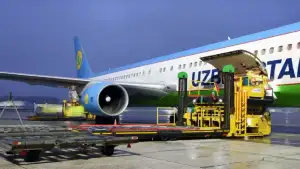
Regular weekly flights operate between our countries. In addition, a new air route between Tashkent and Hyderabad is being launched.
Therefore, in my view, it would be highly beneficial to facilitate convenient cross-border payments through the mutual integration of the payment systems of our two countries.
Healthcare is also of tremendous importance to our bilateral relations. A comprehensive approach is needed in this area. This is not limited to pharmaceuticals. India has a well-established system of traditional medicine – Ayurveda. Uzbekistan, in turn, has a rich heritage of traditional medicine rooted in the legacy of Ibn Sina (Avicenna).
There is considerable potential for complementarity in this area. We therefore need to consider a comprehensive approach to healthcare cooperation and develop closer interaction in the fields of Ayurveda and traditional medicine.

Latest News


See all
Read also

Alpár Kató: The most important change in New Uzbekistan - renewal of people's mindset

Attitude from UN: Resolution adopted at the Initiative of Uzbekistan has important strategic significance