Contemporary crises are transforming journalism’s role and strengthening its contribution to protecting democratic institutions
March 30, 2026. 09:52 • 4 min
• 141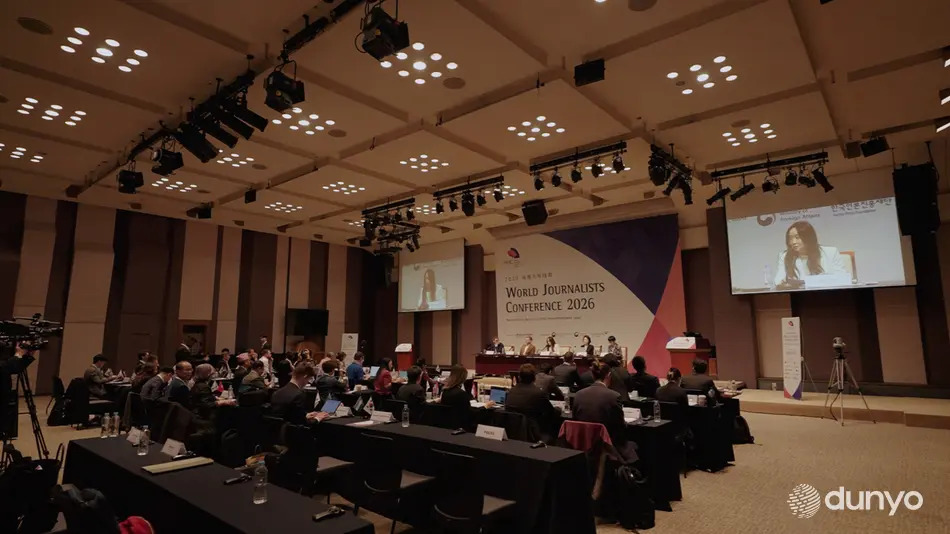
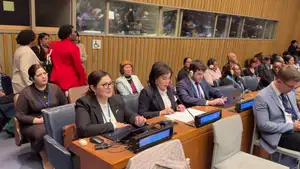
SEOUL, March 30. /Dunyo IA/. “World Journalists Conference 2026” has commenced in the capital of the Republic of Korea, reports Dunyo IA correspondents participating in the event.
Topic of the first session is “Democracy and Journalism at a Crossroads: The Role of Media in Times of Crisis”. Participants are discussing the transformation of the media landscape amid global challenges, including the spread of disinformation, increasing political polarization and declining trust in traditional news sources.
The session moderator, Lee Joo-hee, Senior journalist and executive editor-in-chief of “The Korea Herald”, noted that modern crises are significantly reshaping the role of journalism and reinforcing its importance in sustaining democratic institutions. According to her, the rapid advancement of technology - primarily artificial intelligence is radically transforming the media landscape, creating both new opportunities and serious risks.
Special attention was paid to the role of the media in crisis situations. In such conditions, participants emphasized, journalism becomes a key tool for transparency, informing the public and maintaining social trust.
Felix Lill, a correspondent for the German media group “Redaktionsnetzwerk Deutschland”, noted that one of the primary challenges facing the modern media environment is the decline in trust in journalism.
- In Germany, about 42% of citizens do not trust the media. A significant portion of the audience is convinced that editorial policy depends on the political agenda. This is a serious challenge for journalism as an institution, - he emphasized.
According to Felix Lill, the nature of information consumption is simultaneously changing. More people, especially young audiences, are getting their news via social media, short-form videos and influencer content. News materials are actively spreading on platforms like TikTok, and it is no longer possible to ignore this trend.
Daniel Bastard, Asia-Pacific Editor for the French publication “Courrier International”, drew attention to the global increase in pressure on press freedom.
According to him, models of authoritarian governance are spreading across different regions of the world, impacting even democratic societies. Rhetoric that labels journalists as “enemies of the people” contributes to the normalization of pressure on the media and undermines the stability of the global information system.
Daniel Bastard also noted the growth of digital surveillance, the use of vague laws under the pretext of counter-terrorism and rise of self-censorship among journalists. According to international studies, the state of press freedom is deteriorating in many countries, spanning from Asia to Europe.
He emphasized the importance of pluralism of opinion in modern journalism.
Kim Eun-ji, Chief Political Editor of the South Korean magazine “SisaIN”, dedicated her speech to the events of December 3, 2024, when martial law was declared in the country.
According to her, this decision became a severe test for South Korean democracy and its media system. Under the decree, restrictions were placed on political activities, assemblies and strikes were banned and the mass media were brought under the control of the military command.
However, journalists continued to report on the events in real-time, documenting the actions of security forces and keeping the public informed. This, in Kim Eun-ji’s view, became a crucial factor in mobilizing civil society and protecting the democratic order.
- Journalism must not only convey information but also protect constitutional values. Democracy is never a finished process - it can both evolve and regress, - she emphasized.
Pattraporn Paiboolsin, Head of the International News Department at the Thai newspaper “Daily News”, stated that the modern world is experiencing not only geopolitical crises but also a deep information crisis.
According to her, the development of social media and digital platforms has created an unprecedented flow of data; however, an abundance of information does not mean it is reliable. On the contrary, this often leads to an increase in disinformation and a competition between political narratives.
According to the expert, an additional threat is posed by the development of artificial intelligence, which allows for the generation of convincing fake images, audio and video.
- Today, wars are fought not only on the battlefield but also in the information space. In these conditions, responsible journalism becomes a vital element in protecting democratic societies, - Pattraporn Paiboolsin noted.
She also emphasized that despite the rapid advancement of technology, the foundation of the profession remains rooted in human values -responsibility, independence and empathy.
“World Journalists Conference” continues its work.

See all