Uzbekistan and China successfully launch “Samarkand-2028” Hyperspectral Satellite
August 05, 2026. 17:30 • 2 min
• 52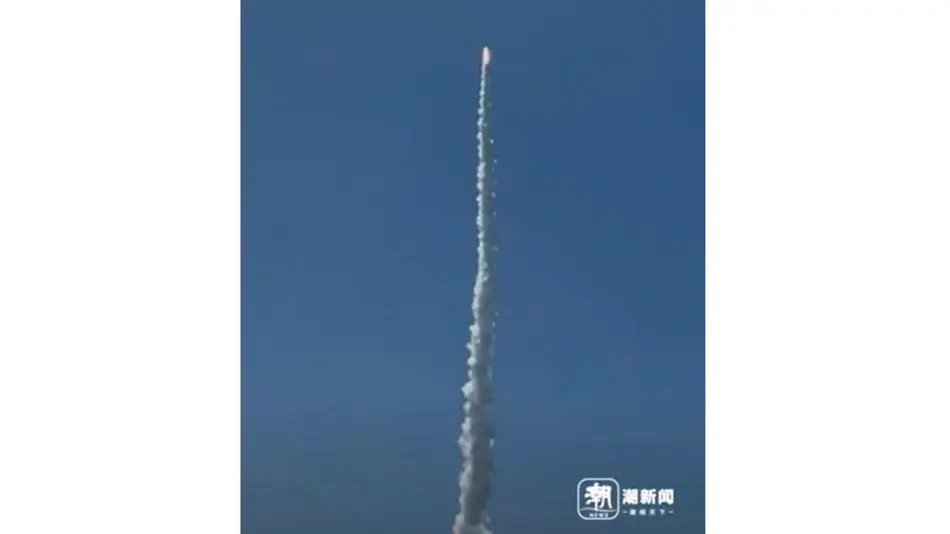
BEIJING, August 5. /Dunyo IA/. With the participation of the delegation of Uzbekistan led by Mukhiddin Ibragimov, Deputy Director of the Space Research and Technology Agency under Digital Technologies Ministry of Uzbekistan, in cooperation with the Chinese company “Star.Vision”, hyperspectral satellite “Samarkand-2028” was successfully launched from the spaceport in Shandong Province, reports Dunyo IA correspondent.
Uniqueness of this 300 kg satellite lies in its lightweight design compared to similar Earth observation satellites. For context, the American “WorldView-3” weighs 2.8 tons, while the European Space Agency's “Sentinel-2” weighs 1,140 kg.
As Chinese specialists note, it is equipped with an artificial intelligence computing unit, making it the most powerful hyperspectral satellite in the world. The high computing power allows for on board data processing, transmitting only “effective information” to Earth, reducing processing time from “days/hours” to “minutes”, increasing the data utilization rate from less than 10% to over 80%, and improving operational efficiency by more than 5 times compared to manual interpretation.
The combination of “lighter” and “more intelligent” technologies enables a transition from “clear observation” to “understanding”, representing a significant step for the hyperspectral satellite from “data collection” to “intelligent services”. For instance, it can monitor the nitrogen, phosphorus, and potassium content in agricultural crops and track their growth, as well as detect pollution in lakes and soil.
According to Li Deren, Recipient of the State Preeminent Science and Technology Award, Member of the Chinese Academy of Sciences and the Chinese Academy of Engineering, “Today’s success is a major breakthrough in hyperspectral remote sensing technology. High-end international commercial hyperspectral satellites are no longer just cameras recording pixels, but are starting to understand everything they see”.
For the Uzbek delegation, additional meetings were organized at the China Manned Space Agency, as well as at “Great Wall”, “Star Vision” and “Mino Space” corporations.

Latest News


See all