According to German Sources, Uzbekistan’s economy expected to set to sustain strong growth through 2026-2027
January 17, 2026. 14:40 • 2 min
• 227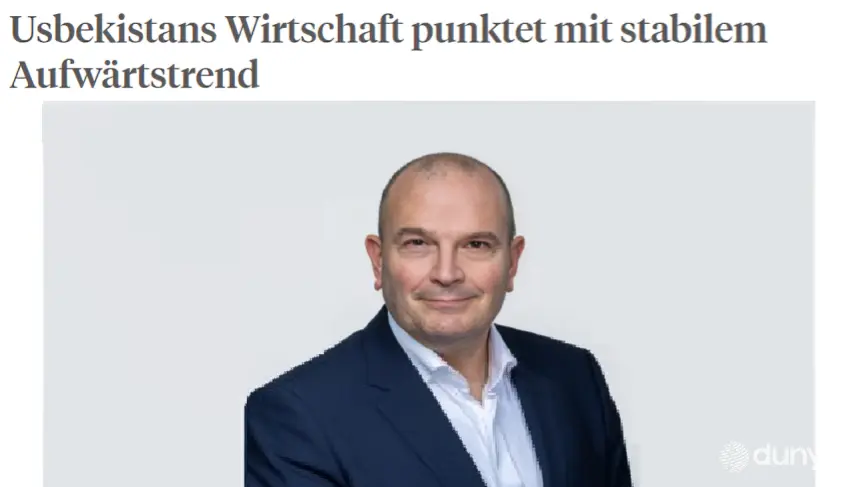
BERLIN, January 16. /Dunyo IA/. Uwe Strohbach, an expert at Germany’s prestigious „Germany Trade & Invest“ (GTAI) agency, has released a special report outlining the economic prospects of Uzbekistan for the next two years, reports Dunyo IA correspondent.
According to the report, ongoing reforms and investment activity are the main drivers of economic growth in Uzbekistan. The German expert noted that the Uzbek government, together with international financial institutions including the International Monetary Fund (IMF) and World Bank, projects real GDP growth of 6–7 percent in 2026 and 2027.
Uzbekistan is pursuing ambitious goals in the field of renewable energies. Their share of total electricity generation is expected to rise to 54 percent by 2030. In the first ten months of 2025, around 23 percent were already achieved - after only 7 percent in 2022. There are currently around 50 ongoing and planned green electricity projects with a total value of 26 billion US dollars (US$).
The report also highlights Uzbekistan’s strong investment appeal. By the end of 2025, the volume of foreign investments and loans flowing into the economy was nearly three times higher than in 2022. For 2026, further growth is expected, with almost two-thirds of total capital inflows projected to come from foreign investment.
The analysis emphasizes that Germany remains Uzbekistan’s key trading partner in the European Union, with German exports to the country exceeding $1 billion. According to Strohbach, the most promising sectors for German exporters include pharmaceuticals and medical equipment, textile and food processing machinery, agricultural storage and refrigeration systems and IT outsourcing services.
The government is flanking the economy with reforms. Its current agenda includes the dismantling of state monopolies, structural reforms to realign large state-owned enterprises, the accelerated privatization of companies and fallow land and increased business and export promotion.
The increased use of public-private partnership models is also part of this. In the period 2024 to 2030, the government wants to implement such projects with an estimated total cost of around US$ 30 billion.
Uzbek government is strengthening its economic environment by reducing monopolies and accelerating privatization. Through a public-private partnership model, Uzbekistan plans to implement projects worth $30 billion by 2030, offering investors a sign of long-term stability.
The expert notes that these positive assessments from German economic circles further reinforce Uzbekistan’s reputation as a reliable partner in global markets.

See all