View from Tajikistan: Uzbekistan and Azerbaijan build a robust “East–West” interregional bridge
August 25, 2026. 14:30 • 4 min
• 144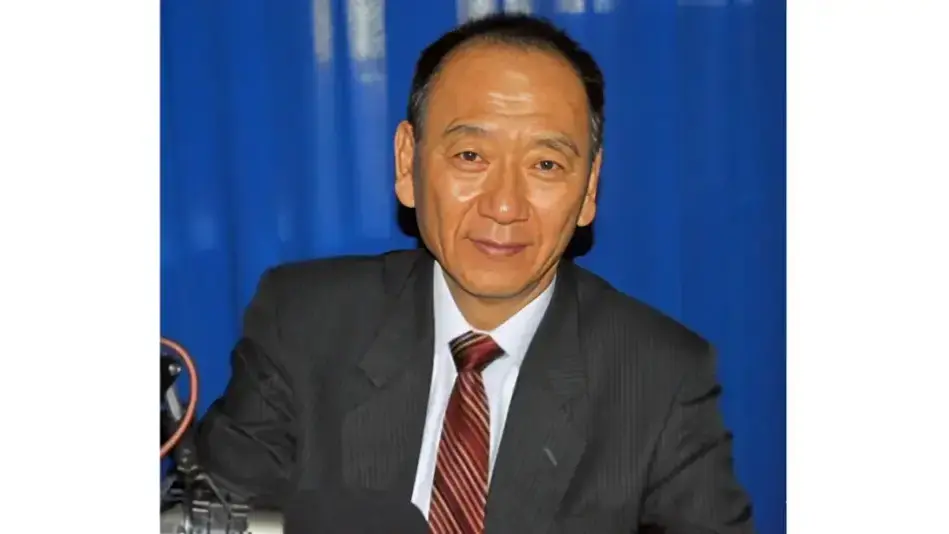
DUSHANBE, August 25. /Dunyo IA/. Viktor Kim, Research Fellow at the Institute of Philosophy, Political Science and Law of the National Academy of Sciences of Tajikistan, commented for Dunyo IA on the outcomes of the state visit of the President of Azerbaijan Ilham Aliyev, to Uzbekistan on August 23–24th:
- State visit of the President of Azerbaijan Ilham Aliyev, to Uzbekistan marks a vibrant and logical milestone in the long process of shaping a new Eurasian architecture. The signing of the historic Treaty on Eternal Friendship is not merely a protocol-driven pinnacle of diplomacy, but a document that seals the birth of a genuine axis of stability at the intersection of two newly emerging geopolitical regions.
Within the expert community, we encounter various interpretations of the emerging new processes in Central Asia and the South Caucasus, often attempting to explain this phenomenon through clichés such as “Greater Central Asia” or merely as a mechanical definition like the C6 format. However, if we discard these clichés and apply pure political logic, an entirely different picture emerges: we are witnessing a classic example of an equivalent interregional synthesis between the sovereign spaces of Central Asia and the South Caucasus.
Attempts to expand the Central Asian C5 to a conditional C6 format by including Azerbaijan fail to recognize the novelty of contemporary processes, which are freed from customary clichés and stereotypical perspectives. The C5 format evolved from a shared historical and geographical core, a water and energy balance, and the civilisational connectivity of the five regional states. Azerbaijan, meanwhile, possesses the most potent gravity of the South Caucasus. A simple, mechanical merger of the two would disrupt the unique subjectivity of both sides.
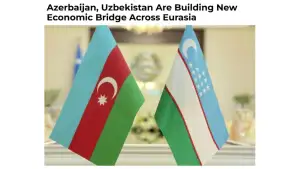
True depth of the unfolding process lies in the fact that Uzbekistan and Azerbaijan are building a robust “East–West” interregional bridge. Here, Uzbekistan acts as an active core drawing together continental links, while Azerbaijan serves as a key western outpost in the Caspian–Black Sea direction. This is a synergy of two independent geo-economic hubs, where each partner respects the sovereignty of the other. In other words, Uzbekistan and Azerbaijan form a tandem that establishes the foundational architecture for Eurasian transit, connecting East and West on their own sovereign terms.
Historical link connecting the grand China–Kyrgyzstan–Uzbekistan railway project with the Caspian infrastructure of Azerbaijan and further with the Georgian ports on the Black Sea is taking its definitive shape.
Doubly landlocked heart of Central Asia, embodied by Uzbekistan, secures a reliable, sovereign, and secure gateway to global markets, insulated from external risks. Azerbaijan, in turn, guarantees an uninterrupted, long-term operational capacity for the Trans-Caspian Corridor. This forms a closed loop of grand Eurasian trade that functions independently of volatile shifts along traditional northern or southern routes.
Signed Treaty on Eternal Friendship is underpinned by a robust economic foundation. A 500-million-dollar joint investment fund and over a hundred successfully operating joint ventures - spanning from the automotive industry to agribusiness - demonstrate that the alliance between the two nations has ascended to a level where capital and industrial strategies are deeply integrated.
Leaders of the two states demonstrate an example of long-term planning that is rare in today’s turbulent world. Gaining familiarity with the urban planning philosophy of New Tashkent and launching practical production chains underscore that the leaders of Uzbekistan and Azerbaijan think not in terms of current statistics, but in horizons of decades.
State visit of the President of Azerbaijan Ilham Aliyev, to Uzbekistan has demonstrated the most crucial point - modern Eurasia is being built not in the capitals of global superpowers, but right here, at the intersection of the interests of sovereign states.

Latest News

See all
Read also
“Daily News Hungary”: Water-saving technologies in Uzbekistan saved 3 billion cubic meters of water in 2025
“Sada al-Balad” IA: Sport becomes an instrument of the cultural diplomacy of Uzbekistan