Attitude from Türkiye: Central Asia is gradually shaping its own agenda based on joint technological advancement, innovation and human capital development
July 30, 2026. 19:50 • 3 min
• 38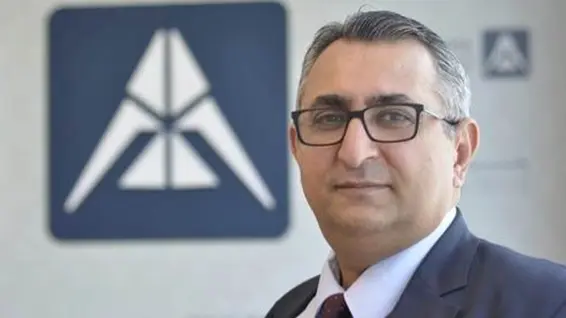
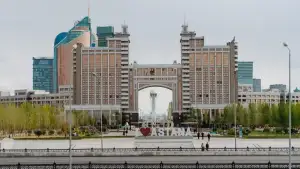
ANKARA, July 30. /Dunyo IA/. Professor Mehmet Seyfettin Erol, Founding President of the Ankara Center for Crisis and Policy Studies (ANKASAM), shared his assessment with Dunyo IA on the outcomes of President of Uzbekistan Shavkat Mirziyoyev’s working visit to Kazakhstan on July 29th, including his participation in the opening ceremony of the Third International “Games of the Future” competitions, held in Astana:
- Working visit of the President of Uzbekistan Shavkat Mirziyoyev, to Astana comes at a time when Central Asia is progressively expanding its international agenda. While until recently the region was primarily associated with matters of energy, logistics and security, today increasing attention is being paid to digital technologies, innovations, education and youth initiatives. It is precisely within this context that hosting the Third International “Games of the Future” competitions acquires a profound significance.
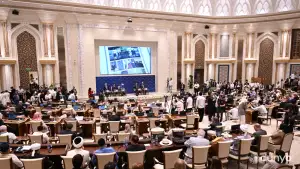
Opening ceremony itself demonstrated that the tournament has already transcended the boundaries of a conventional sporting event. Presidents of Kazakhstan, Uzbekistan, Kyrgyzstan and Tajikistan gathered in Astana, while Russian President Vladimir Putin addressed the participants via a video message. Such a high level of representation underscores that the organizers view the “Games of the Future” as an international platform capable of uniting sports, technology and humanitarian cooperation.
Competition format itself reflects modern trends. “Phygital” integrates classic sports disciplines with digital technologies, creating a new model of competition that resonates deeply with the younger generation. This approach allows us to speak not only about the development of sports but also about the formation of new competencies demanded by the digital economy.
Participation of President Shavkat Mirziyoyev in the opening ceremony appears entirely consistent. The country is actively investing in digitalization, the development of the IT industry, artificial intelligence and the training of young specialists. In this sense, the interest in the “Games of the Future” fully aligns with the domestic transformations being implemented in the country.
It is equally important that Uzbekistan's participation in the tournament is not merely formal. Uzbek athletes will compete in phygital football, laser tag, and the dance discipline. This demonstrates the country's commitment to being represented in emerging sports fields, where digital technologies are becoming as vital a component of competition as physical training.
Consistency of Tashkent's position deserves separate attention. The President of Uzbekistan attended the opening of the inaugural “Games of the Future” in Kazan in 2024, and is now participating in the tournament's opening ceremony in Astana. This approach indicates that the Republic views this project as a long-term international initiative rather than a one-time event.
Today, it is increasingly such projects that are becoming a new tool for regional interaction. Central Asia is gradually shaping its own agenda, based not only on economic cooperation but also on the joint development of technology, innovation and human capital. That is why the participation of the President of Uzbekistan in the opening of the “Games of the Future” should be viewed as part of a broader process, within which the states of the region are jointly defining their place in the global technological and humanitarian architecture.

Latest News
See all
Read also
Uzbekistan – Kyrgyzstan: Strategic partnership for peace, stability and prosperity in the region