ISRS presented an analytical report titled “Uzbekistan as a Responsible Middle Power”
August 26, 2026. 16:00 • 8 min
• 286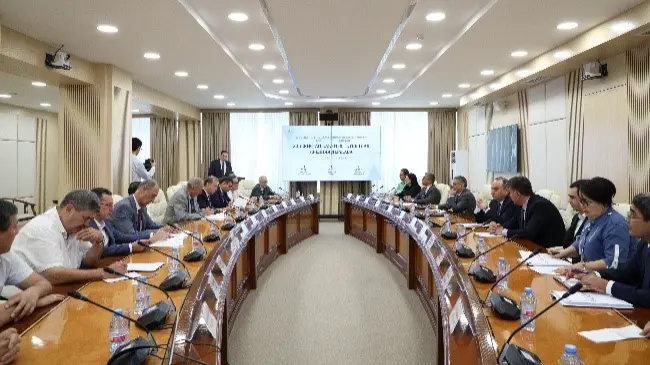
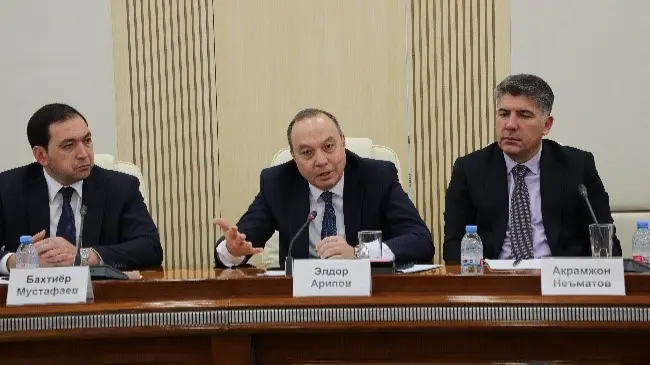
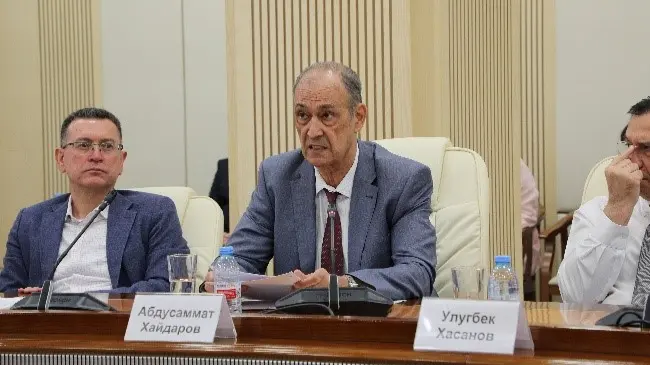
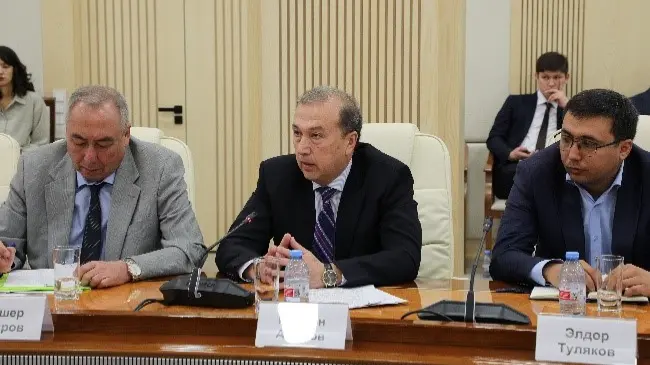
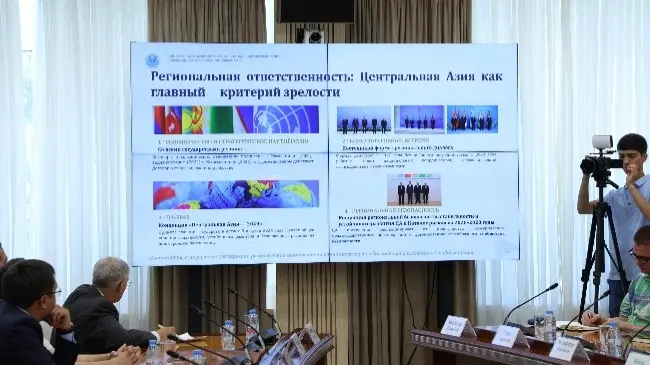
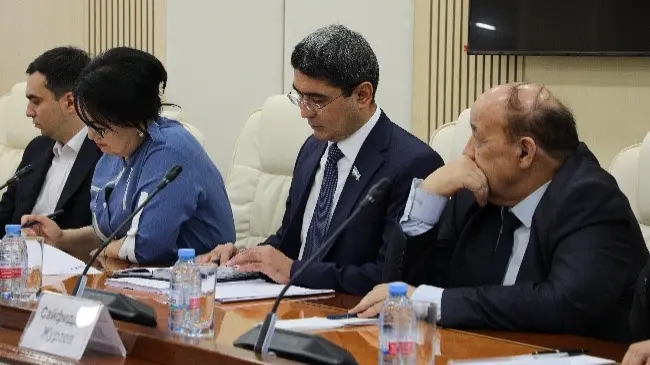
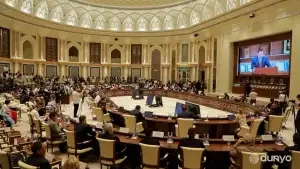
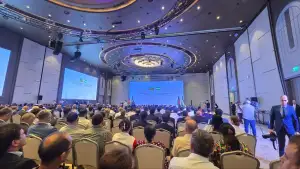
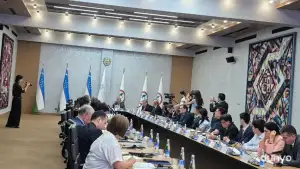
TASHKENT, August 26. /Dunyo IA/. The Institute for Strategic and Regional Studies under the Head of our state (ISRS) hosted a research and policy seminar entitled “Uzbekistan as a Responsible Middle Power: Foreign Policy Transformation, Regional Responsibility and International Standing”, dedicated to the 35th anniversary of the state independence of the Republic of Uzbekistan, reports Dunyo IA correspondent.
The discussion centered on the analytical report “Uzbekistan as a Responsible Middle Power,” prepared by a team of ISRS authors. The report examines the evolution of the country’s foreign policy and the qualitative changes that have taken place during the years of independence, particularly over the past decade.
The discussion brought together representatives of government agencies, research and analytical centers, leading universities, as well as scholars and experts in international relations and foreign policy.
Opening the seminar, ISRS Director Eldor Aripov emphasized that, over 35 years of independence, Uzbekistan had established itself as an independent and responsible actor in international relations, developed its own school of foreign policy and fostered a culture of advancing national interests. In his assessment, it was the past decade in particular that had brought a new quality to the country’s foreign policy. While preserving the fundamental principles of sovereignty, non-interference, the peaceful settlement of disputes, pragmatism and mutual benefit, it had become considerably more open, proactive and focused on creating a favourable external environment.
Eldor Aripov noted that the discussion was prompted by assessments from the international academic and expert community, which in recent years has increasingly identified features of a modern middle power in Uzbekistan’s policies. The task of ISRS was to examine in substantive terms the extent to which this analytical framework reflects the changes that have taken place.
Seminar participants noted that interest in the phenomenon of middle powers is naturally increasing amid growing polycentricity, intensifying strategic competition and fragmentation of the international system. Under these conditions, there is particular demand for states capable of pursuing an independent course, maintaining constructive relations with various centres of power and facilitating practical solutions to common challenges.
It is in this context that the international academic and expert community increasingly views Uzbekistan as an emerging middle power.
Presenting the report, ISRS First Deputy Director Akramjon Nematov noted that, in contemporary international practice, a middle power is defined not so much by the size of the state as by its ability to translate available resources into an independent and proactive foreign policy, regional responsibility and tangible international outcomes.
According to Nematov, the analysis demonstrates that Uzbekistan is increasingly displaying these qualities. First, this is reflected in the independence and pragmatism of its foreign policy. Tashkent consistently develops constructive relations with Russia, China, the United States, the European Union, Türkiye, the Gulf states, South Asia, Japan, the Republic of Korea and other partners. This is not a policy of equidistance, but an effort to broaden the scope for strategic choice and avoid becoming drawn into confrontational dynamics among major centers of power.
Second, it is reflected in proactive diplomacy. As highlighted in the presentation, Uzbekistan is increasingly not only participating in an established international agenda but also proposing its own issues and mechanisms concerning Central Asia, Afghanistan, transport connectivity, climate, the Aral Sea region, interfaith dialogue, youth and sustainable development. By August 2026, the United Nations General Assembly (UNGA) had adopted 15 special resolutions initiated by Uzbekistan. Nematov stressed that, for a middle power, what matters is not merely putting forward an initiative, but the ability to unite states with differing interests around it and translate the proposal into a practical international decision.
Third, the country’s foreign policy engagement is underpinned by its growing domestic resources: a dynamic economy, the largest demographic potential in Central Asia, a central geographical position, human capital, a substantial natural resource base and expanding transport connectivity. Participants noted that it is precisely the combination of political and diplomatic capabilities with material resilience that provides the foundation for strategic autonomy and enables the country to broaden its choice of partners, markets, routes and technologies.
Assessing the approach presented in the report, Professor Abdusamat Khaydarov, Director of the Diplomatic Academy at the University of World Economy and Diplomacy under the Ministry of Foreign Affairs of Uzbekistan, drew attention to the importance of continuity in the country’s foreign policy. In his view, the qualitative transformation of recent years has not displaced the fundamental principles of Uzbek diplomacy, but has given them a more proactive form. It is precisely the combination of sovereign decision-making, pragmatism, predictability and the ability to maintain dialogue with various centres of power that builds the state’s reputational capital and expands its diplomatic capabilities.
Central Asia occupied a prominent place in the discussion. As Sherzod Fayziev, Deputy Director of the International Institute for Central Asia, emphasised, a country’s own region provides the most rigorous test of the maturity of any middle power. It is there that one can see whether a state is capable of translating its political and economic weight into trust, resilience and public goods for its neighbours rather than pressure. In the case of Uzbekistan, this is reflected in stronger good-neighbourly relations, the settlement of border issues, the restoration of transport links, increased trade, the search for compromises on water and energy, and the development of the region’s own dialogue mechanisms.
At the same time, participants stressed as a matter of principle that Uzbekistan’s more active role should be viewed not as a redistribution of influence within Central Asia, but as one element in the growth of the region’s collective international agency.
Kazakhstan, Kyrgyzstan, Tajikistan, Turkmenistan and Uzbekistan are pursuing more proactive foreign policies and increasingly advancing region-wide interests together. A space of shared responsibility is taking shape in which the strengthening of each state enhances the resilience and international standing of the entire region.
As noted during the discussion, proactivity and a readiness to assume responsibility are becoming region-wide characteristics. The Central Asian states are not only strengthening cooperation within the region, but are also playing an increasingly active role in shaping the broader international agenda by advancing their own priorities, whose significance extends far beyond the region. Each state is developing its own profile of international influence, while their combined efforts reinforce the agency of the region as a whole.
Ravshan Alimov, Doctor of Sciences and Director of the Centre for Afghanistan and South Asia Studies at the Institute for Advanced International Studies, noted that regional consolidation is creating new foreign policy opportunities for Central Asia. In his assessment, the transition from fragmented interaction to coordinated positions enables the region to act with greater agency in its relations with major external partners, promote connectivity with South Asia and transform its central location into a practical resource for development. In this context, Uzbekistan’s initiatives on dialogue, transport corridors and economic integration serve not only its national interests but also the broader objective of increasing Central Asia’s collective weight.
According to Ravshan Alimov, it is fundamentally important that the growing international role of individual countries in the region is not leading to competition for political primacy. On the contrary, a model is emerging in which the international achievements of one state expand opportunities for Central Asia as a whole, strengthen its negotiating position and make the region a more resilient and sought-after partner.
Participants cited the UNGA decisions of 20 May 2026 as a notable example of this new agency. The resolution entitled “Strengthening Regional Cooperation and Economic Integration to Ensure Sustainable Development in the Central Asian Region,” presented by Uzbekistan on behalf of the five Central Asian states, attracted 66 co-sponsors. On the same day, the resolution entitled “Peaceful Settlement of Border Disputes,” submitted by Kyrgyzstan jointly with Tajikistan and Uzbekistan, was adopted with 40 co-sponsors. In the participants’ view, the first initiative reflects the region’s growing capacity to shape a shared development agenda, while the second demonstrates its ability to transform its own experience in peacefully resolving complex issues into an approach of international relevance.
The very fact that the Central Asian states are jointly presenting their regional experience at the United Nations and building broad coalitions around it points to a qualitative change in the region’s international role. Central Asia is increasingly not only adapting to an externally shaped agenda, but also participating in its formulation. In this context, the growing recognition of Uzbekistan as an emerging middle power is also a manifestation of Central Asia’s increasing international weight as a whole.
The global dimension of responsibility was also discussed separately. According to the participants, Uzbekistan’s international influence is becoming increasingly evident in two areas: its ability to shape the agenda and its capacity to provide platforms for dialogue. Tashkent, Samarkand, Bukhara, Khiva, Fergana and Termez host major multilateral events, while national and regional initiatives concerning the Aral Sea region, climate, transport connectivity, religious tolerance and sustainable development receive support at the United Nations and other international institutions.
Participants emphasized that an important feature of Uzbekistan’s foreign policy remains its commitment to connecting rather than dividing, while preserving strategic autonomy, good-neighbourliness and openness to engagement with various centres of power. This enables the country not only to benefit from a stable external environment but also to contribute to shaping it.
Concluding the discussion, Eldor Aripov stressed that the concept of a responsible middle power should be understood not as a title or privilege, but primarily as a higher standard of responsibility. The growth of a state’s capabilities inevitably entails higher expectations regarding the quality of its diplomacy, economic and technological resilience, human capital, ability to fulfil commitments and capacity to deliver practical results for its own region and the international community.
Participants agreed that the report presented does not offer a definitive determination of Uzbekistan’s status, but rather opens a professional discussion. At the same time, the combination of external assessments, the transformation of the country’s foreign policy conduct, stronger regional responsibility and expanding international proactivity points to an important trend: Uzbekistan is increasingly demonstrating a model of statehood that seeks to connect rather than divide, stabilize rather than exacerbate tensions, build trust and create space for mutually beneficial cooperation.

Latest News



See all
Read also
Center for Islamic Civilization in Uzbekistan announces World Calligraphy Competition to create a unique Quran