EBRD Vice-President Matteo Patrone: Uzbekistan is implementing a comprehensive program of reforming its economy and the country has great investment potential
November 18, 2024. 07:39 • 9 min
• 1821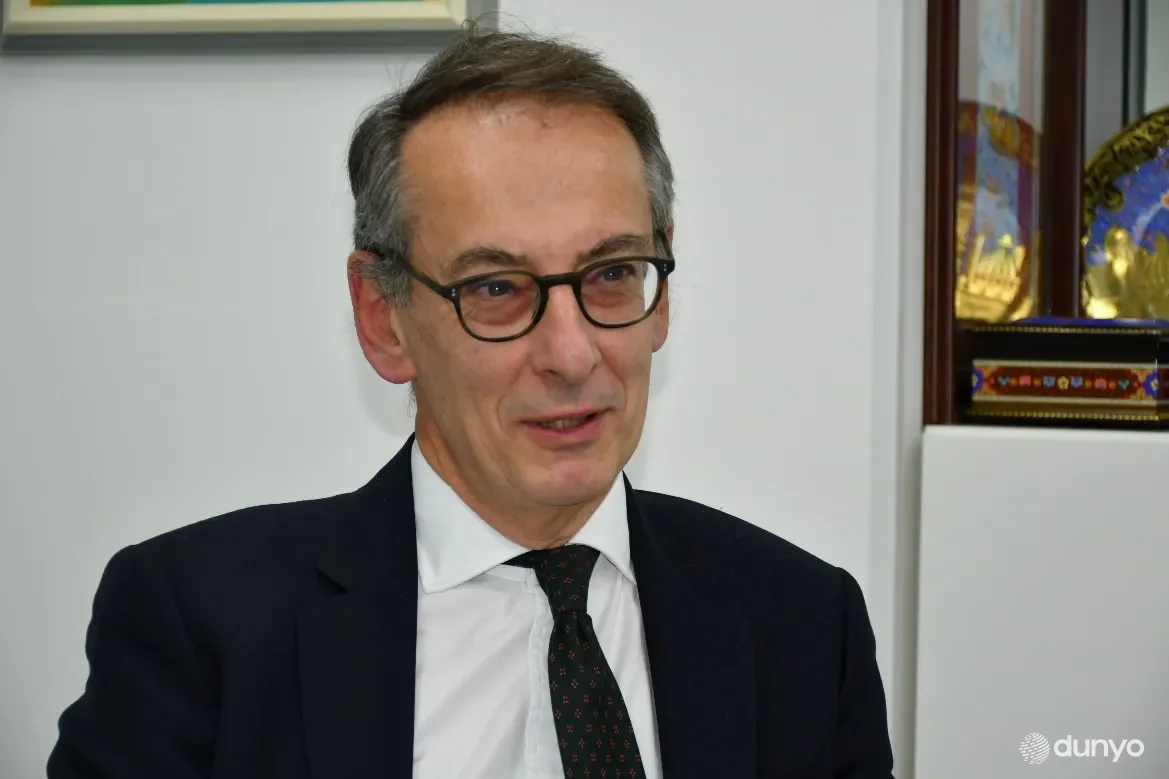
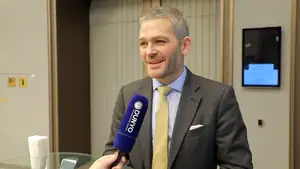
TASHKENT, November, 18. /Dunyo IA/. Investments of the European Bank for Reconstruction and Development (EBRD) in Uzbekistan may soon reach 1 billion euros a year. This and other topics were in the center of talks in Uzbekistan of EBRD Vice President Matteo Patrone. In an exclusive interview for Dunyo IA, he spoke about the current development of cooperation, immediate plans and long-term prospects of the EBRD's interaction with Uzbekistan.

- Since the European Bank for Reconstruction and Development (EBRD) resumed its activities in our country in 2017, it has been actively involved in the economic and social development of Uzbekistan. We propose to start our conversation with the main directions of the bank's projects in Uzbekistan.
- Thank you for the question. Indeed, our relations have been strengthening since 2017. In 2023, we invested more than 700 million euros (760 million US dollars) in your country's economy.
Uzbekistan has been the leader of the Central Asian region in attracting EBRD funds for the fourth year. The portfolio of projects in the country allows us to forecast that our annual investment in Uzbekistan will gradually reach the level of 1 billion euros.
We finance projects ranging from renewable energy to sustainable infrastructure, from SME support to residential energy efficiency. Our activities in Uzbekistan, the country with the largest population in Central Asia, are defined in the Bank's strategy, developed in cooperation with the government. Our priorities in the country until 2029 include supporting decarbonization, improving water efficiency, clean energy, private sector development, supporting employment, promoting inclusion and digital transition, economic governance, improving the business environment and infrastructure connectivity, and focusing on the implementation of signed projects, especially in the public sector.
Let me briefly tell you about several projects financed by our Bank and implemented by the Saudi "ACWA Power Company" this year. These are the first large-scale project in Central Asia to create a battery energy storage system in the Tashkent region and the first pilot plant for renewable hydrogen production. The first project, the largest in the region to date, will safely connect variable renewable energy sources to the power grid, while the second will contribute to the decarbonization of fertilizer and energy production in Uzbekistan.
- We know that the Bank actively supports the development of small and medium-sized businesses in Uzbekistan. How do you see the business environment created in our country, and what are the prospects for cooperation with the EBRD in this regard?
- In Uzbekistan, small and medium-sized enterprises produce almost 50% of GDP and employ about 80% of the labor force. It is not surprising that President Shavkat Mirziyoyev has made support for SMEs a national priority.
The EBRD has also made this sector one of its main operational priorities and this is outlined in the Bank's new strategy for Uzbekistan. We provide lending opportunities to SMEs through our partner banks. Targeted programs are envisaged that will support women- and youth-led enterprises, enabling them to adopt environmentally friendly and climate-resilient technologies. Both banks and SMEs will continue to benefit from the EBRD's Business Advisory Services (ASB) program.
Last year, the EBRD launched a seven-year, €200 million ($218 million) Youth in Business program in Central Asia. The program is designed to provide funding and better access to vocational training for young entrepreneurs aged 18 to 34. In the Central Asia region, they make up one-third of the working age population.
The EBRD loan funds will be complemented by a package of grants and concessional co-financing of up to €30 million to promote inclusive lending to youth entrepreneurship. Among the first institutions to join the program were the largest private bank in Uzbekistan "Hamkorbank", and "Ipak Yuli" Bank.
In cooperation with its client ACWA Power, the EBRD has also developed a "green skills" program for young people in Uzbekistan in the field of solar and wind technologies.
- You mentioned that the EBRD supports the empowerment of women entrepreneurs, what are your plans in this regard?
- The Bank's Equal Opportunity Strategy recognizes that factors such as gender, place of birth or residence, age, disability, types of skills, displacement and so on can lead to inequality of opportunity but can change over a person's lifetime.
This strategy opens up new areas for EBRD investment and provides targeted support in the following areas. These include expanding skills, employment and sustainable livelihoods, inclusive and gender-sensitive financial systems and business environment, and services and public goods.
In general, support to women entrepreneurs is crucial for Uzbekistan, which aims to increase the share of SMEs owned or managed by women from the current 25 percent to 40 percent in line with the country's 2030 gender equality strategy.
The EBRD's Women in Business in Central Asia Program was launched in Uzbekistan in 2020. It is supported by grant funding from the Women Entrepreneurs Finance Initiative and designed to help promote women’s entrepreneurship and business activity by assisting with access to finance, know-how and technical advice. Credit lines to our partner banks help us assist women-led or women-owned businesses, even in remote parts of the country.
- How do you assess the development of infrastructure projects and infrastructure improvement processes in Uzbekistan in general?
- Regional transportation links are very important for Central Asia in general and Uzbekistan in particular. Trade in Central Asia and beyond will benefit greatly from the improvement and expansion of the Trans-Caspian Corridor. We strongly believe that Uzbekistan is an important part of this initiative on interregional transport links. The country needs to modernize its roads and railways, upgrade border crossings, and remove unnecessary barriers to intra-regional trade and transport.
At the beginning of 2024, our bank announced that it is ready to invest about 1.5 billion euros in the next 2-3 years in the Trans-Caspian Corridor infrastructure and related transportation solutions.
Here is a good example of our work in this direction. An EBRD sovereign loan of up to $238 million, signed in May 2024, will help modernize 81 kilometers of road in the Khorezm region and build a bridge over the Amudarya River. This strategically important road is part of the transport network linking the administrative center of the region, Urgench, to Kazakhstan and forming the Trans-Caspian Corridor.
- Environmental projects are high on the EBRD's agenda for Uzbekistan. What is the Bank's strategy for cooperation with Uzbekistan in this regard?
- We are first and foremost a "green" bank, and from this perspective every project we support in Uzbekistan must meet our strict environmental and social criteria.
The EBRD and the Uzbek government have developed a long-term decarbonization strategy that supports the country's plan to achieve carbon neutrality in the energy sector by 2050. Our Bank is also helping the country develop a national methane emissions program.
We will continue to support the introduction of renewable energy in Uzbekistan. In 2023 alone, our Bank financed the creation of 1 GW of renewable energy capacity, bringing the country's total renewable energy capacity to 2.7 GW.
The EBRD is also encouraging competitive tenders for wind power, including the first 200 MW power plant in Karakalpakstan. We will continue to work on this area as it will help get better electricity prices for consumers and attract better investors. In the coming years, we will support new renewable energy projects to help Uzbekistan achieve its ambitious goal of installing up to 25 GW of solar and wind power by 2030.
Our Bank supported a major (US$200 million) project to modernize the irrigation system in the Ferghana Valley, the most densely populated part of Central Asia. Replacing old water pumps with modern equipment will reduce water losses.
- In recent years, Uzbekistan has been implementing reforms in various spheres, including economic reforms. They have been positively assessed by foreign experts. It is also interesting to know your opinion as a specialist.
- Your country is implementing a comprehensive program of reforming its economy. The country has a great investment potential. Uzbekistan is on the right track in terms of economic development and is achieving good results in the development of the private sector. Also, positive dynamics has been recorded in the energy sector, there are many initiatives to develop infrastructure, which gives a strong impetus for further economic integration with the states of the region.
- One more question: have you been to the regions of Uzbekistan? What can you say about the business environment in the regions? Are sufficient conditions created or is the focus only on the capital from the business point of view?
- Yes, I have been to the regions of Uzbekistan, and I have been there not once, but several times. I must say that every time I go there, I see how quickly the city is developing and the conditions for doing business are improving. In general, we see that the role of the private sector in the economy is growing and we believe that this is a promising trend.
- Yes, it should be noted that Uzbekistan pays special attention to economic ties in mutual cooperation. You noted above that reforms will stimulate economic integration. How would you assess Uzbekistan's role in economic integration in the region?
- Indeed, given the geopolitical situation, the country's activity on economic integration of the region is very significant. Uzbekistan is also an important country for the European Bank for Development and Reconstruction. Taking into account our annual investments in Uzbekistan, we expect that the EBRD's total investment in the region's economy may exceed 2 billion US dollars.
- We are aware of the EBRD's public charity initiative in Uzbekistan, could you please tell us more about it?
- The EBRD in cooperation with "Ezgu Amal", a non-profit foundation in Uzbekistan, has launched a public initiative aimed at collecting donations for the purchase of medicines and essential medical care for children with cancer. Donations will be collected for 6 months and "Ezgu Amal" will expand its activities to support more families and save the lives of children suffering from serious illnesses throughout Uzbekistan. The EBRD has already started the process of allocating up to €50,000 for this good cause.
- Thank you, Mr. Patrone, for your time and such an informative conversation!
- Thank you.
See all