Alpár Kató: The most important change in New Uzbekistan - renewal of people's mindset
August 10, 2026. 17:00 • 4 min
• 191
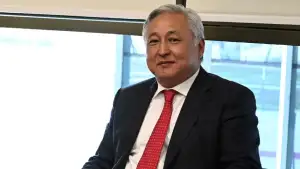
BUDAPEST, August 10. /Dunyo IA/. Alpár Kató, Director General of the popular Hungarian media resources “Daily News Hungary” and “Helló Magyar”, in an interview with Dunyo IA shared his thoughts on the results of the ten-year reforms carried out in New Uzbekistan, bilateral relations and priority areas for the future.
- How do you assess the results of the large-scale reforms implemented in Uzbekistan over the past decade?
As the head of media resources, I can say that one of the most important achievements is that Uzbekistan has become a much more open country to the world. The Republic has significantly asserted itself on the international arena. The active policy of liberalizing the economy, strengthening regional cooperation, and attracting foreign investment has fundamentally changed the country's image abroad.
Perhaps the most important change is that the outlook of both the people and the state has changed. Uzbekistan manifests itself as an active entity striving for cooperation, ready to compete and attract investment. This opens up new opportunities for the economy, tourism, education and cultural-humanitarian ties.
- What results of cooperation between Hungary and Uzbekistan do you consider the most successful?
- I consider it a very positive phenomenon that awareness of Uzbekistan in Hungary is growing. In the publications “Daily News Hungary” and “Helló Magyar”, we regularly cover issues of economic transformation, tourism and diplomacy in the country.
Recent processes involving Hungarian companies, in particular OTP Group and “Ipoteka-Bank”, show that bilateral ties yield concrete economic results. In the future, we will support the expansion of ties in media cooperation, journalist exchanges, and tourism promotion. “Daily News Hungary” and “Helló Magyar” are ready to provide informational support to Uzbek companies in promoting their interests in the European market.
- How has the improvement of openness and the investment climate in the country affected the confidence of the international community and investors?
- Changes are obvious and noticeable. Today, international investors view Uzbekistan completely differently than they did ten years ago. The liberalization of currency and trade regulations, and the expansion of the private sector testify to the seriousness of economic modernization.
Success of OTP Group involving “Ipoteka-Bank” has become an excellent advertisement for Hungary. Fact that one of the largest Hungarian companies is successfully operating in Uzbekistan instils confidence in other Hungarian investors as well.
- What opportunities do you see in the coming years in the fields of sustainable development, “green” economy and education?
- Cooperation can be deepened in the areas of water resources management, agriculture, renewable energy, digitalization and higher education.
Field of education is particularly important, as cooperation between universities creates strong ties that last for decades. Scholarship programs between Hungary and Uzbekistan are an excellent basis for joint research and student exchanges. Investing in human capital can yield even more benefits than investing in infrastructure.
- What regional initiatives of Uzbekistan do you consider to have the most important global and regional significance?
- Uzbekistan's initiatives to strengthen regional cooperation in Central Asia have a long-term impact. Issues such as transport connectivity, water resources, and energy security in the region cannot be solved alone.
Regarding the transport sector, “Uzbekistan – Afghanistan – Pakistan” railway project could become a real success factor for the country's access to the sea. The development of highway infrastructure is also very important. Wherever highways appear, industry and logistics develop faster.
- What areas, in your opinion, will be of decisive importance for the sustainable development of Uzbekistan in the coming decade?
- I would highlight three main areas: further strengthening the private sector and creating a competitive business environment; large-scale investments in education, technology, and innovation so that economic growth is based on knowledge and productivity; addressing environmental challenges, especially in water resources management and the transition to “green” energy.
These priority areas are also reflected in the “Uzbekistan – 2030” strategy.

Latest News

See all
Read also

Attitude from UN: Resolution adopted at the Initiative of Uzbekistan has important strategic significance
How China–Kyrgyzstan–Uzbekistan railway is redrawing the economic map of the continent