Uzbekistan's experience in meeting the Needs of Persons with Disabilities presented at UN Headquarters
June 15, 2026. 14:00 • 5 min
• 125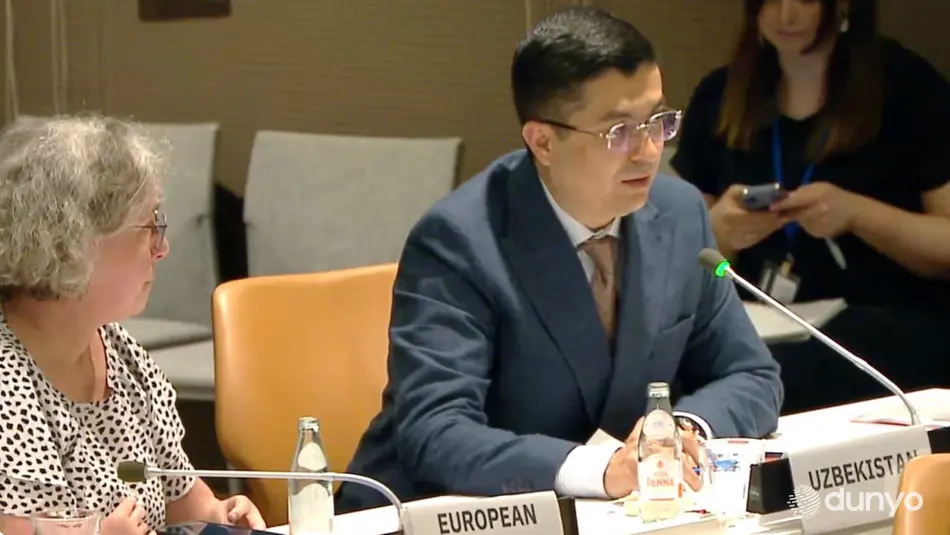
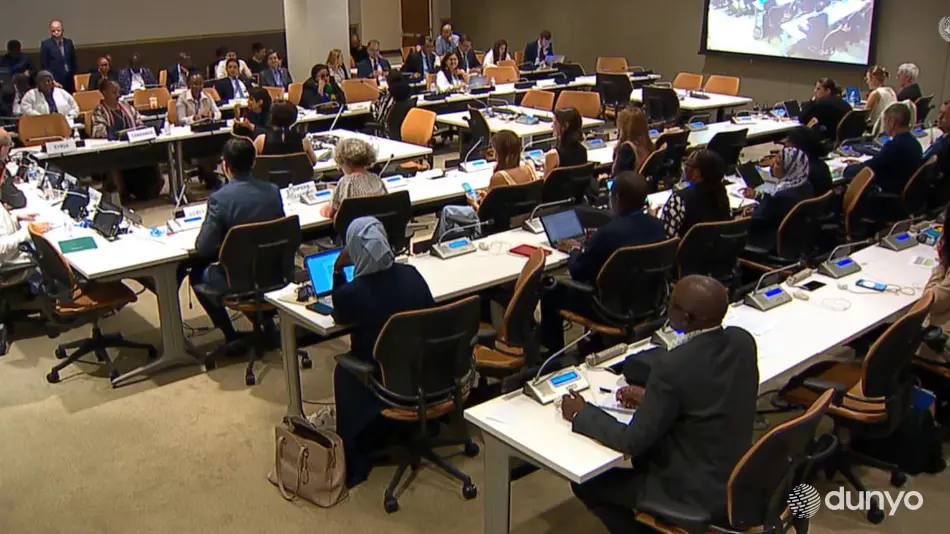
NEW YORK, June 15. /Dunyo IA/. A high-level event titled “Assistive technology: Capacity assessment and enhancement to meet the needs of persons with disabilities" was held at the UN Headquarters in New York, reports a Dunyo IA correspondent.
The forum was organized by the Permanent Mission of Uzbekistan to the UN jointly with the diplomatic missions of Ireland and Tanzania, World Health Organization (WHO) and the International Disability Alliance.
The event was attended by representatives of UN member states, heads of relevant entities within the UN system, diplomatic missions, the expert community, civil society, and organizations of persons with disabilities.
During the event, the Permanent Mission of Uzbekistan to the UN drew special attention to the profound democratic transformations being implemented under the leadership of the Head of State.
In particular, in his statement, Permanent Representative of Uzbekistan to the UN Ulugbek Lapasov, noted that for Uzbekistan, assistive technologies are not merely a matter of healthcare or social protection, but above all, a vital instrument for ensuring human dignity, independence and the full participation of persons with disabilities in public life.
It was emphasized that with the support of the WHO, a comprehensive National Assistive Technology Capacity Assessment was conducted in Uzbekistan. This process enabled a thorough analysis of the current system, identifying its strengths and defining directions for further enhancement.
The participants deliberated on expanding access to assistive technologies, strengthening national capacity, fostering interagency coordination, improving data collection, training specialists and incorporating the lived experiences of persons with disabilities into the formulation of relevant solutions.
Werner Obermeyer, Director of the World Health Organization (WHO) Office at the United Nations in New York, delivered welcome remarks. He emphasized that assistive technology stands as an essential prerequisite for the realization of the rights, equality, dignity, independence and full participation of persons with disabilities in society.
Keynote addresses were also delivered by the Minister of State for Disability of Ireland, Emer Higgins, Deputy Minister for Community Development, Gender, Women and Special Groups of Tanzania, Mary Prisca Mahundi, Member of the European Parliament, Katrin Langensiepen, as well as the representative of the World Federation of the Deafblind at the Youth Committee of the International Disability Alliance, Pere Canteñys Gómez.
During the interactive discussion, Uzbekistan’s experience in the field of assistive technology was highly commended. In particular, Giusi Princi, Member of the European Parliament from Italy and Chair of the European Parliament Delegation for Relations with the Countries of Central Asia, noted that the initiatives implemented in the country merit special attention.
According to her, Uzbekistan's experience could be of substantial interest to other nations in the region. In this regard, it was proposed to explore the possibilities of disseminating this relevant practice within the framework of interparliamentary cooperation between the European Union and the countries of Central Asia.
The participants concurred that assistive technologies must be viewed as a fundamental right and a practical tool for inclusion, rather than an element of ad hoc social support. It was noted that sustainable progress in this field requires reliable data, political will, interagency coordination, investment, capacity building and the direct participation of persons with disabilities themselves.
The event provided an important platform to present Uzbekistan’s national experience within the global discourse on assistive technology development, reinforcing the country's steadfast readiness to further cooperate with the WHO, UN member states, International Disability Alliance and civil society organizations to build an inclusive society.
Giusi Princi, Member of the European Parliament from Italy and Chair of the European Parliament Delegation for Relations with the Countries of Central Asia, noted:
- I would like to highlight that the presentation delivered by the representative of Uzbekistan was of particular interest to me. Today, it is with great satisfaction that I learned that Uzbekistan is already taking concrete steps toward integrating assistive technologies and is doing so with the support of the World Health Organization.
I chair the European Parliament Delegation for Relations with the Countries of Central Asia. In this regard, I would be highly interested in receiving more detailed information on the comprehensive work being carried out in Uzbekistan in this field.
In March of this year, we visited Uzbekistan, where we participated in the inaugural Interparliamentary Forum of Central Asian Countries. The forum served as a platform to deliberate on a wide range of issues of mutual interest to the states of the region.
Therefore, I believe that the experience presented today by Uzbekistan merits special attention. I consider it important to bring this experience to the platform of the Central Asia Interparliamentary Forum, which we have established.
One of the primary objectives of this forum is to foster inclusivity and accessibility for all citizens, as well as to create conditions under which persons with disabilities can fully exercise their rights and lead a fulfilling public life.
That is precisely why I believe that Uzbekistan's experience in the field of assistive technology could be of substantial interest not only to a single country but also to other nations in Central Asia. It would be highly beneficial to explore the possibilities of disseminating this practice within the framework of our interparliamentary cooperation.

Latest News
See all