
University of Warsaw hosts discussion on New Uzbekistan reforms and “Uzbekistan – 2030” Strategy
September 19, 2026. 14:00 • 4 min
• 108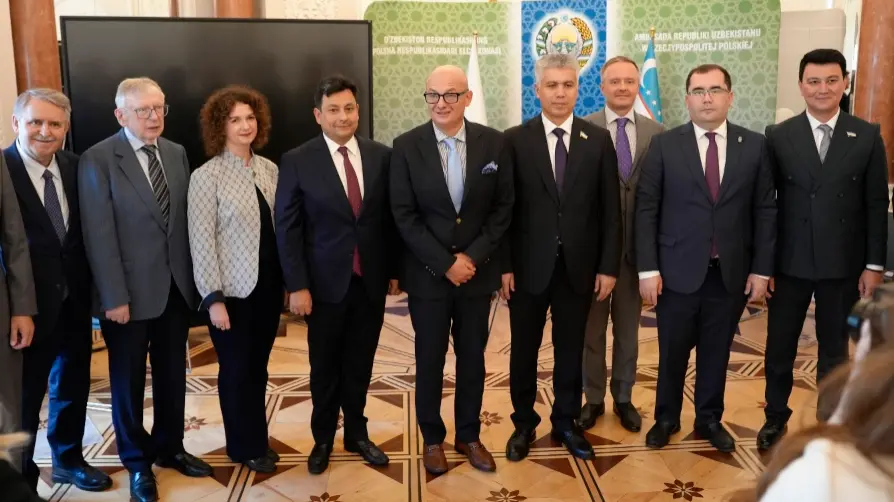
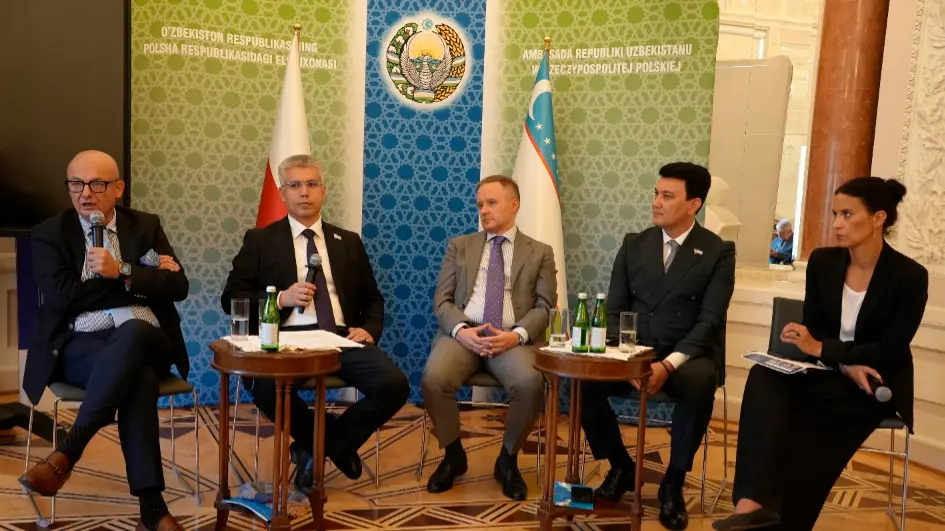
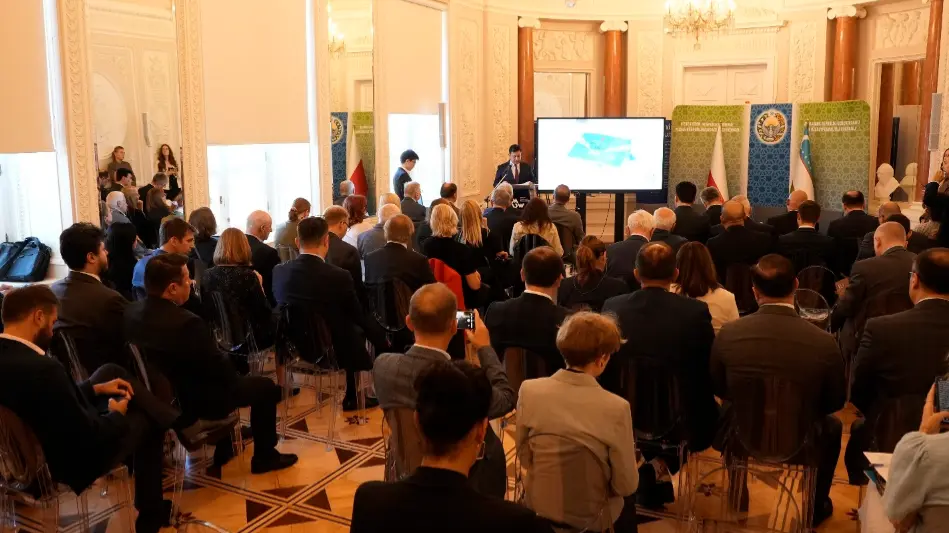
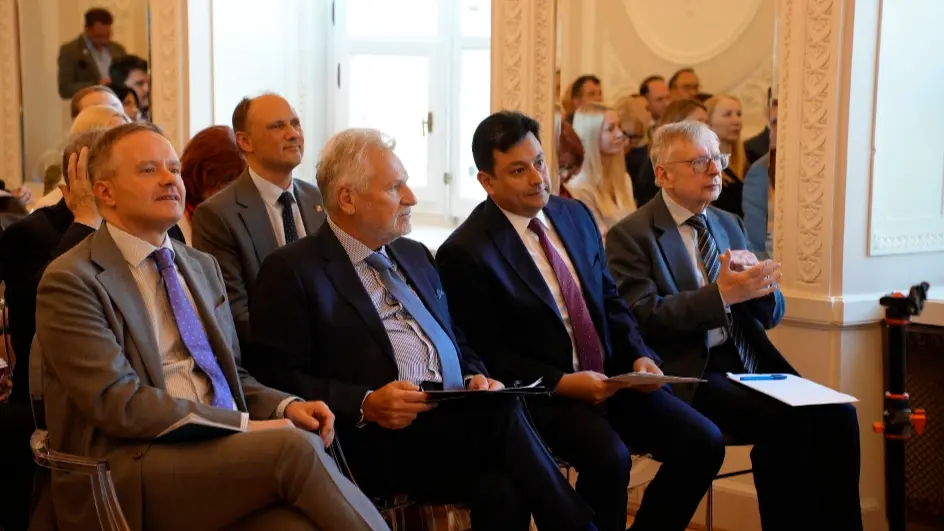
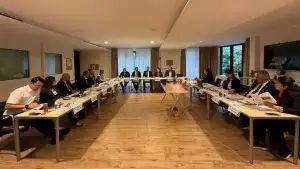
WARSAW, September 19. /Dunyo IA/. An international conference titled “Reforms in New Uzbekistan and the Uzbekistan – 2030 Strategy” was held at the University of Warsaw to mark the 35th anniversary of the Independence of Uzbekistan, reports Dunyo IA correspondent.
Conference was organized at the initiative of the Embassy of the Republic of Uzbekistan in Poland, jointly with the Legislative Chamber of the Oliy Majlis of Uzbekistan, Development Strategy Centre, Faculty of Political Science and International Studies of the University of Warsaw, Aleksander Kwaśniewski “Amicus Europae” Foundation and “Perspektywy” Education Foundation.
Conference brought together former President of Poland Aleksander Kwaśniewski, Deputy Marshal of the Senate of Poland Michał Kamiński, Deputy Speaker of the Legislative Chamber of the Oliy Majlis of Uzbekistan Rahimjon Hakimov, Ambassador of Uzbekistan Amirsaid Agzamkhodjaev, Director of the Development Strategy Centre Eldor Tulyakov, as well as representatives of state bodies and the parliaments of the two countries, diplomats, academics, experts and media representatives.
Discussions highlighted the far-reaching changes brought about by Uzbekistan’s reforms over the past decade, spanning public administration, the economy and the social sphere. Among the measures cited were the abolition of the registration system and restrictions on currency conversion, the strengthening of Parliament and the powers of local Councils, and measures to eliminate forced and child labour. Official Uzbek sources confirm the introduction of free foreign-currency conversion and the country’s efforts to end forced and child labour.
Particular attention was devoted to the 2023 constitutional reform. According to information presented at the conference, more than 220,000 proposals were received from citizens during the preparation of the revised Constitution, with approximately 65 percent of its text updated to reflect public input. These figures are also confirmed by the official website of the President of Uzbekistan.
Participants also reviewed the results of Uzbekistan’s economic and social transformation. According to the data presented at the conference, annual foreign investment has reached $40–50 billion, while the poverty rate has fallen from around 35 percent in 2017 to 4 percent. Preschool education coverage has risen to 78 percent, while the share of the population enrolled in higher education has exceeded 42 percent, compared with 9 percent in 2016.
A central focus of the conference was the “Uzbekistan – 2030” Strategy, which was presented in its Polish-language edition during the event. Eldor Tulyakov, Director of the Development Strategy Centre, outlined the document’s key priorities, including human capital and education development, technological transformation of the economy, rational use of natural resources, stronger judicial independence and the rule of law.
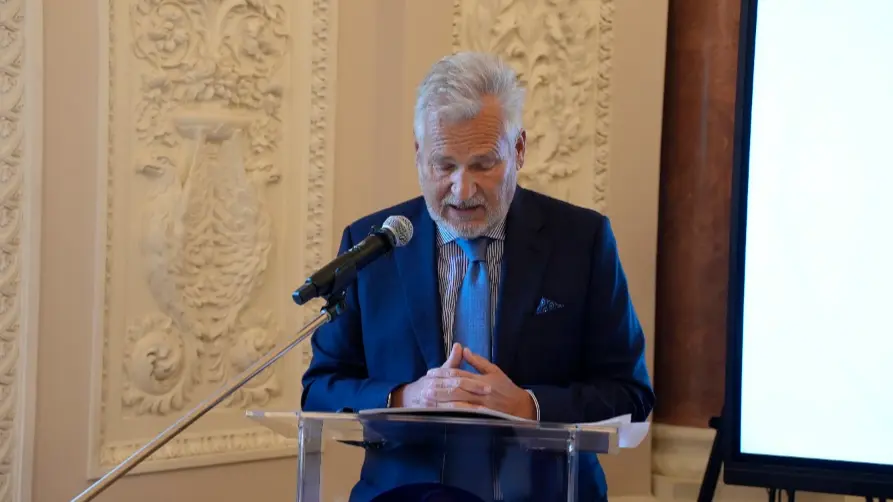
- On the sidelines of the conference, Former President of Poland Aleksander Kwaśniewski shared his assessment of the transformations under way in Uzbekistan:
- Today, Uzbekistan is undergoing a far-reaching political, legal and institutional transformation. Under the leadership of President Shavkat Mirziyoyev, the country has embarked on a comprehensive process of economic, social and institutional modernisation, while becoming increasingly open to the region and the wider world.
Uzbekistan is emerging as an important partner for the European Union. The signing of the Enhanced Partnership and Cooperation Agreement (EPCA) in October 2025 marked an important milestone, encompassing cooperation in trade, investment, education, innovation, advanced technologies and sustainable development.
Situated at the heart of Central Asia, Uzbekistan has the potential to become an important economic hub and a bridge between Europe and Asia. The development of transport, energy and digital infrastructure could further strengthen these opportunities.
Against the backdrop of geopolitical change, Uzbekistan’s balanced foreign policy and its role in promoting stability across Central Asia are of particular importance. The key challenge is to harness the country’s human, natural and institutional potential in support of sustainable development.
- Deputy Marshal of the Senate of Poland Michał Kamiński noted that interest among Polish parliamentarians in Uzbekistan, its international role and foreign policy has been growing in recent years:
- In recent years, interest among Polish parliamentarians in Uzbekistan, its international role and foreign policy has been growing. This is linked to the country’s openness, active international dialogue and independent foreign policy. The reforms under way are also contributing to strengthening Uzbekistan’s standing on the international stage.
For Poland, Uzbekistan’s importance is shaped, among other factors, by its role as an important geopolitical centre of Central Asia, as well as its significance in the Islamic and Turkic worlds. My recent visit to the Islamic Civilization Center in Tashkent made a particularly strong impression on me. The Center showcases the country’s rich historical and spiritual heritage and its potential to serve as an important intellectual and cultural centre of the Islamic world.
Uzbekistan’s open political course and ongoing development are creating new opportunities for cooperation with Poland, particularly in the areas of the economy, labour migration and political dialogue. The growing interest of Polish parliamentarians in Uzbekistan is laying a solid foundation for further deepening relations between the two countries.

Latest News
See all
Read also

Leading Indian business publication covers updated “Uzbekistan – 2030” strategy

