Uzbekistan and Turkmenistan forge new strategic partnership framework to strengthen bilateral cooperation
November 26, 2025. 14:39 • 6 min
• 469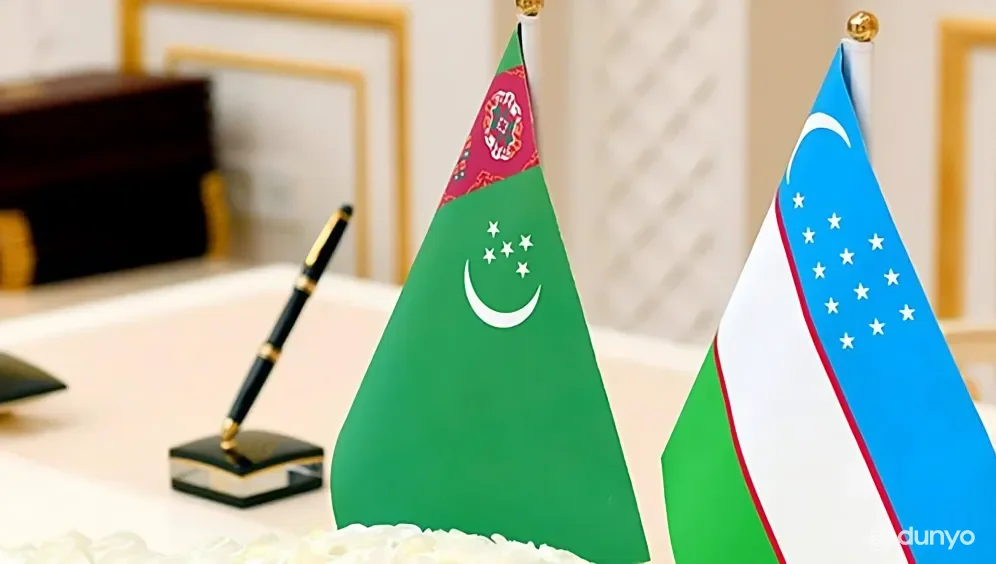
TASHKENT, November 26. /Dunyo IA/. Khurshed Asadov, Deputy Director of the Center for Economic Research and Reforms, presented an exclusive analysis to Dunyo IA on the state of Uzbek-Turkmen relations and the outcomes of the official state visit by President of Turkmenistan, Serdar Berdimuhamedov to Uzbekistan, which took place in November of this year.

The author notes that the visit marked a natural step in deepening the strategic partnership between the two countries.
High-level talks reaffirmed the alignment of interests in regional security, transport, energy, and humanitarian cooperation, while consolidating the positive trends observed in trade and economic relations in recent years. The package of documents adopted during the visit strengthened the institutional framework for cooperation and set forth a more long-term integration agenda.
According to the Center for Economic Research and Reforms, the economic ties between Uzbekistan and Turkmenistan have shown a stable upward trajectory. Between 2017 and 2024, the volume of bilateral trade rose 6.4-fold, increasing from USD 177.9 million to USD 1.14 billion.
Uzbekistan's exports to Turkmenistan rose 1.8-fold, reaching USD 128.2 million, while imports from Turkmenistan surged 10.6-fold to over USD 1.02 billion. Consequently, Turkmenistan's share in Uzbekistan's foreign trade increased from 0.7% to 1.7%. In 2024, bilateral trade expanded further by 4.8%, bringing total turnover to USD 1.15 billion.
The composition of bilateral trade underscores the highly complementary nature of the two economies. Uzbekistan’s exports to Turkmenistan are dominated by chemical products, including fertilizers and plant growth regulators, which account for approximately 33% of shipments. Services, primarily in the transport and logistics sector, also constitute a significant share, around 25%.
A substantial portion of Uzbekistan’s exports to Turkmenistan consists of food products, textiles, and household appliances. These sectors highlight significant potential for further growth, particularly through the deepening of industrial cooperation and the development of joint value chains.
Uzbekistan’s imports from Turkmenistan are primarily composed of energy resources and petroleum products, which in 2024 amounted to USD 975.9 million. Additional imports include textiles, chemical products, and glass. Overall, imports from Turkmenistan increased by 10.4% in 2024, with the largest contribution coming from energy supplies, underscoring the strategic interdependence of the two countries in the energy sector.
The short-term dynamics underscore the strategic importance of the bilateral partnership. In January–February 2025, the trade turnover between Uzbekistan and Turkmenistan reached USD 110 million. During this period, Uzbekistan’s exports increased by 30.5% to USD 14.4 million, while imports declined by 27.8% to USD 95.6 million. Overall, the trend remains positive, reflecting structural shifts in trade flows and continued deepening of economic cooperation between the two nations.
Investment cooperation between Uzbekistan and Turkmenistan is developing steadily. Over the past four years, the number of enterprises with Turkmen capital participation has increased by 12%, reaching approximately 200 companies. This reflects a gradual deepening of bilateral economic ties and growing confidence in the investment climate of both countries.
A flagship project in Uzbekistan-Turkmenistan economic cooperation is the establishment of a joint venture between "UzAvtoSanoat" and "Turkmenistan-Motors", with an investment volume of up to USD 10 million. In the first phase, the enterprise plans to produce 5,000 passenger vehicles per year, with a future expansion into agricultural machinery and buses. This cooperative model lays the foundation for the development of the automotive industry and related sectors across the region, strengthening industrial integration and regional economic ties.
In 2022–2023, Turkmenistan’s investments in Uzbekistan amounted to USD 6.7 million, directed towards construction, crop and livestock production, as well as the manufacture of glass and mineral products. The investment structure reflects a focus on long-term, capital-intensive projects with a high degree of localization, underscoring the strategic nature of bilateral economic cooperation between the two countries.
The results of the state visit, combined with current trade indicators, have created a strong foundation for structurally deepening economic cooperation between Uzbekistan and Turkmenistan.
During the negotiations, special emphasis was placed on expanding trade and economic ties, enhancing transport connectivity, and strengthening energy cooperation. It was noted that in recent years, bilateral trade has nearly doubled, and the medium-term target is set at USD 2 billion, to be achieved through broadening the range of mutual supplies, deepening processing industries, and developing joint manufacturing projects.
The inauguration of the "Shavat–Dashoguz" border trade zone represents a strategic instrument for advancing bilateral trade objectives. This zone is designed to serve as a key platform for expanding commerce between Uzbekistan’s Khorezm region and Turkmenistan’s Dashoguz velayat, home to over 3.5 million residents. Building on this experience, both sides plan to replicate this model across other border sectors, including the "Alat–Farab" corridor. The initiative aims to establish a networked framework of cross-border integration, leveraging direct linkages between regional administrations to facilitate trade and economic cooperation.
A dedicated segment of the bilateral agreements focused on transportation and logistics. Both parties reaffirmed their commitment to expand road and rail routes, while increasing utilization of Turkmenbashi port to boost transit volumes and access new markets. For Uzbekistan, this development provides additional opportunities to diversify export corridors, enhancing trade resilience and regional connectivity.
Energy issues occupy a central role in bilateral economic engagement. Uzbekistan and Turkmenistan reaffirmed their commitment to deepen cooperation in electricity supply and transit, as well as to implement joint energy projects. Amid the global transition to green energy and the growing significance of regional energy networks, such initiatives aim to strengthen energy system resilience and provide an additional impetus for industrial growth.
Environmental protection and the sustainable use of natural resources have become an important dimension of bilateral collaboration. The two countries have adopted a Roadmap for Cooperation in Forestry for 2026–2030. Both sides expressed their readiness to jointly address environmental conservation and promote efficient water management across the Central Asian region.
The comprehensive set of documents signed between Uzbekistan and Turkmenistan—including the agreement on the operation of the border trade zone, accords in healthcare, agriculture, transport, culture, and forestry, as well as cooperation programs between the Ministries of Justice and specialized research institutes—establishes a robust regulatory and institutional infrastructure for bilateral partnership. The establishment of the Uzbekistan–Turkmenistan Expert Council further enhances the analytical dimension of cooperation, enabling political agreements to be translated into concrete sectoral projects.
The talks underscored the strategic character of the partnership between Uzbekistan and Turkmenistan and established a structured agenda for the further development of bilateral relations, encompassing key sectors of the economy, transport, and social sphere.
The bilateral relationship between Uzbekistan and Turkmenistan is entering a new phase of deep strategic engagement. The outcomes of the state visit, accompanied by a comprehensive package of agreements, lay the foundation for expanding trade and economic ties, fostering industrial cooperation, strengthening transport corridors, and enhancing humanitarian partnership. Recent trends indicate a growing mutual commitment to establishing a sustainable cooperation model aimed at shared development and the creation of new growth opportunities within the Central Asian economy.
See all