Attitude from Madrid: Uzbekistan and Serbia take important steps toward Joint Projects
September 10, 2026. 09:00 • 3 min
• 169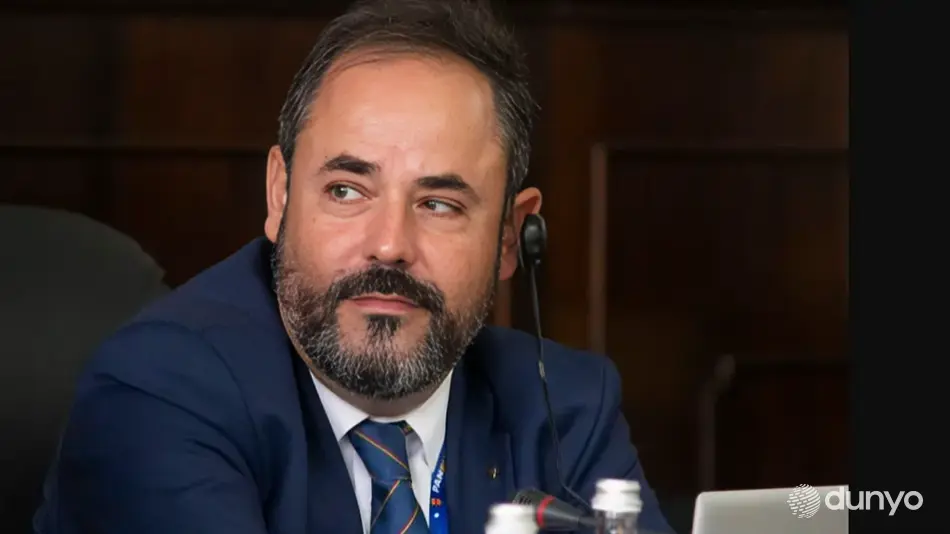
MADRID, September 10. /Dunyo IA/. President of the Pan-European Union in Spain Professor Carlos Uriarte Sánchez, commented for Dunyo IA on the outcomes of the official visit of the President of Uzbekistan Shavkat Mirziyoyev, to Serbia on September 7–8th:
- Official visit of the President of Uzbekistan to Serbia has become an important event in the development of relations between the two countries. In my view, the qualitatively new stage of Uzbek-Serbian ties lies in the transition from traditional political dialogue to a strategic partnership with concrete economic and investment substance.
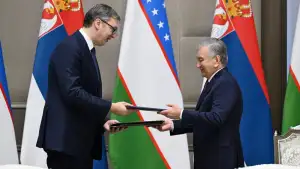
Decision of the two countries' leaders to establish strategic partnership relations is of particular significance. This is an important political signal that creates a solid foundation for long-term cooperation.
The reached agreements cover virtually all key areas - trade, investment, industry, transport and logistics, agriculture, pharmaceuticals, digital technologies, renewable energy, culture, tourism and labor migration.
From an economic standpoint, the visit unlocks broad prospects. For Serbian businesses, Uzbekistan represents a dynamically developing market in Central Asia and a vital partner for entering the broader markets of the region.
In turn, Serbian companies possess significant experience and technology in industry, pharmaceuticals, agriculture, the food and light industries, energy and other sectors. Therefore, agreements on establishing joint ventures and expanding industrial cooperation can yield concrete results in the coming years.
Preparation of a Free Trade Agreement will be a crucial step. Simplifying trade procedures will create more favourable conditions for mutual market access for goods, increasing trade volumes and expanding the product range.
Agreements in the fields of automotive components, machinery, electrical engineering and electronics, pharmaceuticals, agricultural processing and the digital economy are also highly significant.
I highly appreciate the holding of the Uzbek-Serbian business forum involving more than 200 representatives from the official and business circles of both countries. It is precisely these direct contacts between entrepreneurs that make it possible to transform political agreements into real investment projects, joint ventures and new trade contracts.
Separately, I would like to note the development of cooperation in the transport sector. The signed documents in the field of international road transport, railway infrastructure, and support for the Middle Corridor are of strategic importance, as they create additional opportunities for expanding transport and logistics links between Central Asia and Europe.
Interregional cooperation also holds great potential. The establishment of partnerships between the Samarkand region and the Autonomous Province of Vojvodina opens up opportunities for direct contacts between municipalities, entrepreneurs, educational institutions and cultural organizations.
Expansion of humanitarian interaction in the fields of education, culture, cinematography, sports, and tourism also deserves attention. Holding Days of Culture, joint events, and developing direct ties between relevant organizations will contribute to strengthening mutual understanding between the peoples of the two countries.
Agreement in the field of mobility and labor migration serves the interests of both sides and will help create transparent and effective mechanisms for the employment of citizens of Uzbekistan in Serbia.
Thus, the visit of President Shavkat Mirziyoyev became not only an important diplomatic event but also the starting point for a new stage of practical cooperation. The signed documents, reached agreements and the upcoming joint “roadmap” create the necessary conditions for filling the strategic partnership with tangible economic and social substance.
In the coming years, we can expect growth in mutual trade, the implementation of new investment projects, the creation of joint ventures, as well as the expansion of direct contacts between business circles, regions and civil society representatives of the two countries.

Latest News
See all
Read also
Attitude from Ankara: Belgrade Visit marks new step of Uzbekistan toward European Economic Area
Uzbekistan and Serbia strengthen mutual trust and elevate relations to the level of strategic partnership
View from Moscow: India fits well into Uzbekistan’s multi-vector foreign policy
View from Dushanbe: Indian Prime Minister’s visit to Uzbekistan marks a tectonic shift