Alisher Navoi’s enduring legacy strengthens cultural ties between Turkic and European Communities in Brussels
February 09, 2026. 15:43 • 3 min
• 524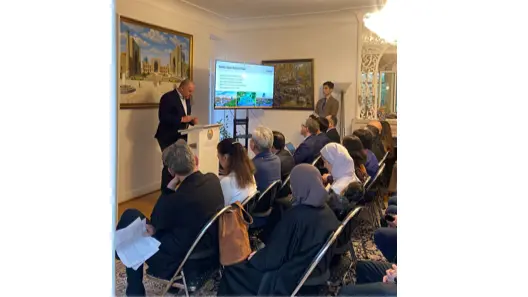
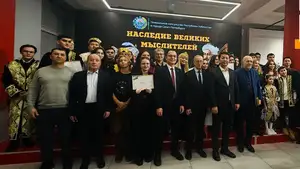
BRUSSELS, February 9. /Dunyo IA/. A literary and educational event was held in the Belgian capital to mark the 585th anniversary of the birth of the great poet and thinker Alisher Navoi, reports Dunyo IA correspondent.
The event was attended by members of the diplomatic corps as well as representatives from academic and literary circles across the Benelux countries, local media and Uzbek expatriates residing in the region.
Speakers highlighted the significance of Alisher Navoi’s work in strengthening cultural and interstate ties between Central Asian countries, the broader Turkic world and Europe. They also emphasized his substantial contribution to world literature and the importance of further promoting his rich spiritual and cultural legacy.
Participants were provided with an overview of the initiatives undertaken by the Government of Uzbekistan to study and promote the heritage of the great poet. Selected examples of Navoi’s poetry were also read during the gathering, showcasing the depth and beauty of his literary contributions.
The event attracted considerable interest from members of the host country’s literary community as well as from attending guests.
Pierre Bastin, a Belgian expert on Turkic languages, literature and the culture of Turkic countries, noted in an interview with the Dunyo Information Agency:
- I attended the commemorative event for Alisher Navoi’s birthday at the Embassy of Uzbekistan in Brussels. I have a deep interest in Turkic languages and this occasion captured my attention.
Alisher Navoi is a pivotal figure for the culture of Central Asia and the wider Turkic world. He was among the first poets to compose works in Chagatai, a Turkic language considered a precursor to modern Uzbek and part of the Karluk branch of Turkic languages.
The development of Chagatai as a literary language was a highly complex process, as poetry in the region at the time was predominantly written in Persian. In my view, Navoi’s main aim was to demonstrate that the Turkic language was fully capable of serving as a medium for high literary expression.
In this way, he became one of the key figures in the cultural history of Central Asia. Navoi was not only a great poet and writer but also an outstanding statesman. During his public service, he oversaw the construction of hospitals, the establishment of schools, madrasahs and other social institutions.
Today, Alisher Navoi is a national symbol of Uzbekistan, which is entirely fitting. At the same time, his significance extends far beyond the borders of a single country - he represents a shared spiritual and cultural heritage for all Turkic-speaking peoples.

See all