
Archaeologists discover new evidence of ancient settlements and rock art in Jizzakh Region
October 07, 2026. 20:30 • 2 min
• 129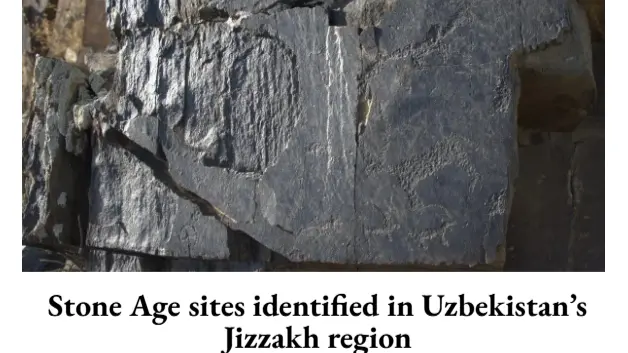
LONDON, October 7. /Dunyo IA/. Archaeologists in the Jizzakh region have discovered previously unknown Palaeolithic and Neolithic sites, as well as around 30 ancient petroglyphs depicting people, animals and symbols, reports Dunyo IA correspondent, citing with the British scientific online publication “Heritage Daily”.
Discoveries were made in September in the Zaamin and Sharaf Rashidov districts by specialists from Uzbekistan’s Cultural Heritage Agency and Samarkand Archaeological Institute named after Yahyo Gulamov.
In the vicinity of settlements in the Zaamin district, researchers identified several new Stone Age sites. A Palaeolithic site was discovered east of the village of Achchi, a Neolithic site near the village of Peshagor, while additional Neolithic material was found in the western part of Achchi and around the village of Arsha.
According to a preliminary assessment, the presence of Palaeolithic and Neolithic sites within a relatively small geographical area indicates that the Zaamin oasis and the surrounding slopes of the Turkestan Range were repeatedly occupied by ancient communities. The discoveries could help researchers investigate how Stone Age communities moved through the landscape and how they exploited the natural resources of the region.
Another significant discovery was made on the left bank of the Ravotsoy River near the village of Ravots. Here, archaeologists identified for the first time a previously undocumented complex of rock art carved into shale outcrops.
Approximately 30 petroglyphs depicting a hunter, mountain goat, cattle and a dog were recorded across seven rock faces. Among the most striking carvings is the figure of a hunter firing a bow, as well as an image that appears to be a solar symbol.
Researchers suggest that the petroglyphs may have been produced over a considerable span of time, potentially ranging from the Bronze Age to the early Middle Ages. Further investigation will be needed to establish a more precise chronology.
Archaeologists plan to continue studying the newly identified sites, conduct detailed archaeological documentation and determine the historical and cultural significance of the discoveries. The findings will also be compared with other known archaeological landscapes in Central Asia.

Latest News





See all
Read also

Kabul hosts Second Scientific Conference dedicated to the rich scholarly legacy of Imam Al-Marghinani

View from Singapore: Trust as a key condition for the success of the Tashkent International Financial Centre