
Low water levels in the Danube river reduce electricity generation in Hungary, Romania and Serbia
August 03, 2026. 17:05 • 3 min
• 50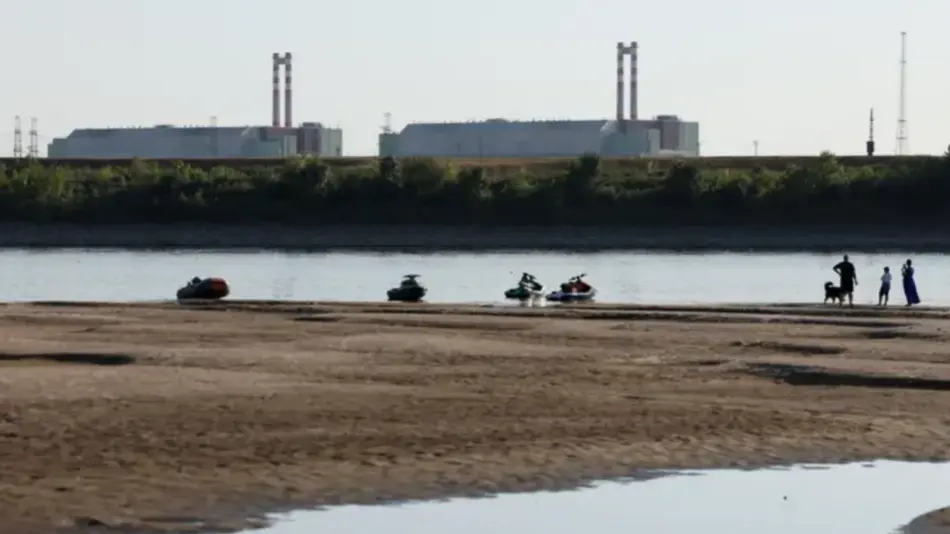
TASHKENT, August 3. /Dunyo IA/. Hungary has decided to completely shut down the “Paks” Nuclear Power Plant for the first time in its 44-year history of operation, facility accounts for nearly half of the country's electricity generation, reports Dunyo IA correspondent, citing with “BBC” News portal.
The unprecedented decision was prompted by a shortage of water required for cooling the reactors. Before the shutdown, the power plant was already operating at only 10 percent of its designed capacity.
Hungarian Prime Minister Péter Magyar stated that the country is facing several critical days amid forecasts of extreme heat, with temperatures expected to reach 40 degrees Celsius. According to him, the shutdown of the nuclear power plant will significantly increase the pressure on the national energy system and require the introduction of measures to limit electricity consumption.
Government has already instructed a number of major industrial enterprises, including the oil company MOL, “Audi” automobile manufacturing plant and battery production facility of “Samsung”, to reduce their energy consumption. In addition, during peak demand periods, freight train operations will be suspended, civil servants have been transferred to remote working arrangements, while architectural lighting of buildings and part of street lighting will be switched off. At the same time, the authorities assured that restrictions affecting households would be introduced only as a last resort.
A challenging situation is also developing in neighboring Romania. To maintain the operation of the “Cernavodă” Nuclear Power Plant, which accounts for around 20 percent of the country’s electricity generation, the military carried out controlled explosions to redirect an additional volume of water towards the plant’s cooling system. One of the two reactors has already been shut down, while a further decline in water levels could lead to the shutdown of the second power unit.
In Serbia, consequences of the drought have also proven to be severe. Country’s two largest hydropower plants have reduced electricity generation to 20–30 percent of their normal output, significantly decreasing overall electricity production volumes.
It is noted that the energy challenges are becoming particularly significant amid the continued export of electricity from Hungary and Romania to Ukraine, whose energy infrastructure is regularly subjected to attacks.
It is worth recalling that UN Secretary-General António Guterres previously warned that the planet is entering a period of unprecedented heat. According to the World Meteorological Organization, the intensification of the El Niño phenomenon in the coming months could lead to new temperature records, as well as an increase in droughts, floods and wildfires. The UN chief called on governments to accelerate measures to protect populations, adapt infrastructure to extreme heat and step up efforts to combat climate change.
Photo by BBC

Latest News




See all
Read also

UN Report: Uzbekistan among countries achieving Accelerated Progress in Reducing Water Stress

Uzbekistan Unveils Environmental Education Initiatives at UNESCO Summit in Paris