A media event dedicated to the study and promotion of the Timurid heritage was held in Madrid
April 23, 2026. 16:55 • 4 min
• 143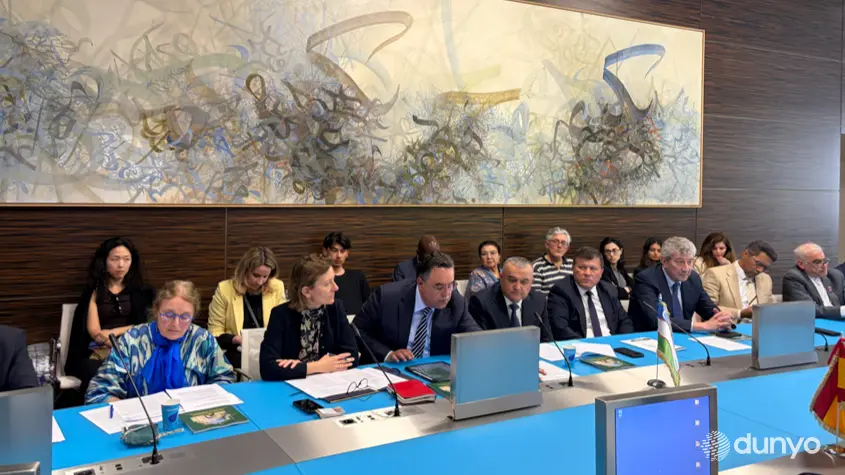
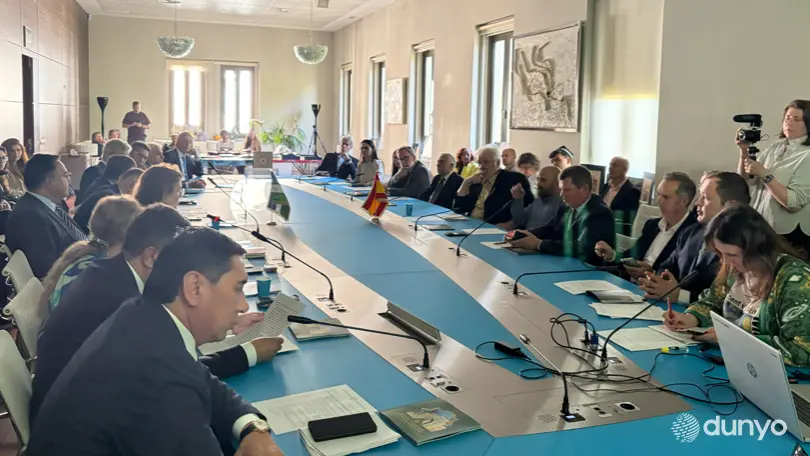
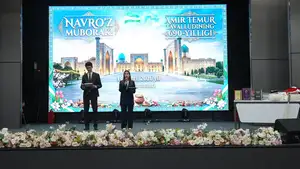
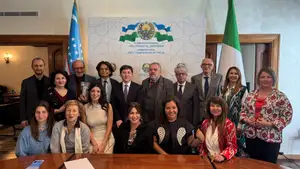
MADRID, April 23. /Dunyo IA/. Yesterday, the Casa Árabe cultural center in the Spanish capital hosted a media event titled “History and Cultural Heritage of the Great Timurids”, organized by the Embassy of Uzbekistan in collaboration with the Center of Islamic Civilization and “Uzbekkino”, reports Dunyo IA correspondent.
The event was attended by representatives of scientific and academic circles, cultural institutions, the expert community, as well as ambassadors from Asian, European Union, and Latin American countries. The program featured video materials showcasing the rich heritage of Amir Temur and events dedicated to the celebration of his 690th anniversary, which is being widely observed in Uzbekistan.
Opening the event, Ambassador of Uzbekistan Farrukh Tursunov, noted that in the context of increasing global tensions, dialogue, mutual respect, and constructive cooperation between states acquire special significance. It was emphasized that Uzbekistan consistently pursues an open and pragmatic foreign policy aimed at strengthening peace and stability, as well as resolving all conflicts exclusively through peaceful means. In this context, the roundtable was characterized as an important platform for building trust, expanding humanitarian ties and developing new joint initiatives.
The first keynote speech was delivered by Khayriddin Sultanov, Advisor to the President of Uzbekistan and a renowned writer, who emphasized the steady positive dynamics of Uzbek-Spanish relations. According to him, cooperation between the two countries is reaching a qualitatively new level, where cultural, humanitarian, and scientific ties play a central role. Special attention was paid to the development of inter-university collaboration, joint research projects, and knowledge exchange between academic institutions. A significant highlight of the speech was the reference to the deep historical roots of bilateral contacts, dating back to the era of Amir Temur and the first diplomatic missions between the East and Europe. Among the promising areas of cooperation, plans were noted for the publication of the “Institutes of Temur” (Tuzuk-i-Temuri) in the Spanish language, the development of partnerships between research centers and museums and the implementation of joint projects in the fields of culture and cinematography.
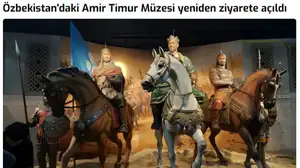
Firdavs Abdukhalikov, Director of the Center of Islamic Civilization in Uzbekistan, presented the activities of the center, established at the initiative of President Shavkat Mirziyoyev. It was noted that the center serves as a unique scientific and educational platform aimed at studying the country's more than 3,000-year history and popularizing the contribution of the Uzbek people to the development of world science and culture. It was reported that over the last few years, more than 1,500 rare exhibits have been returned to Uzbekistan, and the center itself is visited by thousands of people daily. Special attention was paid to the exposition dedicated to the 690th anniversary of Amir Temur, featuring unique manuscripts, maps, and artifacts from the Timurid era. The speech also highlighted the historical ties between Uzbekistan and Spain, including the mission of the Spanish envoy Ruy González de Clavijo to the court of Amir Temur.
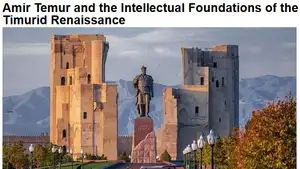
The speech by Dr. Khurshid Fayziev, Director of the State Museum of the History of the Timurids, was both profound and conceptual, as he characterized Amir Temur as the founder of the Second Renaissance in Turan. He emphasized that the Timurid era was one of the key stages in the development of world civilization, marked by an unprecedented flourish of science, culture, and art in Central Asia. According to him, Amir Temur not only supported scholars and poets but also created the conditions for the formation of powerful intellectual centers, attracting outstanding thinkers from all over the world. Special attention was paid to the development of architecture, the art of the book, and science, as well as the role of his descendants, including Ulugbek and Alisher Navoi, who continued the traditions of patronage of knowledge. It was noted that it was during this period that cultural and scientific achievements were formed that influenced the development of world civilization.
The event also featured speeches by Professor Jesús Gil from the Autonomous University of Madrid, Frédéric Bressand, President of the “La Temurid” Association, and other representatives of the scientific and expert community. Participants noted the intensification of Uzbek-Spanish cooperation in the scientific and cultural spheres, including the implementation of joint research and publishing projects aimed at studying and popularizing the Timurid heritage.
Following the event, both parties confirmed their mutual interest in further expanding bilateral cooperation, developing joint scientific and cultural initiatives, and strengthening humanitarian ties. Holding such events in Europe's leading cultural centers testifies to the growing interest of the international community in Uzbekistan's historical heritage and its contribution to world civilization.

See all