Economic transformation of Karakalpakstan: Outcomes, strategic reforms and future prospects
February 26, 2026. 10:25 • 5 min
• 760
NUKUS, February 26. /Dunyo IA/. Over the period 2021–2025, Karakalpakstan demonstrated sustained macroeconomic and investment growth, accompanied by an expansion of its production base, an increase in foreign trade turnover and the implementation of institutional reforms, reports Dunyo IA correspondent.
At the end of 2025, the gross regional product reached USD 3.07 billion, with gross regional product per capita amounting to USD 2,100. Investment in fixed capital totalled USD 1.5 billion, while the volume of foreign direct investment and loans stood at USD 1 billion.
The region’s population exceeds 2 million people, including 792,000 economically active citizens and 735,000 employed. The republic is home to 28,700 operating business entities and 3,600 manufacturing enterprises. In 2025 alone, 28,700 projects were implemented. Tourist arrivals reached 405,800 foreign visitors.
A key indicator of the transformation has been the growth of foreign investment. In 2021, the volume of attracted funds amounted to USD 374 million; in 2022 - USD 992 million; in 2023 - USD 1.324 billion; in 2024 - USD 1.564 billion; and in 2025 - USD 1.9 billion. Thus, over five years, capital inflows increased more than fivefold in Karakalpakstan.
In 2025, the structure of investments by country was distributed as follows: Saudi Arabia - USD 425 million; China - USD 308 million; United Arab Emirates - USD 204.4 million; Hong Kong - USD 66 million and other countries - USD 557 million.
A total of 219 foreign and joint ventures are operating in the region. Some 19,000 entrepreneurs are registered, including 2,700 newly established entities, while 17,200 belong to the small and medium-sized business sector. The investment portfolio comprises 52 ongoing projects, 98 prospective initiatives and 9 major backbone projects.
The industrial sector demonstrated accelerated growth: in 2024, production increased by 6.8% compared to 2023. The structure includes the chemical and petrochemical industry - 38.7%; textiles - 22%; food production - 22%; extraction of non-metallic minerals - 5.5%; and other sectors - 38.7%.
The region possesses substantial mineral resource reserves, including 556.5 million tons of mineral salt, 265.3 million tons of cement raw materials, 200.9 million tons of limestone and 248 million tons of construction stone. This resource base provides a solid foundation for the development of the construction materials industry, chemical production and processing sectors.
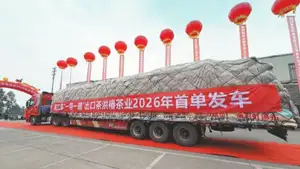
In 2025, foreign trade turnover amounted to USD 810.8 million. Exports totalled USD 435.2 million, marking a 32.7% increase compared to the previous year, while imports reached USD 376 million, up 43.5%. Export activities involve 250 entities and 120 exporting enterprises. The geography of exports covers 54 countries, while imports originate from 58 countries.
The structure of exports is as follows: oil and gas processing products - USD 177 million; construction materials - USD 75 million; food products - USD 72 million; pharmaceutical products - USD 36 million; textiles and fabrics - USD 33 million; chemical products - USD 23 million; energy resources - USD 12 million; leather goods - USD 1 million; and services - USD 4.7 million.
The structure of imports is as follows: mechanical and electrical equipment - USD 186 million; wood products - USD 56 million; food products - USD 37 million; chemical products - USD 27 million; services - USD 25 million; energy resources - USD 16 million; miscellaneous manufactured goods - USD 16 million; plastic products - USD 6.9 million and livestock products - USD 5.7 million.
In the agricultural sector, output in 2025 totalled USD 747.5 million, reflecting growth of 10.1%. Grain production reached 393,300 tons (+15%), while melons and gourds amounted to 236,800 tons (+16.3%).
In livestock farming, production volumes stood at 130,300 tons of meat, 470,700 tons of milk, 425 million eggs and 14,000 tons of fish. Livestock numbers included 1,265,200 head of cattle (+0.4%), including 361,900 cows (+0.1%); 1,253,800 sheep and goats (+0.2%); and 5,744,600 poultry (+6.7%).
At the same time, the market remains fragmented, creating potential for industrialization and the establishment of large, full-cycle agro-clusters.
The region's infrastructure base includes 12,381 km of highways, 9,125 km of railway tracks, 47 railway stations, 2 airports, 13,000 km of power lines and 8,966 km of gas pipelines. The urbanization rate stands at approximately 60%. The region is home to 12 universities, 1,809 preschools, 752 schools, and 522 medical organizations. Karakalpakstan is strategically located at the intersection of 16 international transit routes and the key China - Central Asia – Russia - EU corridor. Cargo delivery to CIS countries is possible within 5 days, and to Europe within 5–7 days. Karakalpakstan shares borders with Kazakhstan (450 km) and Turkmenistan (48 km).
A comprehensive system of preferences has been established. In the “Nukus” Free Economic Zone (130.3 hectares, 20 projects, USD 229.4 million in investments), tax holidays of up to 10 years are granted depending on the investment volume. Exemptions include corporate income tax, property tax, land tax and water use tax. In specific territories, rates for income tax, turnover tax, and social tax are set at a minimal 1%. Small and medium-sized businesses have access to loans of up to 10 billion UZS for terms up to 7 years at a 14% annual interest rate with a grace period. Additionally, subsidies are provided for the hotel sector, cost compensations for cold storage facilities and discounted electricity tariffs for industrial consumers (-15%).
Parallel to this, new sectors are emerging: IT Park Nukus offers tax incentives and support for BPO, fintech, and digital solutions. Key upcoming projects include a 50 MW Data Center (USD 250M, IRR 21%), glass production (USD 12M), copper mining (USD 70.4M, IRR 29%), the “Seoul Mun” development complex (USD 300M), and a mining farm (USD 180M, IRR 28%).
Collectively, the region has transitioned from the moderate investment profile of the early 2020s to a model of accelerated industrial and export growth, characterized by a fivefold increase in foreign capital inflow, an expanded trade geography and a large-scale project portfolio.

See all