President of Uzbekistan approves measures to implement a unified digital platform in public administration
July 07, 2026. 15:32 • 5 min
• 137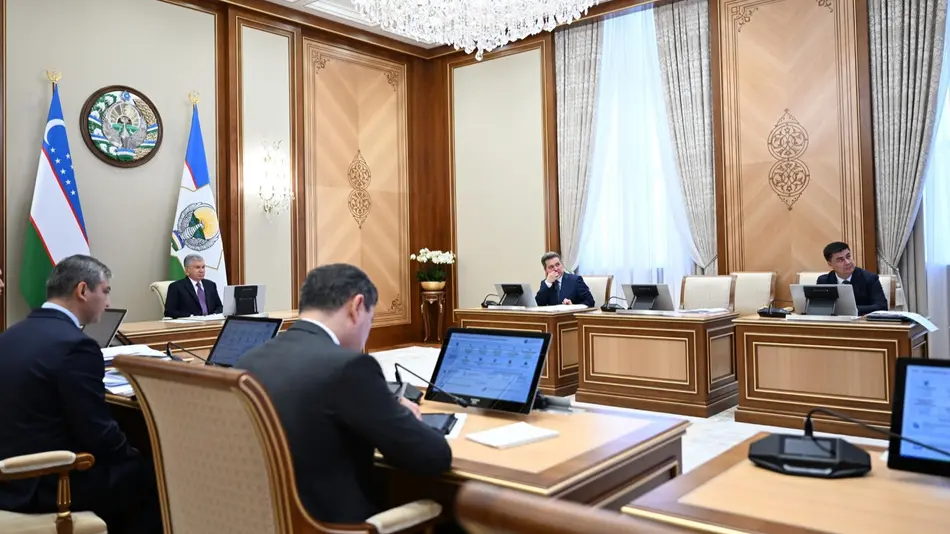
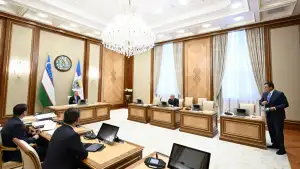
ТАSHKENT, July 7. /Dunyo IA/. Today, President Shavkat Mirziyoyev reviewed a presentation on introducing a unified integrated digital platform for public administration, developing the startup ecosystem, and improving the business environment in the telecommunications sector, reports Dunyo IA correspondent.
According to the press service of the Head of our State, in recent years, extensive work has been carried out to expand digital public services, introduce modern information systems across government and improve convenience for citizens and businesses.
As a result, Uzbekistan has climbed 32 places in the UN E-Government Development Index, rising to 55th place. The goal is to place the country among the world's top 30 countries in this area by 2030.
This year, the number of digital public services is expected to reach 860, with the number of users increasing to 15.5 million. By comparison, last year 525 public services were available to 4 million users.
At the same time, it was noted that databases and information systems in public administration continue to be developed separately by individual agencies, without a unified approach to data analysis and decision-making.
To address this, proposals were presented to gradually implement a unified digital platform for public administration. Through this platform, information on regional economies, investment, ecology, security issues, public concerns, the well-being of mahallas, as well as geospatial data, information on facilities, and cartographic layers will be consolidated into a single system.
The platform will enable the use of artificial intelligence to analyse data, proactively identify regional issues, monitor the implementation of decisions, improve resource allocation, and enhance the quality of public administration.
Head of State emphasized that this digital management system should be implemented in the capital this year and, starting next year, in all regions of the country.
The launch of a unified national system for classifying goods and services was also discussed during the presentation. Currently, customs, tax, statistics, and other agencies use different product classifiers. This increases business costs, reduces reporting accuracy, and complicates interagency data exchange.
The implementation of a unified national classification system will reduce unnecessary bureaucratic procedures for businesses, simplify data exchange between government agencies, and improve the accuracy of statistical reporting.
An initiative to create a national navigation system was also presented. It was noted that foreign navigation platforms are currently used predominantly in the country. A national navigation system will make it possible to form geodata based on a single standard and better organize transport, logistics, emergency services, urban planning activities, and the provision of public services.
The presentation also covered plans to develop IT service exports and the startup ecosystem. By 2030, it is planned to increase IT service exports to $5 billion, create 5,000 active startups, and attract $2 billion in investment.
It was emphasized that Uzbekistan has climbed 31 places in the international StartupBlink ranking, while Tashkent ranked first among Central Asian cities, and Samarkand and Fergana entered the world's top 1,000 startup cities for the first time.
To further develop the sector, the Talent Hub program is planned to be launched, providing foreign specialists and investors with the opportunity to remotely register a company, open a bank account, and obtain an international bank card. It was also proposed to extend tax benefits for employees of IT Park resident companies until 2040, as well as expand the IT Visa and Zero Risk programs.
Support mechanisms for IT service-exporting companies are also envisaged, including the partial reimbursement of salary expenses and costs related to the relocation of foreign clients and specialists, as well as compensation for the cost of obtaining international certification.
In addition, proposals were presented to organize more than 20 acceleration programs in Bukhara and Fergana and support the entry of startups into major international markets.
Particular attention was paid to the development of telecommunications infrastructure. In recent years, the coverage of settlements with telecommunications services has increased from 41 to 98 percent, while total internet bandwidth has grown 65-fold.
However, President Shavkat Mirziyoyev noted that the telecommunications services sector remains insufficiently attractive for local entrepreneurs, and that the share of wired internet users remains extremely low in some regions.
To improve the business climate in the sector, it was proposed to consolidate the two existing licenses for the design and construction of telecommunications networks and reduce the license issuance period from 25 to 10 working days.
A requirement will be introduced to ensure that the design and construction of apartment buildings include high-speed internet connectivity. This will allow fiber-optic communication infrastructure to be incorporated at the construction stage, providing residents with high-quality digital services.
It was also proposed to provide preferential loans of up to 530 million soums for a term of seven years, with a two-year grace period at an interest rate of 15 percent, to young people planning to start a business in the telecommunications sector under the "Kelajak Tadbirkori" program. Preferential tariff plans will also be developed for entrepreneurs operating in remote and hard-to-reach areas.
President Shavkat Mirziyoyev approved the proposals and instructed the responsible officials to integrate data from government agencies, improve the quality of digital services, strengthen cybersecurity and personal data protection, and create an even more favourable environment for private sector development in the telecommunications industry.

Latest News


See all