UNICEF Methodology Integration enables first comprehensive assessment of multidimensional child poverty at the national level
November 27, 2025. 09:54 • 3 min
• 550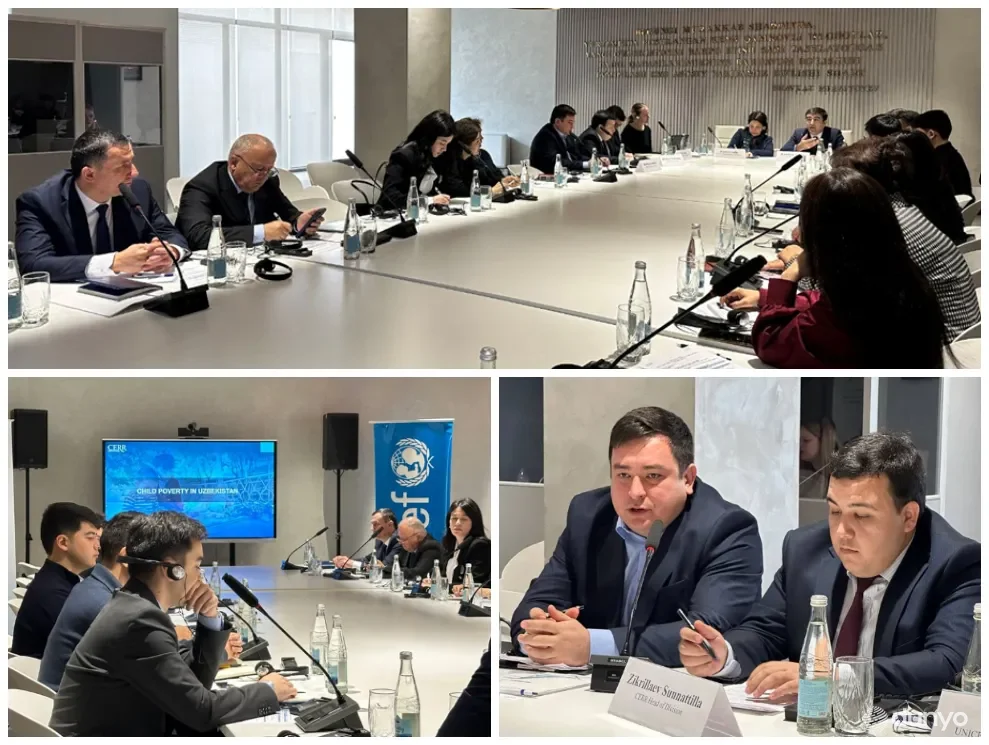
TASHKENT, November 27. /Dunyo IA/. The Center for Economic Research and Reforms (CERR) hosted an international roundtable titled "Overcoming child poverty as a prerequisite for child well-being: Lessons from Uzbekistan", organized in partnership with the United Nations Children’s Fund (UNICEF), reports Dunyo IA correspondent.

The event aimed to discuss and validate the findings of a comprehensive study on child poverty, while also facilitating the exchange of international best practices in child rights protection and welfare.
The event brought together around 30 experts, including representatives from national government agencies, local authorities, international development partners, and research institutions.
The opening remarks were delivered by Maria Castillo, Head of the UNICEF Representation in Uzbekistan. She emphasized that Uzbekistan is implementing decisive reforms to combat child poverty, highlighted the country’s commitment to the Sustainable Development Goals, and underscored the importance of ensuring equal access for all children to education, healthcare, nutrition, and basic living conditions.
It is estimated that the long-term consequences of early childhood poverty affect health, education, and future opportunities, which requires comprehensive and systematic support measures.
Khurshid Asadov, Deputy Director of CEIR, addressing the participants of the "round table" noted that, on the initiative of the President of Uzbekistan, Shavkat Mirziyoyev, the fight against poverty has taken on the character of a nationwide movement and has been defined as a daily task for leaders at all levels.
In this context, reducing child poverty is one of the key directions of the national human capital development strategy. The expert noted that over the past three years, the level of child poverty in Uzbekistan decreased from 21% to 11% as of the end of 2024.
Within the framework of the 'round table,’ the results of a joint study by CEIR and UNICEF, based on the 2024 household budget survey data, were presented.
The analysis was conducted based on the World Bank’s monetary approach and UNICEF’s multidimensional methodology, allowing for the assessment of children’s real living conditions, access to education, healthcare, nutrition, infrastructure, and basic services.
This approach provides a comprehensive understanding of children’s living conditions and identifies vulnerable groups that require targeted support.
The event also presented national and regional assessments of child poverty, including a report by Pamela Dale, UNICEF Regional Advisor for Europe and Central Asia.
Based on the presented report, further work is planned to improve targeted support for vulnerable families, develop social protection tools, ensure more equitable access to social benefits, and reduce the level of poverty in society.
The confirmed findings and recommendations will be taken into account in the development of further measures and the determination of priorities, in accordance with Uzbekistan’s Sustainable Development Goals and its international commitments to eradicate poverty in all its forms.
In conclusion, the parties expressed their readiness to expand cooperation on monitoring the socio-economic situation of children, strengthen the analytical base, and jointly develop recommendations aimed at ensuring the well-being of every child.

See all